Rhynocoris ventralis
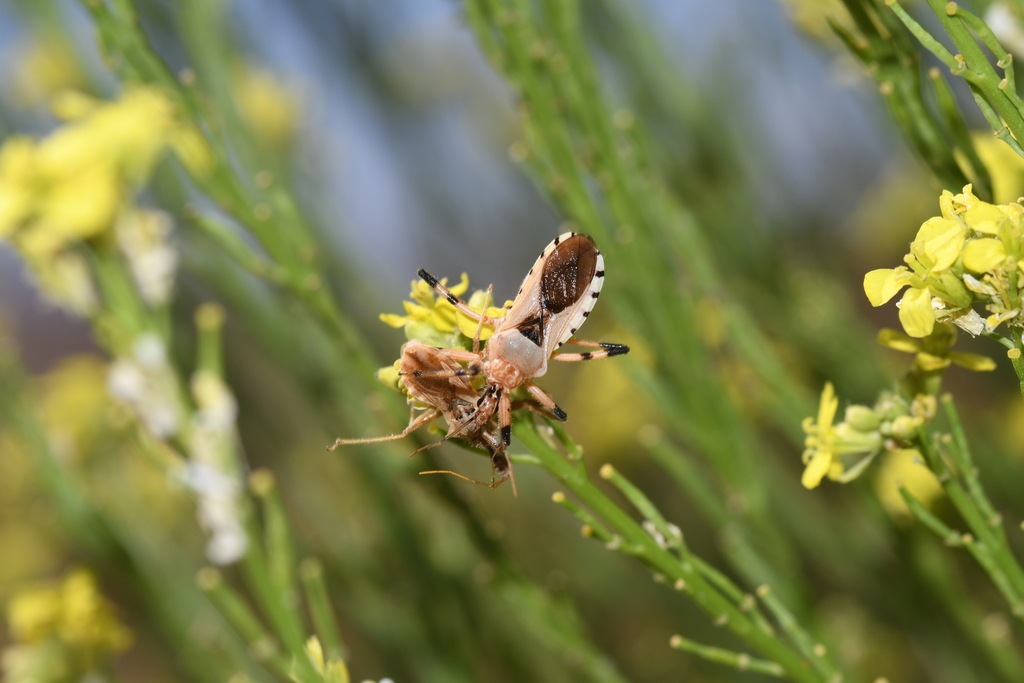
(c) Hawk T., some rights reserved (CC BY) · licence
Family: Reduviidae · Class: Insecta · Order: Hemiptera
Rhynocoris ventralis is a California animal in the Reduviidae family.
Rhynocoris ventralis is a medium-sized assassin bug in the family Reduviidae, subfamily Harpactorinae. Adults measure 10 to 15 mm (0.4 to 0.6 inches) in length, displaying distinctive orange and black coloration that varies among individuals. The species exhibits the characteristic robust build of assassin bugs, with a prominent curved proboscis adapted for piercing prey and strong raptorial forelegs for grasping victims. Four subspecies are recognized, with three isolated to the western United States (BugGuide). The species occurs across a broad range in North America, from the eastern United States west to California and the Pacific coast. In California, R. ventralis is documented from multiple counties, representing the western extent of its continental distribution. The subspecies R. v. femoralis is among those found in western populations, though detailed distributional boundaries between subspecies require further study. Rhynocoris ventralis inhabits diverse terrestrial environments including gardens, agricultural areas, natural grasslands, and forest edges. Adults are commonly observed on flowering plants, where they hunt for prey, leading to the common name "flower assassin bug." The species demonstrates adaptability to both natural and anthropogenic habitats, frequently occurring in suburban settings and cultivated landscapes. As predaceous insects, R. ventralis adults and nymphs feed primarily on other arthropods, using their piercing-sucking mouthparts to inject digestive enzymes and extract body fluids from prey. Their diet includes various soft-bodied insects such as aphids, caterpillars, and other small arthropods, making them beneficial predators in agricultural and garden settings. Adults are most active during warmer months, with peak activity typically occurring from late spring through early fall. Mating and egg-laying behaviors follow typical reduviid patterns, with females depositing eggs in protected locations such as under bark or in plant crevices. The species exhibits hemimetabolous development, progressing through five nymphal instars before reaching adulthood. Nymphs resemble adults but lack fully developed wings and reproductive organs. Both adults and nymphs are capable predators, though adults demonstrate greater mobility and hunting range. Currently, R. ventralis does not hold any federal or state conservation listing status. The species appears to maintain stable populations across its range, with no documented significant population declines or habitat loss concerns. Its adaptability to various habitat types, including human-modified environments, likely contributes to its apparent stability. However, like many arthropod species, comprehensive population monitoring data are limited. The taxonomic history includes the synonyms Reduvius ventralis Say 1832 and Harpactor americanus Bergroth 1897, reflecting historical classification changes within the assassin bug family (BugGuide). Continued taxonomic research may reveal additional complexity within this species complex, particularly regarding the relationships among the four recognized subspecies and their distributional patterns across North America.
Classification
Class: Insecta · Order: Hemiptera · Family: Reduviidae
Frequently asked questions
How is Rhynocoris ventralis classified?
Rhynocoris ventralis belongs to class Insecta, order Hemiptera, family Reduviidae.
What family does Rhynocoris ventralis belong to?
Rhynocoris ventralis is in the Reduviidae family.
What is Rhynocoris ventralis?
Rhynocoris ventralis is a medium-sized assassin bug in the family Reduviidae, subfamily Harpactorinae.
Is Rhynocoris ventralis found in California?
Yes. Rhynocoris ventralis is recorded in California in The California Species Project's catalogue.
Related species
Other California species in the same genus, family, or bioregion.
Data from The California Species Project — 14,000+ California species with verified data from CNPS, CDFW, USFWS, and more.