Rosalia funebris
Banded Alder Borer
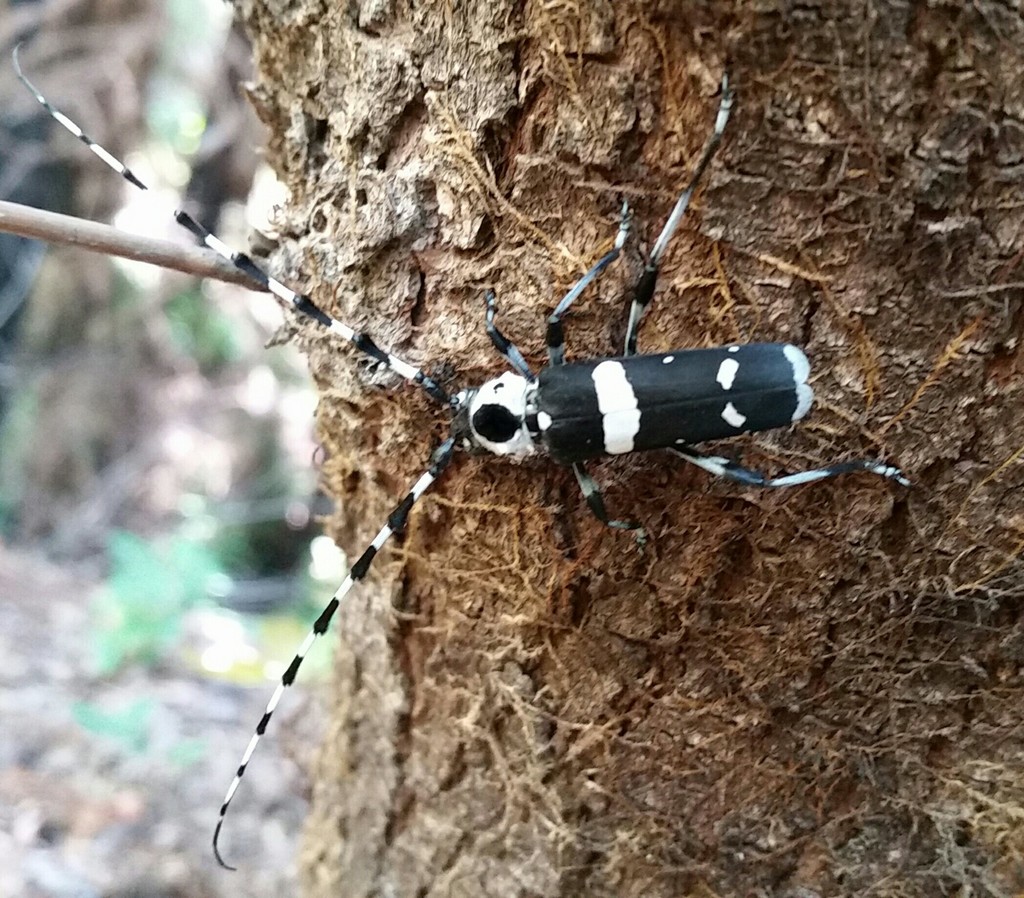
(c) Alex, some rights reserved (CC BY) · licence
Family: Cerambycidae · Class: Insecta · Order: Coleoptera
Rosalia funebris (Banded Alder Borer) is a California animal in the Cerambycidae family.
The Banded Alder Borer is a large longhorn beetle measuring 23 to 40 mm (0.9 to 1.6 inches) in length, excluding the antennae. The species displays distinctive black and blue-white coloration with broad pale stripes across the wing covers (elytra). The pronotum is predominantly white with a distinctive black central spot, while the exceptionally long antennae show alternating black and white bands (BugGuide). This striking pattern makes it one of the most recognizable longhorn beetles in western North America. Rosalia funebris occurs throughout western North America, with its range extending from British Columbia south through California, eastward to Colorado and New Mexico (BugGuide). In Canada, the species is found only in British Columbia (NatureServe Canada 2016). The beetle's distribution follows mountainous regions and areas with suitable host tree populations, particularly along the Pacific Coast ranges and extending into the Rocky Mountain system. The species is closely associated with alder trees (Alnus species), which serve as its primary host plants. Adults are most commonly observed on alder bark during spring and summer months, where they engage in mating behaviors and egg-laying activities (NatureServe Canada 2016). The beetle also utilizes California laurel (Umbellularia californica) as a host, earning it the alternative common name California Laurel Borer (BugGuide). Habitat preferences include forested areas, particularly those dominated by riparian vegetation where alders naturally occur. Most documented records come from areas along watercourses and in moist forest environments where alder populations thrive. Adults are active during warmer months, typically appearing from late spring through early fall. Females deposit eggs in bark crevices or wounds of host trees, and the developing larvae bore through the wood, creating galleries as they feed. The larval stage likely extends over multiple years, as is typical for large cerambycid beetles. Adults may be observed on host tree bark, where they feed on sap and engage in reproductive activities. The species demonstrates a strong association with its host plants, rarely straying far from alder or laurel groves. Currently, Rosalia funebris does not hold federal or state conservation listing status. However, like many forest-dwelling insects, the species may face localized pressures from habitat modification and forest management practices that remove dead or dying trees essential for larval development. Climate change impacts on riparian forest communities could potentially affect alder distribution and consequently influence beetle populations. The species' dependence on specific host trees makes it vulnerable to changes in forest composition, though its relatively broad geographic range across western North America suggests overall population stability. Continued monitoring of populations, particularly in areas experiencing significant forest management or development pressure, would help ensure long-term conservation of this distinctive longhorn beetle.
Classification
Class: Insecta · Order: Coleoptera · Family: Cerambycidae
Frequently asked questions
How is Rosalia funebris classified?
Rosalia funebris belongs to class Insecta, order Coleoptera, family Cerambycidae.
What family does Rosalia funebris belong to?
Rosalia funebris is in the Cerambycidae family.
What is Rosalia funebris?
The Banded Alder Borer is a large longhorn beetle measuring 23 to 40 mm (0.9 to 1.6 inches) in length, excluding the antennae.
Is Rosalia funebris found in California?
Yes. Rosalia funebris is recorded in California in The California Species Project's catalogue.
Related species
Other California species in the same genus, family, or bioregion.
Data from The California Species Project — 14,000+ California species with verified data from CNPS, CDFW, USFWS, and more.