Rostanga pulchra
Red Sponge Dorid
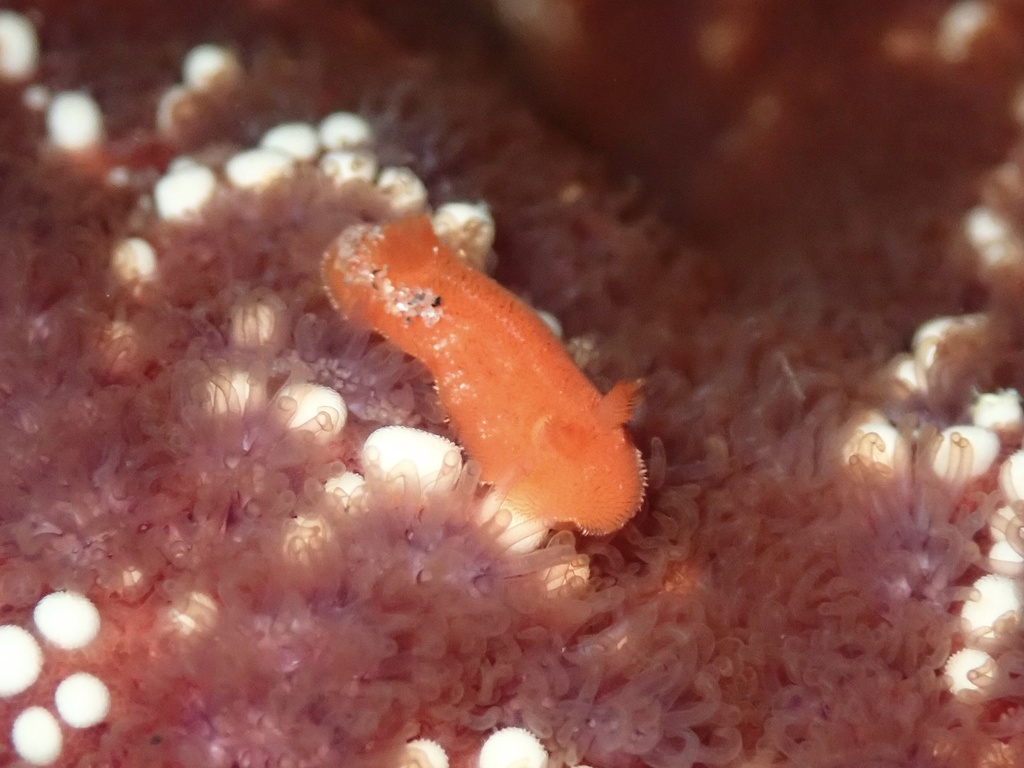
(c) Cricket Raspet, some rights reserved (CC BY) · licence
Family: Discodorididae · Class: Gastropoda · Order: Nudibranchia
Rostanga pulchra (Red Sponge Dorid) is a California animal in the Discodorididae family.
Rostanga pulchra is a small nudibranch mollusk belonging to the family Discodorididae. Adults typically measure 8 to 25 millimeters (0.3 to 1.0 inches) in length, with an elongated, soft body lacking a shell. The species displays distinctive bright red to orange coloration that closely matches its preferred prey. The dorsal surface is covered with numerous small, rounded tubercles giving the animal a textured appearance. Two prominent rhinophores (sensory tentacles) extend from the anterior end, while a circle of retractable gills surrounds the anal opening posteriorly. The body margins are typically smooth and undulating. Rostanga pulchra occurs along the Pacific coast from British Columbia to Baja California, Mexico. In California, the species is documented from intertidal and subtidal zones throughout the state's coastal waters, from the Oregon border south to the Mexican border. The species inhabits rocky shores, tide pools, and nearshore subtidal environments where suitable prey organisms are present. This nudibranch specializes in rocky intertidal and shallow subtidal habitats, typically found from the low intertidal zone to depths of approximately 30 meters (100 feet). Rostanga pulchra requires hard substrate environments with abundant sponge growth, particularly areas with strong water circulation that support healthy sponge communities. The species is most commonly encountered in crevices, under overhangs, and on vertical rock faces where red sponges flourish. Rostanga pulchra is a highly specialized predator that feeds exclusively on red sponges, particularly species in the genus Ophlitaspongia. The nudibranch's coloration provides excellent camouflage against its red sponge prey, making detection difficult for both predators and researchers. Reproduction involves the exchange of sperm between hermaphroditic individuals, followed by the deposition of white or pale yellow egg ribbons in spiral formations. Spawning typically occurs during warmer months when sponge growth is most active. The species exhibits negative phototaxis, remaining hidden during daylight hours and becoming more active during low light conditions. Rostanga pulchra currently holds no federal or state conservation listing status. The species appears to maintain stable populations throughout its range, though comprehensive population assessments have not been conducted. Primary threats include coastal development that destroys rocky intertidal habitat, pollution that affects water quality and sponge communities, and climate change impacts such as ocean acidification and warming temperatures. The species' specialized diet makes it particularly vulnerable to factors that negatively impact red sponge populations, including sedimentation from coastal runoff and changes in water chemistry. Marine protected areas along the California coast provide some habitat protection for this species and its prey organisms. The inconspicuous nature and specialized habitat requirements of Rostanga pulchra make population monitoring challenging, though citizen science efforts by tide pool enthusiasts contribute valuable distribution data.
Classification
Class: Gastropoda · Order: Nudibranchia · Family: Discodorididae
Frequently asked questions
How is Rostanga pulchra classified?
Rostanga pulchra belongs to class Gastropoda, order Nudibranchia, family Discodorididae.
What family does Rostanga pulchra belong to?
Rostanga pulchra is in the Discodorididae family.
What is Rostanga pulchra?
Rostanga pulchra is a small nudibranch mollusk belonging to the family Discodorididae.
Is Rostanga pulchra found in California?
Yes. Rostanga pulchra is recorded in California in The California Species Project's catalogue.
Related species
Other California species in the same genus, family, or bioregion.
Data from The California Species Project — 14,000+ California species with verified data from CNPS, CDFW, USFWS, and more.