Rudenia leguminana
Black-tipped Rudenia Moth
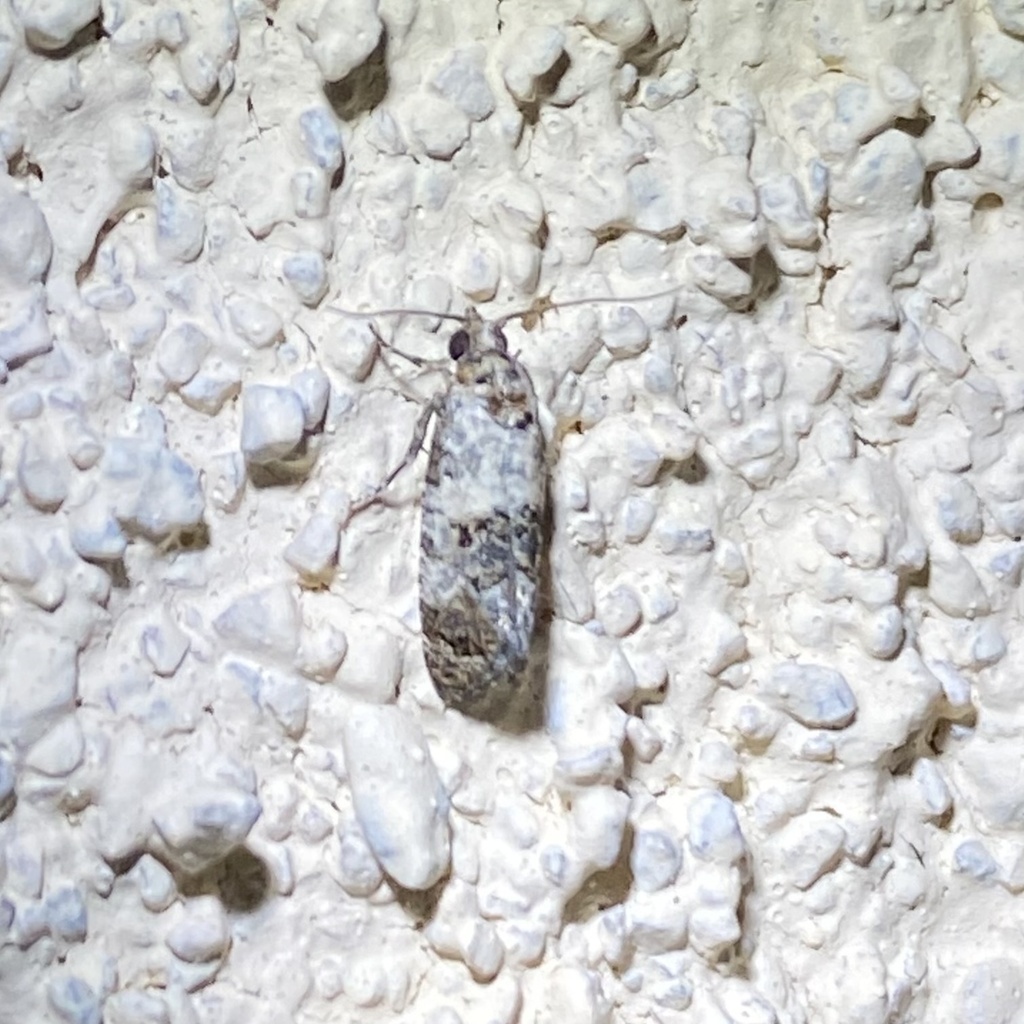
(c) Elliott Gordon, some rights reserved (CC BY) · licence
Family: Tortricidae · Class: Insecta · Order: Lepidoptera
Rudenia leguminana (Black-tipped Rudenia Moth) is a California animal in the Tortricidae family.
The black-tipped rudenia moth (Rudenia leguminana) is a small tortricid moth in the family Tortricidae. Adults display typical tortricid proportions with forewings that are broader at the base and taper toward the apex. The species derives its common name from distinctive black-tipped forewings, though detailed morphological descriptions remain limited in the scientific literature. This species exhibits a broad North American distribution, ranging from southern Connecticut south to Florida and extending westward through the midwestern United States to California (iNaturalist). The species also occurs in Mexico, where it has been documented in the states of Sinaloa, Puebla, Nuevo León, and Coahuila (Wikipedia). Within California, the species appears to have a scattered distribution, with records from various regions of the state. Habitat requirements for R. leguminana have not been thoroughly documented in the scientific literature. Like many tortricid moths, this species likely inhabits areas where its host plants occur, potentially including riparian zones, disturbed areas, and edge habitats. The broad geographic distribution suggests the species may be adaptable to various habitat types across its range. Specific ecological and behavioral information for the black-tipped rudenia moth remains poorly documented. As a member of the Tortricidae, adults likely follow typical tortricid life history patterns, with larvae developing as leaf rollers or borers within plant tissues. Flight periods, mating behaviors, overwintering strategies, and detailed larval development have not been well studied for this species. The taxonomic placement within the genus Rudenia, which ranges from Ontario, Canada to Venezuela and represents a complex of six or more extremely similar species (GBIF), suggests that behavioral and ecological distinctions may be subtle among closely related taxa. Host plant relationships for R. leguminana appear to be associated with leguminous plants, as suggested by the specific epithet 'leguminana.' Some sources indicate a connection to Senna species, formerly classified as Cassia leptocarpa, with adults potentially found along streams, washes, disturbed areas, and roadsides where these plants occur. However, comprehensive host plant studies and larval feeding ecology remain inadequately documented. The conservation status of the black-tipped rudenia moth has not been formally assessed. No federal or state listing status has been assigned to this species. Population trends, specific threats, and conservation needs have not been evaluated. The apparently broad geographic distribution may suggest the species is not currently at risk, though localized populations could face habitat-related pressures from development, agricultural practices, or changes in host plant availability. Scientific documentation for this species remains limited. The information presented here is based on available sources including taxonomic databases, citizen science platforms, and general tortricid biology. If you have additional verified information about this species' biology, distribution, or ecology, please contact us to help improve this species account.
Classification
Class: Insecta · Order: Lepidoptera · Family: Tortricidae
Frequently asked questions
How is Rudenia leguminana classified?
Rudenia leguminana belongs to class Insecta, order Lepidoptera, family Tortricidae.
What family does Rudenia leguminana belong to?
Rudenia leguminana is in the Tortricidae family.
What is Rudenia leguminana?
The black-tipped rudenia moth (Rudenia leguminana) is a small tortricid moth in the family Tortricidae.
Is Rudenia leguminana found in California?
Yes. Rudenia leguminana is recorded in California in The California Species Project's catalogue.
Related species
Other California species in the same genus, family, or bioregion.
Data from The California Species Project — 14,000+ California species with verified data from CNPS, CDFW, USFWS, and more.