Rusa unicolor
Sambar Deer
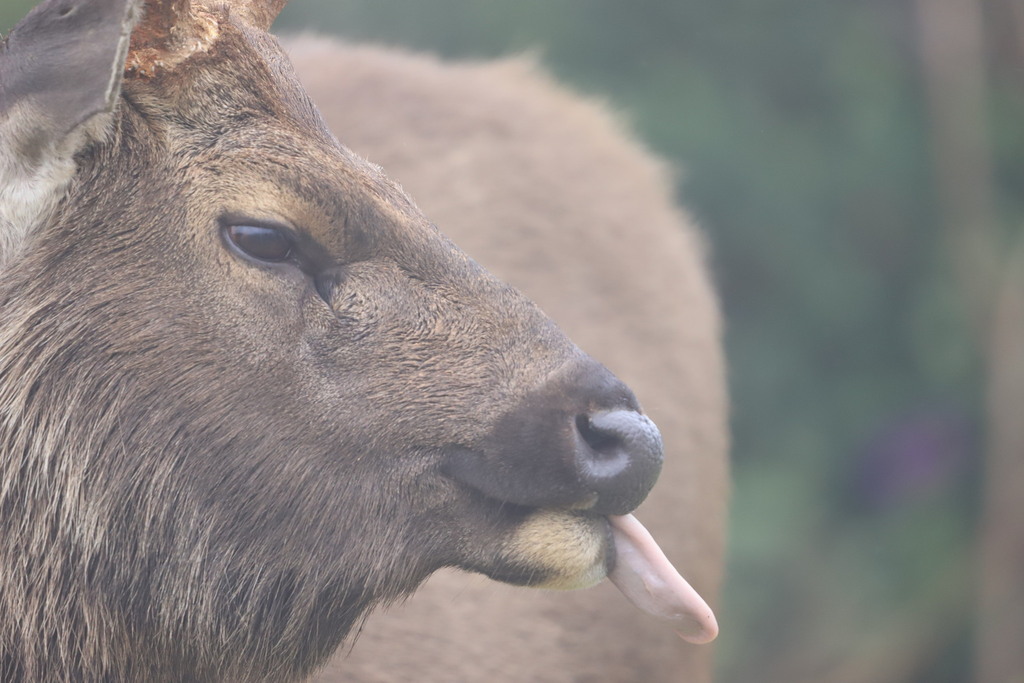
(c) spacegecko, some rights reserved (CC BY) · licence
Family: Cervidae · Class: Mammalia · Order: Artiodactyla
Rusa unicolor (Sambar Deer) is a California animal in the Cervidae family.
The Sambar deer (Rusa unicolor) is a large cervid native to South and Southeast Asia that has established non-native populations in California. Adults stand 102 to 160 cm (40 to 63 inches) at the shoulder and weigh 100 to 350 kg (220 to 770 pounds), making them one of the largest deer species. Males are significantly larger than females and possess distinctive three-tined antlers that can reach 110 cm (43 inches) in length. The coat is typically dark brown to grayish-brown with a coarse texture, and both sexes have a distinctive yellowish-brown rump patch. Males develop a prominent mane of longer hair around the neck during breeding season. In California, Sambar deer populations are primarily restricted to private hunting preserves and exotic game ranches, with documented populations in Monterey, San Luis Obispo, and Kern counties. The species is not native to North America and all California populations originate from introduced animals. Wild populations may exist on some large private properties, but the extent of free-ranging populations remains unclear due to limited monitoring of non-native ungulates. Sambar deer inhabit forested and woodland environments, preferring areas with dense vegetation cover near water sources. In their native range, they occupy tropical and subtropical forests from sea level to elevations of 3,500 meters (11,480 feet). California populations are typically maintained in oak woodland and chaparral habitats that provide adequate cover and browse. The species requires access to permanent water sources and areas with sufficient vegetation density for daytime resting. Sambar deer are primarily crepuscular and nocturnal, becoming most active during dawn and dusk hours. They are predominantly browsers, feeding on leaves, shoots, bark, and fruits of various woody plants. In California's mediterranean climate, they adapt their feeding behavior seasonally, consuming fresh growth during spring and switching to more woody browse during dry summer months. Breeding occurs year-round in tropical climates, but California populations may show seasonal breeding patterns. Gestation lasts approximately 240 to 270 days, with females typically producing a single spotted fawn. As a non-native species in California, Sambar deer are not protected under state or federal endangered species legislation. The California Department of Fish and Wildlife classifies them as an exotic species subject to specific importation and possession regulations. Their presence raises ecological concerns due to potential competition with native deer species and habitat modification through browsing pressure. Some populations may have escaped captivity and established feral populations, though comprehensive surveys of their distribution and abundance in California are limited. Management focus centers on preventing further escapes and monitoring potential impacts on native ecosystems rather than conservation of the species itself.
Classification
Class: Mammalia · Order: Artiodactyla · Family: Cervidae
Frequently asked questions
How is Rusa unicolor classified?
Rusa unicolor belongs to class Mammalia, order Artiodactyla, family Cervidae.
What family does Rusa unicolor belong to?
Rusa unicolor is in the Cervidae family.
What is Rusa unicolor?
The Sambar deer (Rusa unicolor) is a large cervid native to South and Southeast Asia that has established non-native populations in California.
Is Rusa unicolor found in California?
Yes. Rusa unicolor is recorded in California in The California Species Project's catalogue.
Related species
Other California species in the same genus, family, or bioregion.
Data from The California Species Project — 14,000+ California species with verified data from CNPS, CDFW, USFWS, and more.