Sabulodes aegrotata
Omnivorous Looper
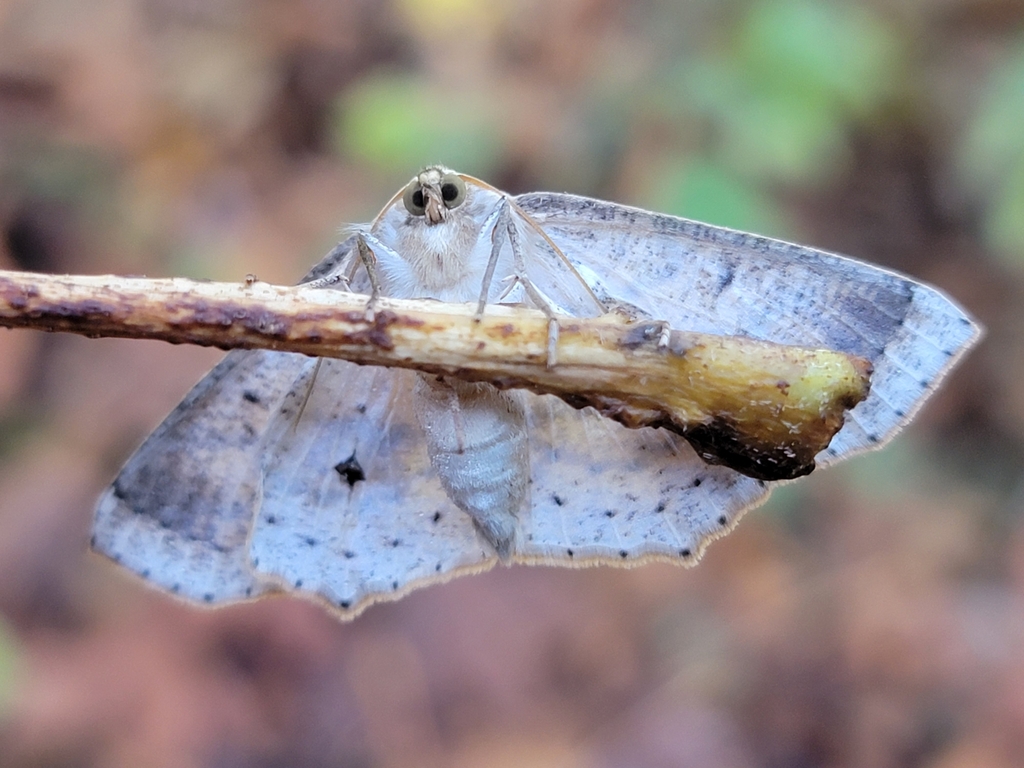
(c) DeeF, some rights reserved (CC BY) · licence
Family: Geometridae · Class: Insecta · Order: Lepidoptera
Sabulodes aegrotata (Omnivorous Looper) is a California animal in the Geometridae family.
The Omnivorous Looper (Sabulodes aegrotata) is a medium-sized moth in the family Geometridae, commonly known as inchworms or geometrid moths. Adults typically measure 25 to 35 mm (1.0 to 1.4 inches) in wingspan. The forewings are pale gray to brownish-gray with subtle darker crosslines and small discal spots. The hindwings are similarly colored but generally paler, with less distinct markings. Like other geometrids, the antennae are thread-like in females and may be slightly feathered in males. At rest, the wings are held horizontally, giving the moth a triangular silhouette. This species occurs across much of western North America, with populations documented from British Columbia south through California and eastward into the Rocky Mountain region. In California, Sabulodes aegrotata has been recorded from various counties including those in the Central Valley, coastal ranges, and Sierra Nevada foothills. The species appears to have a broad elevational tolerance, occurring from near sea level to moderate mountain elevations. Omnivorous Loopers inhabit diverse habitats including mixed woodlands, chaparral, riparian zones, and suburban areas with suitable vegetation. The larvae are polyphagous, feeding on a wide variety of host plants across multiple plant families. Documented hosts include various shrubs and trees such as ceanothus, oak species, willow, elderberry, and numerous other deciduous and evergreen plants. This broad host plant range contributes to the species' adaptability to different habitat types. The species exhibits typical geometrid behavior and ecology. Larvae are characterized by their distinctive looping locomotion, lacking the full complement of prolegs found in most caterpillars. They move by extending the front portion of their body forward, then drawing the rear end up to form an arch or loop. Adults are primarily nocturnal and are attracted to artificial lights. The species appears to have multiple generations per year in favorable climates, with adults recorded flying from spring through fall. Larvae pupate in the soil or leaf litter, emerging as adults after several weeks. Sabulodes aegrotata does not currently hold any federal or state conservation listing status. The species appears to maintain stable populations across its range, likely due to its broad host plant preferences and habitat adaptability. Urban development and habitat fragmentation may pose localized threats in some areas, but the moth's ability to utilize diverse plant species and adapt to modified environments suggests overall population resilience. As with many moth species, light pollution may affect adult behavior and reproduction patterns, though specific impacts on this species have not been extensively studied. The Omnivorous Looper represents a relatively common and widespread member of California's geometrid fauna, contributing to the state's rich lepidopteran diversity.
Classification
Class: Insecta · Order: Lepidoptera · Family: Geometridae
Frequently asked questions
How is Sabulodes aegrotata classified?
Sabulodes aegrotata belongs to class Insecta, order Lepidoptera, family Geometridae.
What family does Sabulodes aegrotata belong to?
Sabulodes aegrotata is in the Geometridae family.
What is Sabulodes aegrotata?
The Omnivorous Looper (Sabulodes aegrotata) is a medium-sized moth in the family Geometridae, commonly known as inchworms or geometrid moths.
Is Sabulodes aegrotata found in California?
Yes. Sabulodes aegrotata is recorded in California in The California Species Project's catalogue.
Related species
Other California species in the same genus, family, or bioregion.
Data from The California Species Project — 14,000+ California species with verified data from CNPS, CDFW, USFWS, and more.