Sabulodes edwardsata
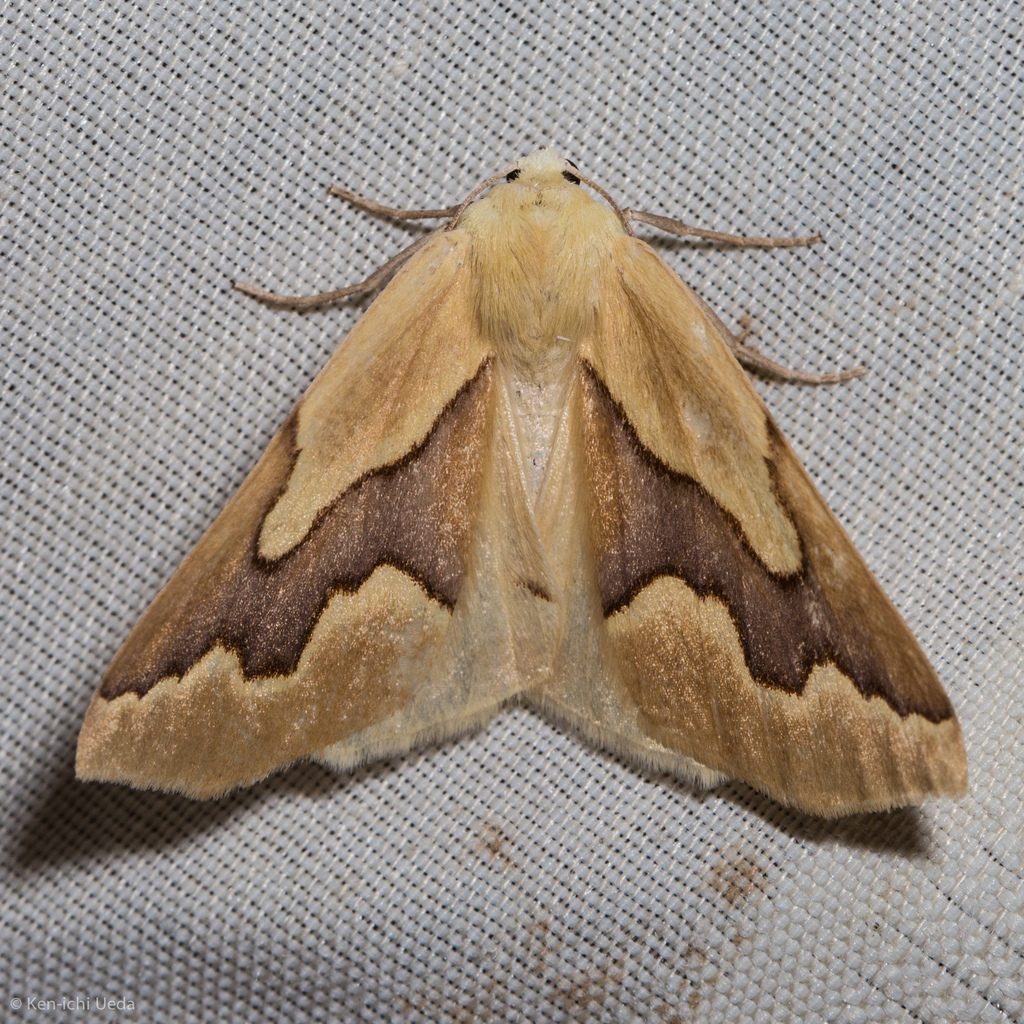
(c) Ken-ichi Ueda, some rights reserved (CC BY) · licence
Family: Geometridae · Class: Insecta · Order: Lepidoptera
Sabulodes edwardsata is a California animal in the Geometridae family.
Sabulodes edwardsata is a moth species belonging to the family Geometridae, commonly known as geometrid moths or inchworm moths. This species is part of the genus Sabulodes, which contains several North American species characterized by their distinctive wing patterns and caterpillar behavior. Adult Sabulodes edwardsata moths typically display the characteristic features of geometrid moths, with broad wings held horizontally when at rest. The forewings and hindwings exhibit cryptic coloration patterns that provide camouflage against bark and lichen-covered surfaces. Like other members of the Geometridae family, these moths have relatively slender bodies compared to their wingspan. Sexual dimorphism may be present, with males often displaying more feathered or elaborate antennae used for detecting female pheromones. The range and distribution of Sabulodes edwardsata appears to be limited within North America, though specific geographic boundaries require further documentation. Many geometrid species have restricted ranges due to their dependence on specific host plants and habitat requirements. The species likely occurs in areas where suitable host vegetation and appropriate microclimatic conditions converge. Habitat preferences for this species are closely tied to the distribution of its larval host plants. Geometrid moths typically inhabit forested areas, woodland edges, and shrublands where their caterpillars can access appropriate food sources. The larvae, known as inchworms or loopers, are characterized by their distinctive method of locomotion, arching their bodies as they move due to having fewer prolegs than other caterpillars. The life cycle follows the typical lepidopteran pattern of complete metamorphosis. Females deposit eggs on or near host plants, where larvae develop through several instars before pupating. The timing of emergence and reproduction is often synchronized with host plant phenology and favorable environmental conditions. Adult moths are likely nocturnal or crepuscular, active during evening hours when they engage in mating behaviors and feeding on nectar sources. Conservation status information for Sabulodes edwardsata is currently limited, with no federal or state listing designations documented. The species' conservation needs may be related to habitat preservation, particularly the maintenance of native plant communities that serve as larval host plants. Many geometrid moths face threats from habitat fragmentation, introduced plant species that may not serve as suitable hosts, and climate change effects on plant-insect synchronization. Further research is needed to fully document the ecology, distribution, and conservation status of this species. Comprehensive surveys and taxonomic studies would help clarify its range, host plant relationships, and any potential conservation concerns. The species represents part of the broader diversity of geometrid moths in North America, a group that plays important ecological roles as both herbivores in their larval stage and pollinators as adults.
Classification
Class: Insecta · Order: Lepidoptera · Family: Geometridae
Frequently asked questions
How is Sabulodes edwardsata classified?
Sabulodes edwardsata belongs to class Insecta, order Lepidoptera, family Geometridae.
What family does Sabulodes edwardsata belong to?
Sabulodes edwardsata is in the Geometridae family.
What is Sabulodes edwardsata?
Sabulodes edwardsata is a moth species belonging to the family Geometridae, commonly known as geometrid moths or inchworm moths.
Is Sabulodes edwardsata found in California?
Yes. Sabulodes edwardsata is recorded in California in The California Species Project's catalogue.
Related species
Other California species in the same genus, family, or bioregion.
Data from The California Species Project — 14,000+ California species with verified data from CNPS, CDFW, USFWS, and more.