Sabulodes spoliata
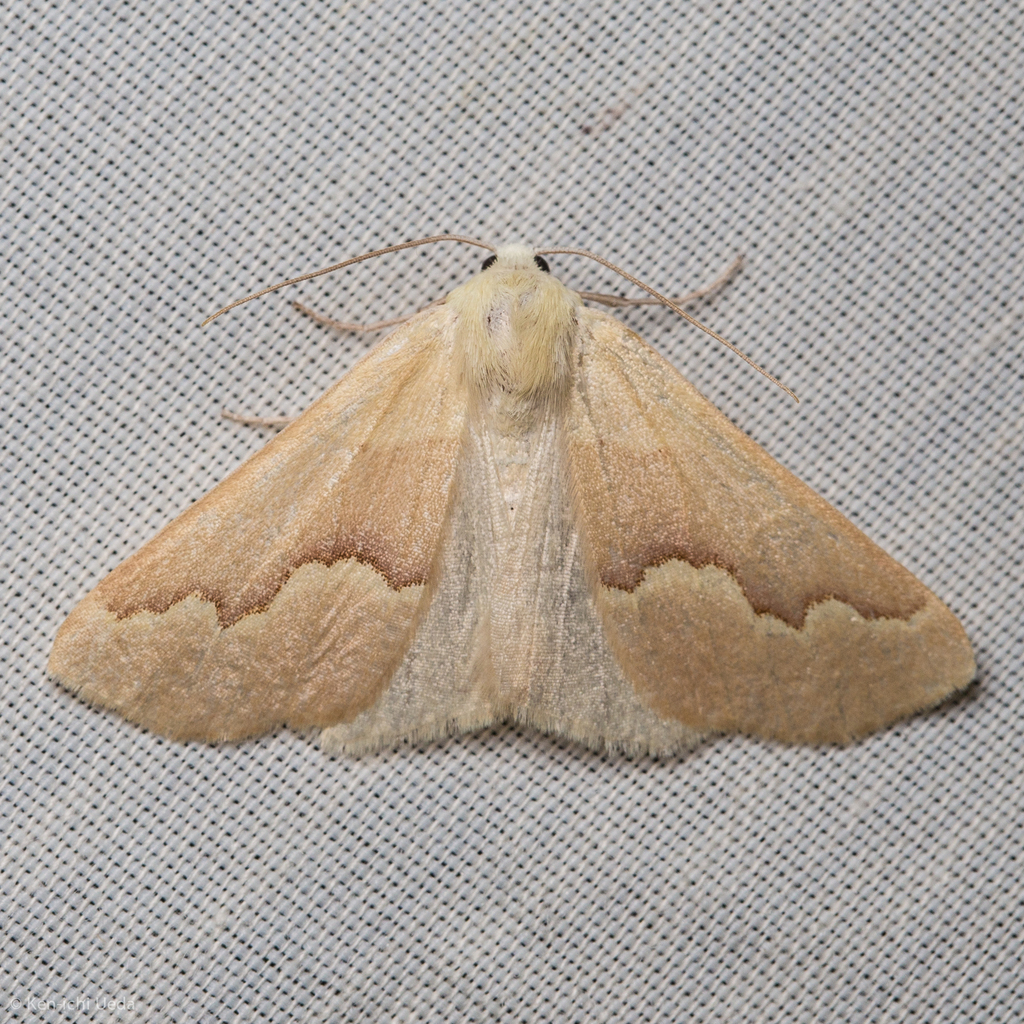
(c) Ken-ichi Ueda, some rights reserved (CC BY) · licence
Family: Geometridae · Class: Insecta · Order: Lepidoptera
Sabulodes spoliata is a California animal in the Geometridae family.
Sabulodes spoliata is a geometrid moth belonging to the subfamily Ennominae within the family Geometridae. This species represents one of the numerous geometer moths found in western North America, characterized by the typical slender body and broad wings that distinguish this family from other Lepidoptera. Adult moths display the characteristic wing patterns typical of the genus Sabulodes, with forewings that are generally pale gray to brownish in coloration. The wings feature subtle darker markings and cross-lines that provide camouflage against bark and lichen substrates. Like other geometrids, the wingspan typically ranges from 25 to 35 millimeters (1.0 to 1.4 inches). The antennae are filiform in both sexes, and the body maintains the slender profile characteristic of the Geometridae family. The species occurs in western North America, with documented populations in California and adjacent regions. The precise range limits require further survey work, as many geometrid species have localized distributions that may not be fully documented. Within California, the species likely occurs in multiple bioregions, though specific county records and elevational ranges need verification through systematic surveys. Sabulodes spoliata inhabits areas with suitable host vegetation, likely favoring habitats that support shrubland and woodland plant communities. Many Sabulodes species are associated with shrubs in the families Rosaceae, Ericaceae, or other woody plant families. The species probably occurs across a range of elevations, from foothill zones to montane areas, depending on the distribution of appropriate host plants and suitable microclimate conditions. Like other geometrid moths, Sabulodes spoliata undergoes complete metamorphosis with egg, larval, pupal, and adult stages. The larvae are typical geometrid caterpillars, commonly called inchworms or loopers due to their distinctive locomotion method of arching their bodies. Larvae likely feed on the foliage of specific host plants during spring and early summer months. Adults emerge during the warmer months, typically from late spring through early fall, when they engage in mating and egg-laying activities. Flight periods may vary with elevation and local climate conditions. The species exhibits nocturnal habits typical of most geometrid moths, with adults attracted to artificial lights during evening hours. Mating likely occurs during nighttime hours, with females depositing eggs on or near host plant foliage. Winter survival probably occurs in the pupal stage, with pupae located in soil or leaf litter beneath host plants. The conservation status of Sabulodes spoliata has not been formally assessed, and the species lacks federal or state protection status. Like many invertebrate species, population trends and specific conservation needs remain largely unknown due to limited systematic monitoring. Potential threats may include habitat loss from development, altered fire regimes, climate change impacts on host plant communities, and pesticide applications in areas where the species occurs. Further research is needed to determine population status, ecological requirements, and conservation priorities for this species.
Classification
Class: Insecta · Order: Lepidoptera · Family: Geometridae
Frequently asked questions
How is Sabulodes spoliata classified?
Sabulodes spoliata belongs to class Insecta, order Lepidoptera, family Geometridae.
What family does Sabulodes spoliata belong to?
Sabulodes spoliata is in the Geometridae family.
What is Sabulodes spoliata?
Sabulodes spoliata is a geometrid moth belonging to the subfamily Ennominae within the family Geometridae.
Is Sabulodes spoliata found in California?
Yes. Sabulodes spoliata is recorded in California in The California Species Project's catalogue.
Related species
Other California species in the same genus, family, or bioregion.
Data from The California Species Project — 14,000+ California species with verified data from CNPS, CDFW, USFWS, and more.