Salmo trutta
Brown trout
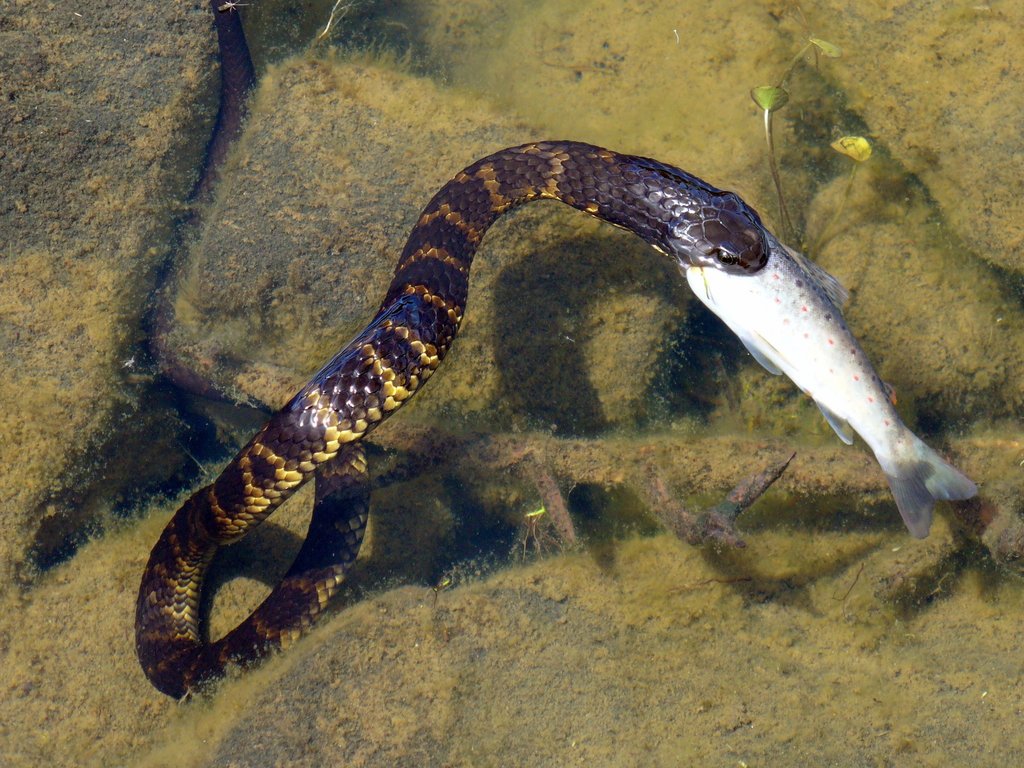
(c) Bruce Deagle, some rights reserved (CC BY) · licence
Family: Salmonidae · Class: Actinopterygii · Order: Salmoniformes
Salmo trutta (Brown trout) is a California animal in the Salmonidae family.
The brown trout is a medium to large salmonid native to Europe and western Asia but widely introduced throughout North America, including California. Adults typically measure 200 to 500 mm (8 to 20 inches) in length and weigh 0.5 to 2 kg (1 to 4 pounds), though individuals can exceed 10 kg (22 pounds) in optimal conditions. The body is elongated and laterally compressed with a slightly forked tail. Coloration varies considerably but generally features a brown to olive-green dorsal surface with yellowish sides marked by distinct black and red spots surrounded by pale halos. The spots extend onto the dorsal and adipose fins. Sea-run populations, known as sea trout, develop a silvery coloration similar to Atlantic salmon. Brown trout were first introduced to California in the 1890s and are now established in suitable coldwater habitats throughout the state. Populations occur in the Sierra Nevada, Cascade Range, Coast Ranges, and southern California mountains. The species inhabits streams, rivers, and lakes from sea level to elevations exceeding 3,000 meters (10,000 feet). Self-sustaining populations are found in systems including the Kern River, McCloud River, Hat Creek, Fall River, and numerous high-elevation lakes in the Sierra Nevada. The species requires cold, well-oxygenated water with temperatures typically below 21°C (70°F) for optimal survival. Brown trout prefer areas with gravel or rocky substrates, undercut banks, overhanging vegetation, and diverse pool-riffle sequences that provide cover and feeding opportunities. Adults are more tolerant of warmer water and lower oxygen levels than other trout species, allowing them to persist in marginal habitats where rainbow trout and native species cannot survive. Brown trout are opportunistic predators that feed on aquatic and terrestrial insects, crustaceans, fish, and occasionally small mammals and amphibians. Larger individuals become increasingly piscivorous, preying on smaller trout, sculpins, and other fish species. Spawning occurs from October through February in gravel beds called redds, typically in tributary streams or lake inlets. Females excavate nests in gravel substrates and deposit 200 to 5,000 eggs depending on body size. Eggs incubate for 100 to 200 days depending on water temperature, with fry emerging in spring. As a non-native species in California, brown trout are not protected under state or federal endangered species legislation. The species is classified as naturalized and is managed as a sport fish by the California Department of Fish and Wildlife. Brown trout populations are generally stable throughout their introduced range in California, supported by both natural reproduction and ongoing stocking programs. However, their presence raises conservation concerns as they may compete with and prey upon native fish species, including threatened and endangered salmonids. Research indicates that brown trout can negatively impact native rainbow trout populations through competition for resources and habitat displacement. Management strategies in some watersheds focus on protecting native species by limiting brown trout distribution or reducing their abundance in sensitive areas.
Classification
Class: Actinopterygii · Order: Salmoniformes · Family: Salmonidae
Frequently asked questions
How is Salmo trutta classified?
Salmo trutta belongs to class Actinopterygii, order Salmoniformes, family Salmonidae.
What family does Salmo trutta belong to?
Salmo trutta is in the Salmonidae family.
What is Salmo trutta?
The brown trout is a medium to large salmonid native to Europe and western Asia but widely introduced throughout North America, including California.
Is Salmo trutta found in California?
Yes. Salmo trutta is recorded in California in The California Species Project's catalogue.
Related species
Other California species in the same genus, family, or bioregion.
Data from The California Species Project — 14,000+ California species with verified data from CNPS, CDFW, USFWS, and more.