Salvelinus confluentus
Bull trout
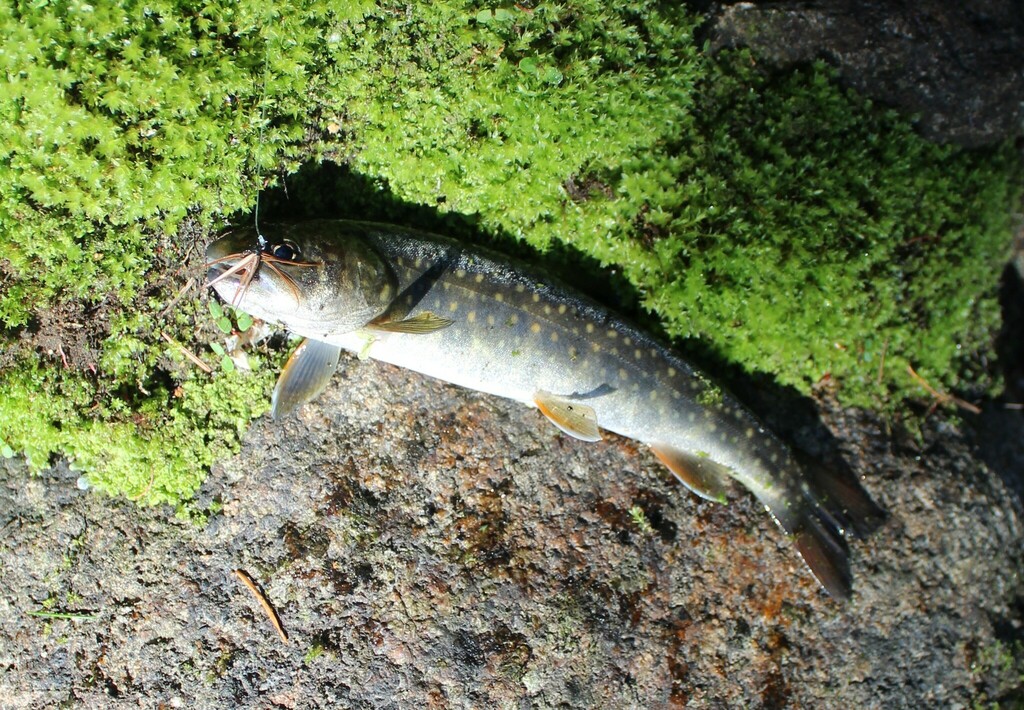
(c) 66dodge, some rights reserved (CC BY) · licence
Family: Salmonidae · Class: Actinopterygii · Order: Salmoniformes
Conservation status: SE · Threatened
Salvelinus confluentus (Bull trout) is a California animal in the Salmonidae family.
The bull trout is a large char species native to cold-water systems throughout the northwestern United States and western Canada. Adults typically measure 35 to 60 centimeters (14 to 24 inches) in length, though some populations produce individuals exceeding 70 centimeters (28 inches) and weighing over 9 kilograms (20 pounds). The species displays olive-green to gray coloration on the dorsal surface with lighter sides marked by pale yellow, orange, or red spots. The belly is typically white to pale yellow. Bull trout lack the black spots characteristic of brook trout and can be distinguished from other salmonids by their large head, wide mouth extending past the eye, and white leading edges on all fins except the dorsal and caudal fins. Historically, bull trout occurred throughout cold-water habitats in Montana, Idaho, Washington, Oregon, and likely northern California. The species inhabited the Columbia River basin, Puget Sound tributaries, and coastal drainages from northern California to Alaska. According to the California Department of Fish and Wildlife, bull trout are considered extirpated in California. Current populations persist in portions of Montana, Idaho, Washington, and Oregon, representing a significant reduction from the species' historical range. Bull trout require cold, clean water with temperatures typically below 15 degrees Celsius (59 degrees Fahrenheit). The species inhabits a variety of freshwater systems including high mountain lakes, large river mainstems, and smaller tributary streams. Spawning occurs in tributaries with gravel substrates, spring influence, and temperatures below 9 degrees Celsius (48 degrees Fahrenheit). Juvenile bull trout utilize shallow areas with complex cover such as undercut banks, large woody debris, and boulder fields. Bull trout exhibit complex life histories with multiple forms including resident populations that complete their entire life cycle in tributary streams, fluvial populations that migrate between tributaries and larger river systems, and adfluvial populations that rear in lakes but spawn in tributaries. The species is piscivorous as adults, feeding primarily on other fish species including sculpins, mountain whitefish, and juvenile salmonids. Spawning occurs from August through November, with females constructing redds in gravel substrates. Females deposit 1,000 to 5,000 eggs depending on body size, with incubation lasting 100 to 145 days. The U.S. Fish and Wildlife Service listed bull trout as threatened under the Endangered Species Act in 1998, subsequently expanded in 1999. The federal listing covers the coterminous United States, though the species remains more stable in portions of Canada and Alaska. Primary threats include habitat degradation from land use practices, water diversions, non-native species competition and predation, climate change effects on water temperature, and habitat fragmentation from dams and other barriers. Brook trout introduction has resulted in hybridization and competition throughout much of the bull trout's range. Recovery efforts focus on habitat restoration, non-native species removal, and barrier modification to restore connectivity between spawning and rearing areas.
Classification
Class: Actinopterygii · Order: Salmoniformes · Family: Salmonidae
Conservation status
SE · Threatened
Frequently asked questions
How is Salvelinus confluentus classified?
Salvelinus confluentus belongs to class Actinopterygii, order Salmoniformes, family Salmonidae.
What family does Salvelinus confluentus belong to?
Salvelinus confluentus is in the Salmonidae family.
Is Salvelinus confluentus protected or of conservation concern?
Salvelinus confluentus carries the following status: SE · Threatened.
What is Salvelinus confluentus?
The bull trout is a large char species native to cold-water systems throughout the northwestern United States and western Canada.
Is Salvelinus confluentus found in California?
Yes. Salvelinus confluentus is recorded in California in The California Species Project's catalogue.
Related species
Other California species in the same genus, family, or bioregion.
Data from The California Species Project — 14,000+ California species with verified data from CNPS, CDFW, USFWS, and more.