Saturnia walterorum
Walters' saturnia moth
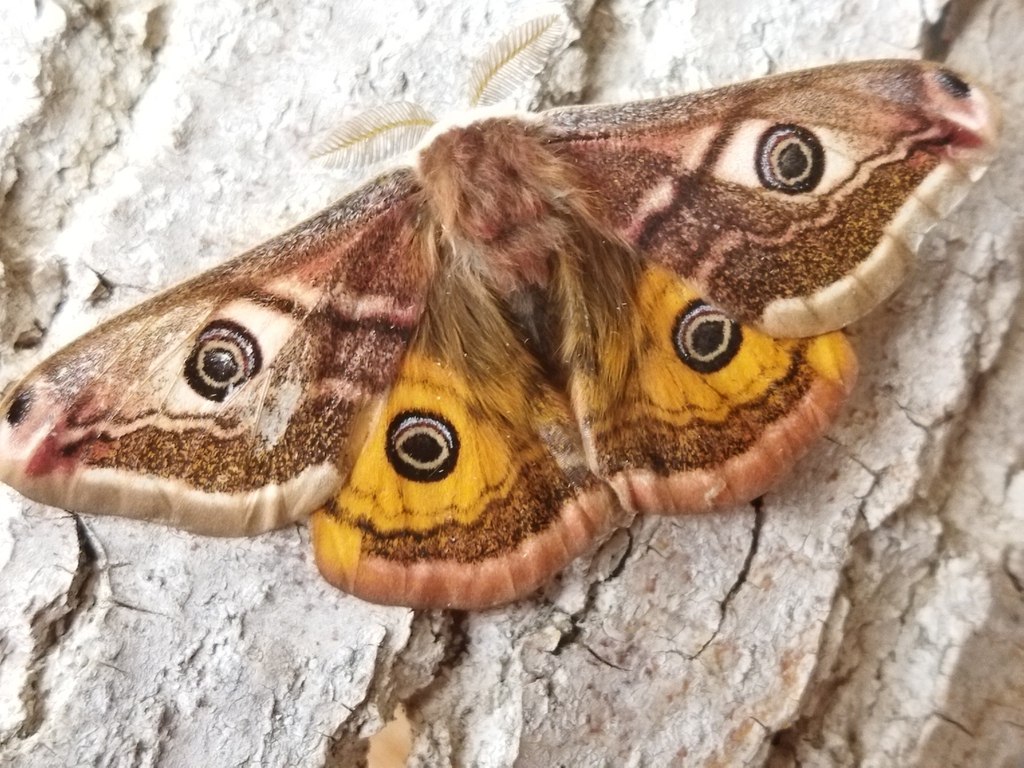
(c) SteveM4560, some rights reserved (CC BY) · licence
Family: Saturniidae · Class: Insecta · Order: Lepidoptera
Saturnia walterorum (Walters' saturnia moth) is a California animal in the Saturniidae family.
Walters' saturnia moth (Saturnia walterorum) is a large silkmoth in the family Saturniidae, also known as Walter's silkmoth. The species was described by Hogue and Johnson in 1958 and represents one of the less common saturniid moths of southern California. Adults are substantial in size, typical of the Saturniidae family, with broad wings and robust bodies characteristic of giant silkmoths. The species has a limited range, occurring in southern California south to Rosarito in Baja California, Mexico. This narrow coastal distribution makes it particularly vulnerable to habitat loss and development pressures. According to NatureServe, the species has a global rank of G3, indicating vulnerability due to loss of coastal populations in southern California and its small regional range (NatureServe Explorer). The species is found primarily in coastal sage scrub and chaparral habitats of the immediate coastal zone and inland valleys. Walters' saturnia moth larvae feed on native shrubs including manzanita (Arctostaphylos species), laurel-leaf sumac (Rhus laurina), and lemonade-berry (Rhus integrifolia), with additional host plants likely utilized. These host plants are characteristic of southern California's coastal sage scrub and chaparral plant communities. The larvae develop through several instars before pupating, following the typical saturniid life cycle pattern. Like other saturniid moths, adults are short-lived and do not feed, relying entirely on energy reserves accumulated during the larval stage. The species likely has one generation per year, with adults emerging during warmer months to mate and lay eggs. Females deposit eggs on or near host plants, where larvae will develop through multiple molts before pupating in cocoons. The timing of adult emergence and larval development is synchronized with host plant phenology and favorable weather conditions. The conservation status of Walters' saturnia moth reflects the broader challenges facing coastal California's native ecosystems. Butterflies and Moths of North America notes that United States populations should be inventoried and monitored (BAMONA). The species' coastal distribution overlaps with areas of intense urban development, habitat fragmentation, and exotic plant invasion. Loss of native host plants due to development and altered fire regimes poses ongoing threats. The species' apparent rarity in collections and limited recent observations suggest population declines, though systematic surveys are needed to assess current status. Climate change may additionally impact this species through altered precipitation patterns and increased fire frequency in its limited range. Scientific documentation for this species remains limited compared to more common moths. The information presented here is based on available sources including museum records, NatureServe data, and citizen science observations. If you have additional verified information about this species' biology, distribution, or ecology, please contact us to help improve this species account.
Classification
Class: Insecta · Order: Lepidoptera · Family: Saturniidae
Frequently asked questions
How is Saturnia walterorum classified?
Saturnia walterorum belongs to class Insecta, order Lepidoptera, family Saturniidae.
What family does Saturnia walterorum belong to?
Saturnia walterorum is in the Saturniidae family.
What is Saturnia walterorum?
Walters' saturnia moth (Saturnia walterorum) is a large silkmoth in the family Saturniidae, also known as Walter's silkmoth.
Is Saturnia walterorum found in California?
Yes. Saturnia walterorum is recorded in California in The California Species Project's catalogue.
Related species
Other California species in the same genus, family, or bioregion.
Data from The California Species Project — 14,000+ California species with verified data from CNPS, CDFW, USFWS, and more.