Satyrium californica
California Hairstreak
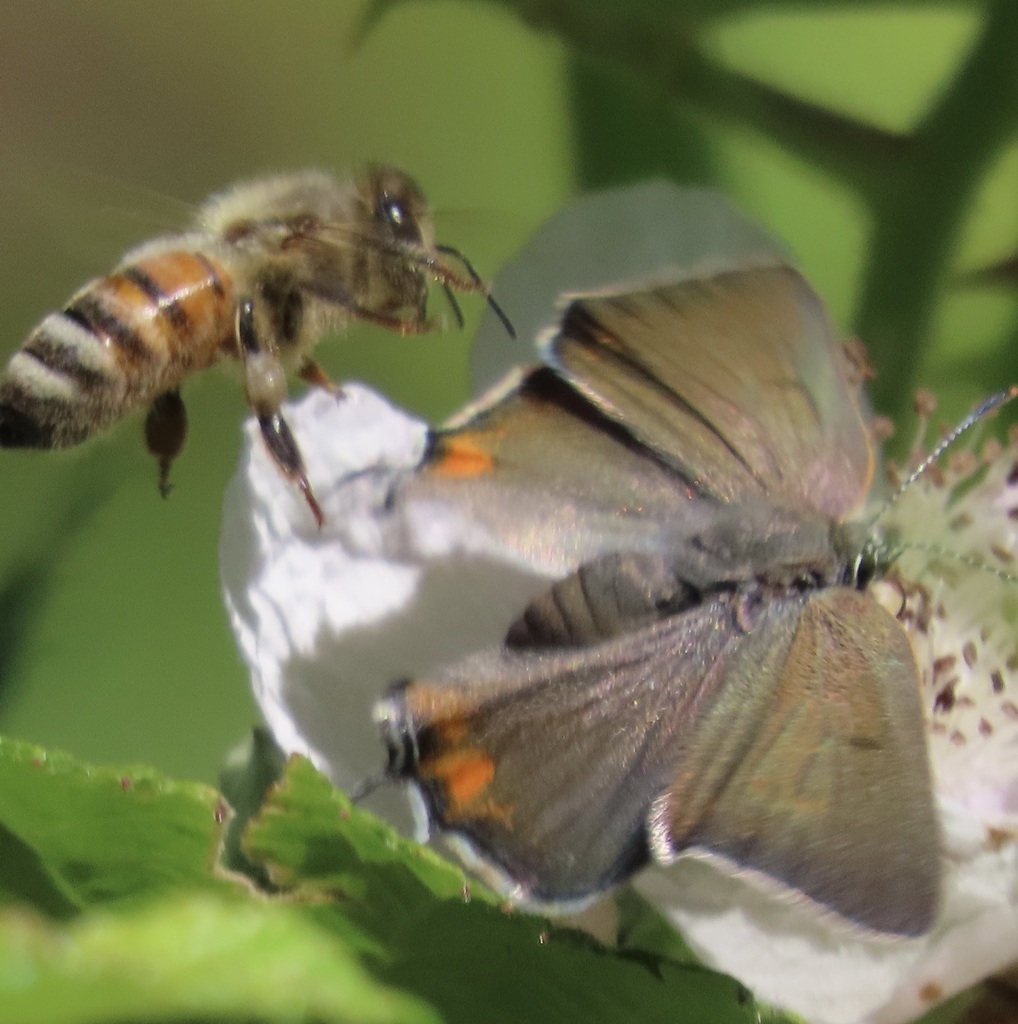
(c) John Hibbard, some rights reserved (CC BY) · licence
Family: Lycaenidae · Class: Insecta · Order: Lepidoptera
Satyrium californica (California Hairstreak) is a California animal in the Lycaenidae family.
The California Hairstreak is a small butterfly in the family Lycaenidae, with adults measuring 22 to 30 mm (0.9 to 1.2 inches) in wingspan. The dorsal wing surfaces are typically brown to gray-brown, while the ventral surfaces display a distinctive pattern of orange and white bands bordered by thin black lines. Males possess small, oval scent patches on the forewings. The hindwings feature characteristic hairstreak tails, typically one to two thin projections that may help confuse predators. This species ranges from British Columbia south to southern California and east to Colorado, representing one of the more widespread hairstreaks in western North America. In California, populations occur throughout much of the state, from the coastal ranges to the Sierra Nevada, typically at elevations from sea level to approximately 2,400 meters (7,900 feet). The species is documented from numerous counties including those in the Coast Ranges, Central Valley foothills, and montane regions. California Hairstreaks inhabit diverse woodland and shrubland communities where their host plants occur. Primary habitat types include oak woodlands, chaparral, riparian zones, and mixed coniferous forests. Adults are commonly observed in areas with scattered trees and shrubs that provide both larval host plants and adult nectar sources. The species demonstrates considerable habitat flexibility, adapting to elevations ranging from coastal scrub to montane forest environments. Adults are primarily active during late spring through early summer, typically flying from May through July depending on elevation and local climate conditions. Males establish territories on hilltops and ridge lines, engaging in perching behavior to locate potential mates. Females deposit eggs singly on host plant foliage, with larvae developing through four instars before pupating. The species utilizes multiple host plant genera including Amelanchier alnifolia and Prunus virginiana, as well as Cercocarpus, Ceanothus, Quercus, and Salix species. This broad host plant range contributes to the species' ecological success across varied habitats. Larvae feed on leaves and may be tended by ants in typical lycaenid fashion, though this mutualistic relationship varies by population. Adults nectar on various flowering plants including buckwheat, ceanothus, and composite flowers. Flight patterns are typically rapid and erratic, with individuals rarely straying far from host plant areas. Males may engage in aerial interactions when defending territories or pursuing females. The California Hairstreak currently holds no special conservation status at federal or state levels, reflecting its relatively stable populations and broad distribution. The species benefits from its diverse host plant associations and habitat flexibility, allowing persistence across a wide range of environmental conditions. However, like many native butterflies, populations may face localized pressures from habitat fragmentation, urban development, and altered fire regimes in some regions. Climate change impacts on montane populations and shifts in host plant phenology represent potential long-term concerns, though comprehensive population monitoring data are limited.
Classification
Class: Insecta · Order: Lepidoptera · Family: Lycaenidae
Frequently asked questions
How is Satyrium californica classified?
Satyrium californica belongs to class Insecta, order Lepidoptera, family Lycaenidae.
What family does Satyrium californica belong to?
Satyrium californica is in the Lycaenidae family.
What is Satyrium californica?
The California Hairstreak is a small butterfly in the family Lycaenidae, with adults measuring 22 to 30 mm (0.9 to 1.2 inches) in wingspan.
Is Satyrium californica found in California?
Yes. Satyrium californica is recorded in California in The California Species Project's catalogue.
Related species
Other California species in the same genus, family, or bioregion.
Data from The California Species Project — 14,000+ California species with verified data from CNPS, CDFW, USFWS, and more.