Satyrium semiluna
Sagebrush Sooty Hairstreak
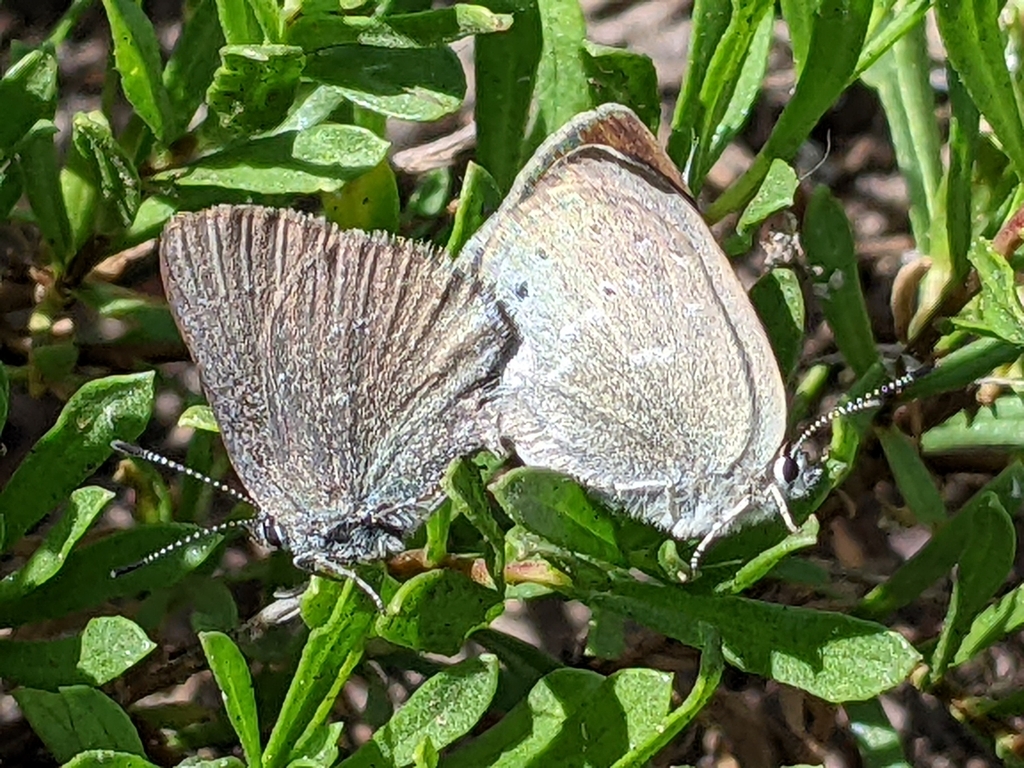
(c) David Anderson, some rights reserved (CC BY) · licence
Family: Lycaenidae · Class: Insecta · Order: Lepidoptera
Satyrium semiluna (Sagebrush Sooty Hairstreak) is a California animal in the Lycaenidae family.
The Sagebrush Sooty Hairstreak (Satyrium semiluna) is a small butterfly in the family Lycaenidae, characterized by its distinctive dark coloration and specialized habitat associations. Adults measure approximately 25-30 mm (1.0-1.2 inches) in wingspan. The dorsal wing surfaces are dark brown to nearly black with a subtle sooty appearance that gives the species its common name. The ventral wing surfaces display a more complex pattern of gray-brown with small white-bordered spots and thin orange crescents near the wing margins. Males typically exhibit a small scent patch on the forewings, and both sexes possess short tail-like projections on the hindwings characteristic of hairstreak butterflies. This species occurs in the western United States, with populations documented in California, Nevada, Oregon, and Utah. In California, the Sagebrush Sooty Hairstreak is found primarily in the eastern Sierra Nevada, Cascade Range, and northeastern regions of the state. The species inhabits areas between approximately 1,200 to 2,400 meters (4,000 to 8,000 feet) in elevation, though specific elevation records vary by location and local climate conditions. The Sagebrush Sooty Hairstreak is closely associated with sagebrush ecosystems, particularly areas dominated by big sagebrush (Artemisia tridentata) and other Artemisia species. Adults are typically found in open shrubland habitats, sage steppe, and montane sagebrush communities. The species shows a strong preference for areas with scattered sagebrush plants interspersed with open spaces, often near rocky outcrops or hillsides with southern exposure. Larvae feed exclusively on various sagebrush species, with big sagebrush serving as the primary host plant. Females deposit eggs singly on or near the host plant, typically in late summer. The species is univoltine, producing one generation per year. Adults emerge in mid to late summer, generally from July through August, depending on elevation and local weather conditions. Males establish territories near host plants and engage in territorial behavior, pursuing other males and potential mates. Adults feed on nectar from various wildflowers, including buckwheat species (Eriogonum), rabbitbrush (Ericameria), and other composite flowers found within their sagebrush habitat. The Sagebrush Sooty Hairstreak is not currently listed under the federal Endangered Species Act or California Endangered Species Act. However, like many sagebrush-dependent species, populations face potential threats from habitat loss and fragmentation due to agricultural conversion, urban development, and altered fire regimes. Climate change may also impact the species through shifts in precipitation patterns and temperature ranges that affect sagebrush ecosystem distribution. The species' specialized habitat requirements and apparent limited dispersal ability make it potentially vulnerable to landscape-level changes. Conservation of intact sagebrush ecosystems across the species' range remains important for maintaining stable populations of this specialized butterfly.
Classification
Class: Insecta · Order: Lepidoptera · Family: Lycaenidae
Frequently asked questions
How is Satyrium semiluna classified?
Satyrium semiluna belongs to class Insecta, order Lepidoptera, family Lycaenidae.
What family does Satyrium semiluna belong to?
Satyrium semiluna is in the Lycaenidae family.
What is Satyrium semiluna?
The Sagebrush Sooty Hairstreak (Satyrium semiluna) is a small butterfly in the family Lycaenidae, characterized by its distinctive dark coloration and specialized habitat associations.
Is Satyrium semiluna found in California?
Yes. Satyrium semiluna is recorded in California in The California Species Project's catalogue.
Related species
Other California species in the same genus, family, or bioregion.
Data from The California Species Project — 14,000+ California species with verified data from CNPS, CDFW, USFWS, and more.