Satyrium sylvinus
Sylvan Hairstreak
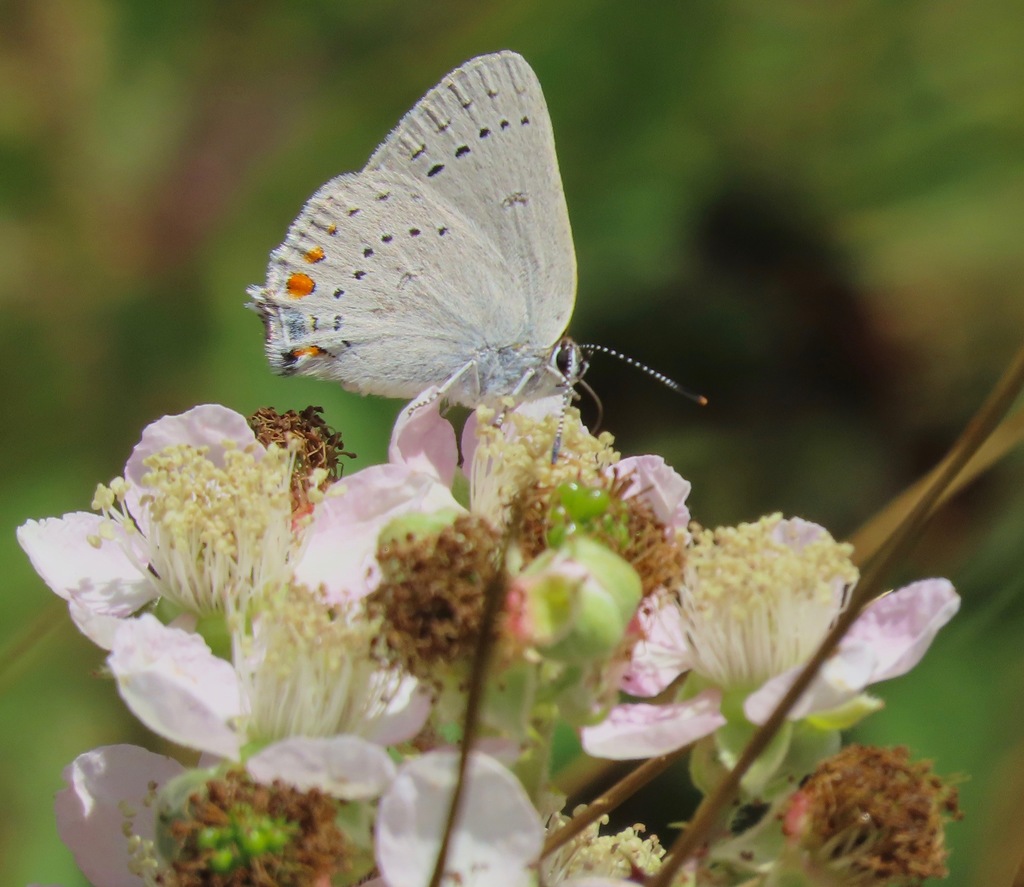
(c) John Hibbard, some rights reserved (CC BY) · licence
Family: Lycaenidae · Class: Insecta · Order: Lepidoptera
Satyrium sylvinus (Sylvan Hairstreak) is a California animal in the Lycaenidae family.
The Sylvan Hairstreak is a small butterfly in the family Lycaenidae, with adults measuring approximately 22 to 30 mm (0.9 to 1.2 inches) in wingspan. The dorsal wing surfaces are brownish-gray to dark brown, while the ventral surfaces display a lighter gray-brown coloration with distinctive white-edged orange spots along the hindwing margins. Males possess scent patches on their forewings and exhibit territorial behavior typical of hairstreak butterflies. The hindwings feature short tails characteristic of the genus Satyrium, along with small eyespots near the wing margins. The Sylvan Hairstreak ranges from British Columbia southeast to Wyoming, Colorado, and New Mexico, extending south through California to Baja California Norte in Mexico. Within California, the species occurs in mountainous regions and foothills throughout much of the state, from the Cascade Range and Sierra Nevada to coastal mountains and desert ranges. Populations are documented from elevations ranging from near sea level to approximately 2,500 meters (8,200 feet), depending on local habitat availability and willow distribution. This species inhabits riparian zones, mountain meadows, canyon bottoms, and other areas where willow species grow abundantly. Adults are typically found in close association with their host plants, particularly in areas with adequate moisture to support willow growth. The species shows preference for edge habitats where open areas meet willow thickets, providing both nectar sources and breeding sites. Suitable habitat includes streamside corridors, wet meadows, and springs in otherwise arid landscapes. Sylvan Hairstreak larvae feed exclusively on various willow species (Salix), with females laying eggs singly on willow twigs or leaf buds. The species is univoltine in most of its range, producing one generation per year. Adults typically emerge from late spring through midsummer, with peak flight periods varying by elevation and latitude. Males establish territories near host plants and patrol for receptive females. Adults nectar on various flowers including rabbitbrush, buckwheat, and other native plants growing near willow stands. Larvae overwinter as eggs on willow branches, hatching in spring to coincide with new leaf growth. The Sylvan Hairstreak currently lacks federal or state conservation listing status, though local populations may face pressure from habitat modification and water diversions that affect riparian willow communities. Urban development, agriculture, and water management practices can fragment or eliminate suitable habitat, particularly in lower elevation areas where human activities are concentrated. Climate change may alter the distribution and abundance of host willows, potentially affecting population dynamics. The species benefits from riparian habitat restoration and protection of watershed integrity. Maintenance of natural hydrological patterns supporting willow communities is essential for long-term population persistence. Fire management in riparian areas requires careful consideration to preserve willow stands while allowing for natural regeneration cycles.
Classification
Class: Insecta · Order: Lepidoptera · Family: Lycaenidae
Frequently asked questions
How is Satyrium sylvinus classified?
Satyrium sylvinus belongs to class Insecta, order Lepidoptera, family Lycaenidae.
What family does Satyrium sylvinus belong to?
Satyrium sylvinus is in the Lycaenidae family.
What is Satyrium sylvinus?
The Sylvan Hairstreak is a small butterfly in the family Lycaenidae, with adults measuring approximately 22 to 30 mm (0.9 to 1.2 inches) in wingspan.
Is Satyrium sylvinus found in California?
Yes. Satyrium sylvinus is recorded in California in The California Species Project's catalogue.
Related species
Other California species in the same genus, family, or bioregion.
Data from The California Species Project — 14,000+ California species with verified data from CNPS, CDFW, USFWS, and more.