Saucrobotys fumoferalis
Dusky Saucrobotys Moth
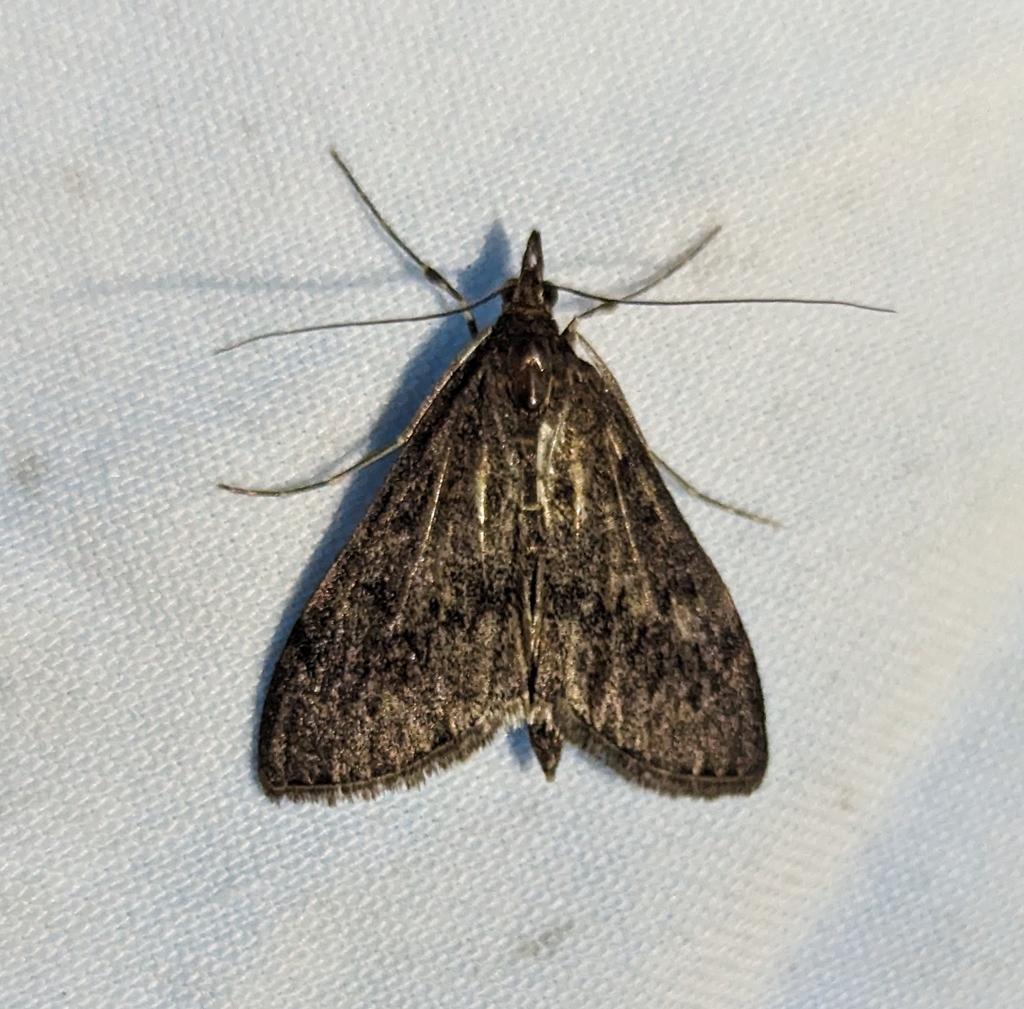
no rights reserved · CC0
Family: Crambidae · Class: Insecta · Order: Lepidoptera
Saucrobotys fumoferalis (Dusky Saucrobotys Moth) is a California animal in the Crambidae family.
The Dusky Saucrobotys Moth (Saucrobotys fumoferalis) is a small pyralid moth in the family Crambidae. This species exhibits the typical characteristics of the genus Saucrobotys, with forewings displaying dusky gray to brownish coloration that gives the species its common name (BugGuide 2024). Like other members of the family Crambidae, adults have narrow forewings and relatively broad hindwings with a wingspan typically ranging from 15-25 mm (BugGuide 2024). Saucrobotys fumoferalis occurs across western North America, with documented populations in California extending from the Sierra Nevada mountains to coastal regions. California records include multiple counties spanning diverse elevational zones. The species has been documented in Plumas County near Meadow Valley at 4,100 feet elevation, in the Sierra Nevada at locations west of Yuba Pass, and in San Joaquin County near Stockton (Lepidopterists' Society 1998-2009). Additional records exist from Fresno, Inyo, and other central California counties, indicating a broad distribution across the state's montane and foothill regions (Lepidopterists' Society 1998-2009). The habitat preferences of S. fumoferalis appear to encompass a variety of environments from montane meadows to lower elevation valleys. Documented collection sites range from approximately 200 feet elevation in valley locations to over 4,000 feet in mountain areas (Lepidopterists' Society 1998-2009). The species occurs in both natural and semi-disturbed habitats, suggesting some adaptability to human-modified landscapes. Flight records span from late spring through early summer, with documented activity from May through July based on California collection data (Lepidopterists' Society 1998-2009). Adult moths are active during warmer months, with peak flight periods varying by elevation and location. Lower elevation populations may emerge as early as April, while higher elevation sites show activity primarily in June and July (Lepidopterists' Society 1998-2009). The species appears to be univoltine (single-brooded) in most locations, though this has not been definitively established through detailed life history studies. Like other pyralid moths, larvae likely feed on herbaceous plants, though specific host plant relationships for S. fumoferalis have not been well documented in the scientific literature. Saucrobotys fumoferalis is not currently listed under federal or state endangered species acts and appears to maintain stable populations across its range. The species' broad distribution and presence in multiple habitat types suggest reasonable resilience to environmental changes. However, like many specialized insects, populations may face localized pressures from habitat modification, urban development, and climate change effects on montane ecosystems. Collection records from multiple decades indicate the species has persisted in California (Lepidopterists' Society 1998-2021), though detailed population monitoring data are not available. Additional research on host plant relationships, detailed life history, and population trends would enhance understanding of this species' conservation status and ecological requirements.
Classification
Class: Insecta · Order: Lepidoptera · Family: Crambidae
Frequently asked questions
How is Saucrobotys fumoferalis classified?
Saucrobotys fumoferalis belongs to class Insecta, order Lepidoptera, family Crambidae.
What family does Saucrobotys fumoferalis belong to?
Saucrobotys fumoferalis is in the Crambidae family.
What is Saucrobotys fumoferalis?
The Dusky Saucrobotys Moth (Saucrobotys fumoferalis) is a small pyralid moth in the family Crambidae.
Is Saucrobotys fumoferalis found in California?
Yes. Saucrobotys fumoferalis is recorded in California in The California Species Project's catalogue.
Related species
Other California species in the same genus, family, or bioregion.
Data from The California Species Project — 14,000+ California species with verified data from CNPS, CDFW, USFWS, and more.