Sauromalus ater
Common Chuckwalla
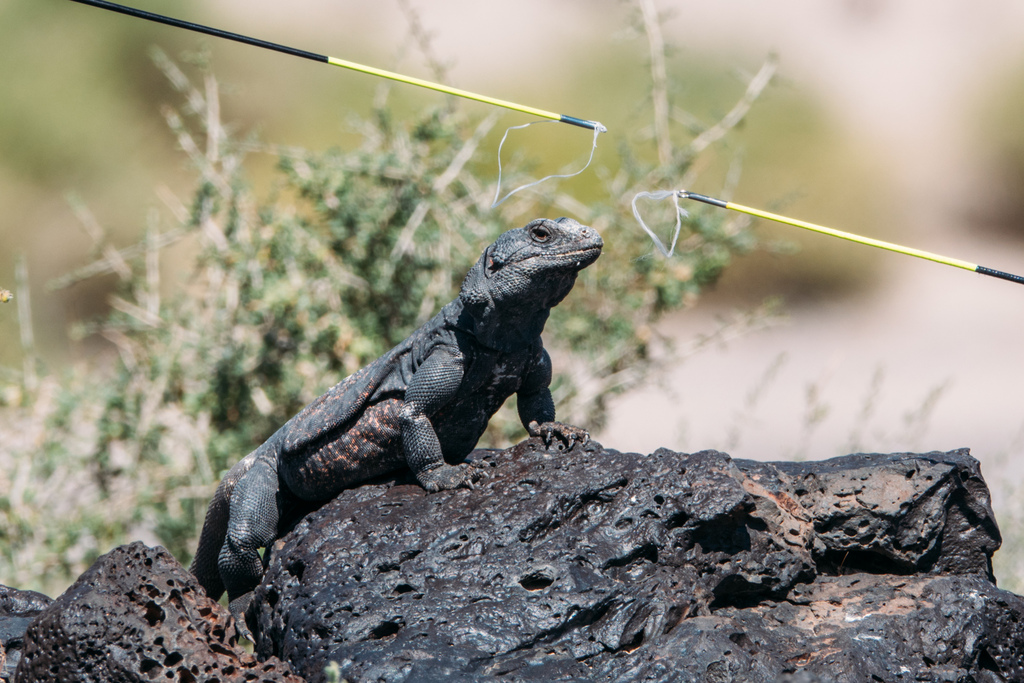
no rights reserved · CC0
Family: Iguanidae · Class: Reptilia · Order: Squamata
Sauromalus ater (Common Chuckwalla) is a California animal in the Iguanidae family.
The Common Chuckwalla (Sauromalus ater) is a large, robust lizard belonging to the iguana family. Adults typically measure 280 to 390 mm (11 to 15.4 inches) in total length, with males reaching larger sizes than females. Body weight ranges from 200 to 680 grams (7 to 24 ounces). The body is characterized by loose, baggy skin that appears oversized, particularly around the neck and flanks. Adult males display dark gray to black coloration on the head, neck, and forelimbs, while the body ranges from gray to brown with lighter banding. Females and juveniles are typically lighter brown with distinct crossbands of yellow, orange, or gray. The tail is thick at the base, tapering to a blunt tip, and comprises approximately 60% of the total body length. Common Chuckwallas occur throughout the Colorado and Mojave deserts of southeastern California, extending into Arizona, Nevada, Utah, and northwestern Mexico. In California, populations are found in Imperial, Riverside, and San Bernardino counties, with scattered records from Kern County. The species inhabits elevations from below sea level in the Salton Sink to approximately 1,370 meters (4,500 feet) in mountainous areas. This species is closely associated with rocky desert habitats, particularly areas with large boulders, rocky outcrops, and lava flows. Chuckwallas require rock crevices and cavities for shelter, thermoregulation, and protection from predators. They are commonly found in desert washes, alluvial fans, and rocky hillsides where paloverde, ironwood, and desert shrub vegetation provide food sources. The species shows strong site fidelity, often returning to the same rock crevices repeatedly. Common Chuckwallas are herbivorous, feeding primarily on desert vegetation including creosote bush, brittlebush, desert willow, and various annual forbs. During spring, when annual plants are abundant, flowers and young leaves comprise the majority of their diet. Adults are capable of consuming large quantities of vegetation, storing fat reserves for periods of food scarcity. The species exhibits marked seasonal activity patterns, becoming active in March or April and entering brumation by October or November, depending on local temperatures. Reproduction occurs in late spring and early summer. Females deposit clutches of 5 to 16 eggs in sandy or gravelly soil, typically in areas with southern exposure. Incubation periods range from 65 to 90 days. Sexual maturity is reached at 2 to 3 years of age. Chuckwallas are known for their defensive behavior of wedging themselves tightly into rock crevices and inflating their bodies with air to become difficult to extract. The Common Chuckwalla is not federally or state-listed and appears to maintain stable populations throughout most of its range. Primary threats include habitat degradation from off-road vehicle use, urban development, and collection for the pet trade, though these impacts are generally localized. Climate change may affect the species through altered precipitation patterns and increased temperatures, potentially impacting food plant availability.
Classification
Class: Reptilia · Order: Squamata · Family: Iguanidae
Frequently asked questions
How is Sauromalus ater classified?
Sauromalus ater belongs to class Reptilia, order Squamata, family Iguanidae.
What family does Sauromalus ater belong to?
Sauromalus ater is in the Iguanidae family.
What is Sauromalus ater?
The Common Chuckwalla (Sauromalus ater) is a large, robust lizard belonging to the iguana family.
Is Sauromalus ater found in California?
Yes. Sauromalus ater is recorded in California in The California Species Project's catalogue.
Related species
Other California species in the same genus, family, or bioregion.
Data from The California Species Project — 14,000+ California species with verified data from CNPS, CDFW, USFWS, and more.