Saxidomus nuttalli
California Butterclam
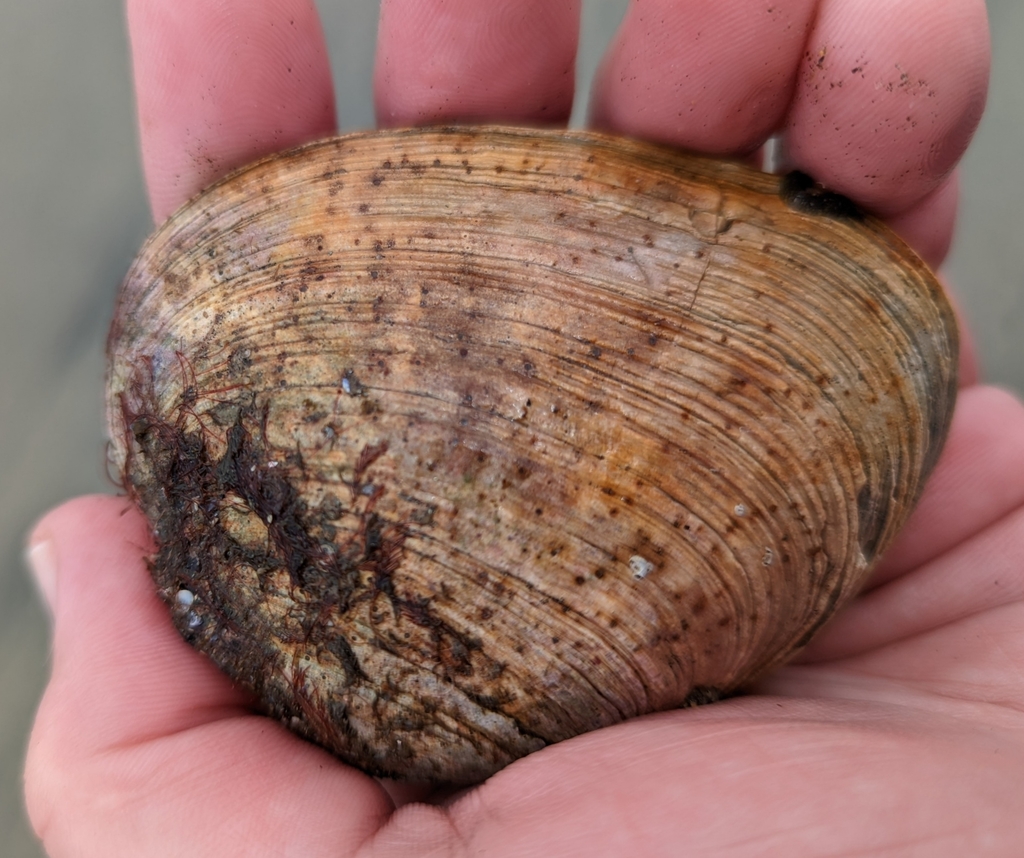
(c) Justin, some rights reserved (CC BY) · licence
Family: Veneridae · Class: Bivalvia · Order: Veneroida
Saxidomus nuttalli (California Butterclam) is a California animal in the Veneridae family.
The California butterclam (Saxidomus nuttallii) is a large marine bivalve mollusk belonging to the family Veneridae. Adults typically reach 100 to 150 mm (4 to 6 inches) in shell length, with some specimens exceeding 180 mm (7 inches). The shell is thick-walled, oval to elongate, and relatively compressed compared to related species. The exterior surface displays concentric growth ridges and may appear cream to light brown in coloration. The interior is white with a purple-tinged pallial sinus that extends deeply into the shell. This species occurs along the Pacific coast from southeastern Alaska to Baja California, Mexico. In California waters, populations are documented from Humboldt Bay south to San Diego County. The California butterclam inhabits intertidal and subtidal zones, typically buried 15 to 30 cm (6 to 12 inches) deep in sandy or muddy substrates. Preferred habitat includes protected bays, estuaries, and nearshore areas with moderate wave action and salinities ranging from brackish to full seawater. California butterclams are filter feeders, using their siphons to draw water through their shells to capture phytoplankton, detritus, and dissolved organic matter. The species exhibits separate sexes and reproductive biology typical of temperate clams. Spawning generally occurs during warmer months when phytoplankton abundance is highest. Females release eggs into the water column where fertilization occurs externally. Larvae undergo a planktonic stage lasting several weeks before settling and metamorphosing into juvenile clams. The species demonstrates relatively slow growth rates characteristic of large marine bivalves in temperate waters. Clams burrow using their muscular foot, positioning themselves with siphons extending to the sediment surface for feeding and respiration. Natural predators include crabs, sea stars, fish, and marine mammals such as sea otters. The California butterclam serves as an important prey species in coastal marine food webs and historically supported Native American subsistence harvesting along the California coast. Currently, Saxidomus nuttallii holds no federal or state listing status and is not considered a species of conservation concern as of December 2025. However, local populations may be affected by coastal development, pollution, sedimentation, and harvest pressure in easily accessible areas. The species remains commercially harvested in some regions and is collected recreationally, though regulations vary by location and season. Climate change impacts, including ocean acidification and rising sea temperatures, represent emerging concerns for shellfish populations throughout the species' range. Habitat protection in estuarine and nearshore environments remains important for maintaining stable populations of this ecologically significant bivalve species.
Classification
Class: Bivalvia · Order: Veneroida · Family: Veneridae
Frequently asked questions
How is Saxidomus nuttalli classified?
Saxidomus nuttalli belongs to class Bivalvia, order Veneroida, family Veneridae.
What family does Saxidomus nuttalli belong to?
Saxidomus nuttalli is in the Veneridae family.
What is Saxidomus nuttalli?
The California butterclam (Saxidomus nuttallii) is a large marine bivalve mollusk belonging to the family Veneridae.
Is Saxidomus nuttalli found in California?
Yes. Saxidomus nuttalli is recorded in California in The California Species Project's catalogue.
Related species
Other California species in the same genus, family, or bioregion.
Data from The California Species Project — 14,000+ California species with verified data from CNPS, CDFW, USFWS, and more.