Scantius aegyptius
Mediterranean red bug
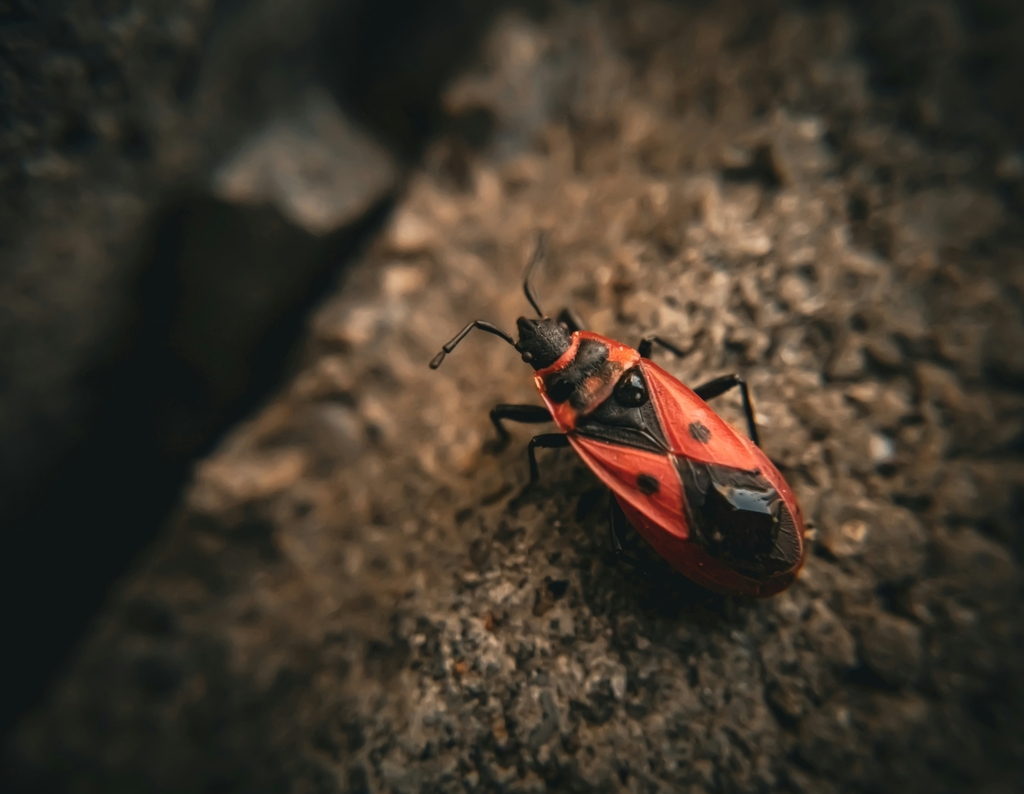
(c) Atalay Karakuş, some rights reserved (CC BY) · licence
Family: Pyrrhocoridae · Class: Insecta · Order: Hemiptera
Scantius aegyptius (Mediterranean red bug) is a California animal in the Pyrrhocoridae family.
The Mediterranean red bug (Scantius aegyptius) is a small hemipteran insect in the family Pyrrhocoridae, commonly known as red bugs or cotton stainers. Adults typically measure 8-12 mm in length, with a characteristic bright red and black coloration pattern. The body is oval-shaped with a distinctly flattened dorsal surface. The forewings are typically red with black markings, while the hindwings are membranous. The head is small and triangular, bearing prominent compound eyes and four-segmented antennae. Like other true bugs, this species possesses piercing-sucking mouthparts adapted for feeding on plant fluids. As its common name suggests, Scantius aegyptius is native to the Mediterranean region and parts of North Africa and the Middle East. The species has established populations throughout much of southern Europe, including Spain, Italy, Greece, and southern France. In recent decades, the species has expanded its range through human-mediated dispersal, similar to other Mediterranean insects that have colonized new regions through international trade and transportation. Mediterranean red bugs inhabit warm, dry environments typical of Mediterranean climates. They are commonly found in agricultural areas, gardens, and disturbed habitats where their host plants occur. The species shows a preference for open, sunny locations with sparse vegetation. Adults and nymphs are typically found on or near their host plants, often aggregating in groups during feeding. They can tolerate a range of elevations from sea level to moderate mountain slopes, provided suitable microclimatic conditions exist. This species is phytophagous, feeding primarily on the seeds and fruits of various plants in the Malvaceae family, including cotton, hibiscus, and mallow species. Adults use their piercing mouthparts to penetrate plant tissues and extract nutrient-rich fluids. The species exhibits typical hemipteran development with incomplete metamorphosis, progressing through egg, five nymphal instars, and adult stages. Reproduction occurs primarily during warmer months, with females laying clusters of barrel-shaped eggs on host plants or in soil near the base of plants. Nymphs resemble adults but lack fully developed wings and reproductive organs. The species may produce multiple generations per year in favorable climates. Currently, Scantius aegyptius does not appear on federal or state threatened and endangered species lists in California or other jurisdictions where it occurs. As a non-native species in many regions where it has established, it is not typically a conservation priority. However, in agricultural contexts, the species can occasionally reach pest status when populations build up on economically important crops. The species' continued range expansion reflects its adaptability to human-modified environments and changing climatic conditions. Climate change may facilitate further northward expansion of this Mediterranean species into previously unsuitable temperate regions.
Classification
Class: Insecta · Order: Hemiptera · Family: Pyrrhocoridae
Frequently asked questions
How is Scantius aegyptius classified?
Scantius aegyptius belongs to class Insecta, order Hemiptera, family Pyrrhocoridae.
What family does Scantius aegyptius belong to?
Scantius aegyptius is in the Pyrrhocoridae family.
What is Scantius aegyptius?
The Mediterranean red bug (Scantius aegyptius) is a small hemipteran insect in the family Pyrrhocoridae, commonly known as red bugs or cotton stainers.
Is Scantius aegyptius found in California?
Yes. Scantius aegyptius is recorded in California in The California Species Project's catalogue.
More California species
This species has no close relatives in our California data — here are other species to explore.
Data from The California Species Project — 14,000+ California species with verified data from CNPS, CDFW, USFWS, and more.