Scapanus latimanus insularis
Angel Island Mole
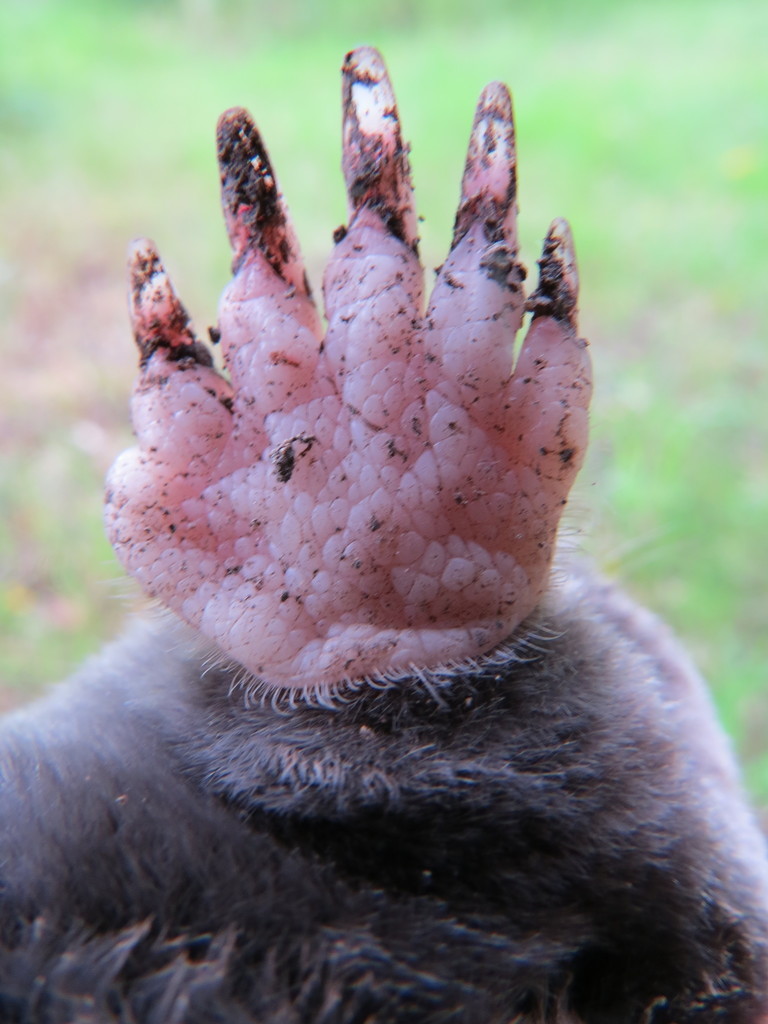
(c) Garth Harwood, some rights reserved (CC BY) · licence
Family: Talpidae · Class: Mammalia · Order: Eulipotyphla
Conservation status: G5T1 S2?
Scapanus latimanus insularis (Angel Island Mole) is a California animal in the Talpidae family.
The Angel Island mole (Scapanus latimanus insularis) is a subspecies of broad-footed mole endemic to Angel Island in San Francisco Bay, California. This subspecies represents an isolated population of the widespread broad-footed mole species that has adapted to the unique island environment. As a member of the family Talpidae, Angel Island moles possess the characteristic features of fossorial mammals, including powerful forefeet with enlarged claws adapted for digging, reduced eyes and ears, and dense, velvety fur that lies flat in any direction to facilitate movement through underground tunnels. The Angel Island mole is restricted to Angel Island, a 740-acre island located in San Francisco Bay between Marin County and San Francisco. This represents one of the most geographically limited ranges of any North American mammal subspecies. The subspecies is completely isolated from mainland populations of Scapanus latimanus, which range from Santa Barbara and Yosemite Valley, California, northward to south-central Oregon (NatureServe Explorer). Rocky areas and bodies of water serve as barriers to distribution, with the Angel Island population being the only endemic race on an island (Verts & Carraway 2001). The subspecies inhabits the varied terrain of Angel Island, which includes grasslands, oak woodlands, and chaparral communities. Angel Island moles construct extensive underground tunnel systems in suitable soil conditions, primarily in areas with sufficient depth and moisture to support their fossorial lifestyle. The island's Mediterranean climate and diverse plant communities provide the necessary conditions for the invertebrate prey that sustains mole populations. Like other broad-footed moles, Angel Island moles are insectivorous, feeding primarily on earthworms, beetle larvae, and other soil invertebrates encountered while excavating their tunnel systems. They are solitary animals that maintain individual territory through their burrow networks. Breeding likely occurs in late winter to early spring, typical of the species, with females producing small litters in underground nests. Their fossorial lifestyle means they are rarely observed above ground, spending virtually their entire lives in subterranean tunnels. The Angel Island mole holds a conservation status of G5T1 S2?, indicating it is critically imperiled as a subspecies due to its extremely limited range. The subspecies was formerly threatened by soil erosion caused by introduced mule deer, though this threat has been reduced (Montana Field Guide). The small population size and restricted range make this subspecies vulnerable to environmental changes, habitat disturbance, and potential genetic bottlenecks associated with island populations. Climate change and sea level rise pose additional long-term concerns for this island endemic. Conservation of the Angel Island mole depends on maintaining the island's natural habitats and managing introduced species that could impact soil conditions or vegetation communities essential to the subspecies' survival. The subspecies serves as an example of how geographic isolation can lead to distinct evolutionary lineages worthy of conservation attention.
Classification
Class: Mammalia · Order: Eulipotyphla · Family: Talpidae
Conservation status
G5T1 S2?
Frequently asked questions
How is Scapanus latimanus insularis classified?
Scapanus latimanus insularis belongs to class Mammalia, order Eulipotyphla, family Talpidae.
What family does Scapanus latimanus insularis belong to?
Scapanus latimanus insularis is in the Talpidae family.
Is Scapanus latimanus insularis protected or of conservation concern?
Scapanus latimanus insularis carries the following status: G5T1 S2?.
What is Scapanus latimanus insularis?
The Angel Island mole (Scapanus latimanus insularis) is a subspecies of broad-footed mole endemic to Angel Island in San Francisco Bay, California.
Is Scapanus latimanus insularis found in California?
Yes. Scapanus latimanus insularis is recorded in California in The California Species Project's catalogue.
Related species
Other California species in the same genus, family, or bioregion.
Data from The California Species Project — 14,000+ California species with verified data from CNPS, CDFW, USFWS, and more.