Scapanus latimanus parvus
Alameda Island Mole
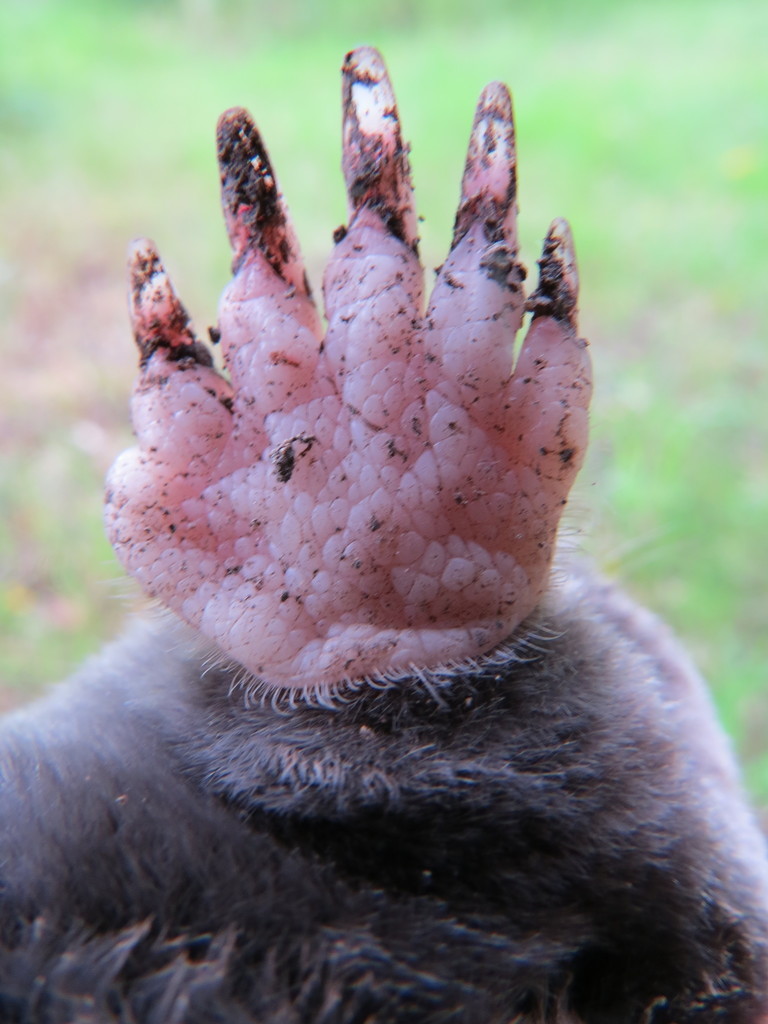
(c) Garth Harwood, some rights reserved (CC BY) · licence
Family: Talpidae · Class: Mammalia · Order: Eulipotyphla
Conservation status: G5T1Q SH
Scapanus latimanus parvus (Alameda Island Mole) is a California animal in the Talpidae family.
The Alameda Island mole (Scapanus latimanus parvus) is a subspecies of the broad-footed mole endemic to a single location in California. This small fossorial mammal exhibits the typical mole characteristics of a cylindrical body adapted for underground life, with powerful front limbs equipped with large claws for digging, small eyes, and velvety fur that can lie flat in either direction to facilitate movement through tunnels. The subspecies is restricted to Alameda Island in Alameda County, California, representing one of the most geographically limited mammal distributions in North America. The nominate species Scapanus latimanus has a much broader range extending from Santa Barbara and Yosemite Valley northward to south-central Oregon (NatureServe Explorer), but the parvus subspecies occurs only on this single island in San Francisco Bay. Alameda Island moles inhabit the island's terrestrial environments, where they construct extensive underground tunnel systems in suitable soil conditions. Like other moles, they require well-drained soils that support tunnel construction and provide adequate prey populations. The island's limited area and specific soil characteristics constrain both habitat availability and population size for this subspecies. As fossorial mammals, Alameda Island moles spend virtually their entire lives underground, rarely appearing at the surface except during extreme weather events or territorial disputes. They are solitary animals that maintain individual tunnel systems, feeding primarily on soil invertebrates including earthworms, beetle larvae, and other subterranean arthropods. Their high metabolic rate requires near-constant foraging, and they must consume approximately their own body weight in food daily. Reproduction likely follows the pattern of other Scapanus species, with breeding occurring in late winter or early spring and females producing small litters of two to four young after a gestation period of approximately four to six weeks. The Alameda Island mole holds the conservation rank of G5T1Q SH, indicating the nominate species is secure globally but this subspecies is critically imperiled with uncertain taxonomy and is possibly extirpated from California. The 'Q' qualifier reflects taxonomic uncertainty regarding the validity of this subspecies designation. The extremely restricted range makes this population vulnerable to habitat modification, invasive species, sea level rise, and stochastic events. The U.S. Fish and Wildlife Service has evaluated this subspecies, with documents indicating it was considered for listing under the Endangered Species Act (USFWS Species Profile). The subspecies faces significant conservation challenges due to its single-island distribution. Any environmental changes affecting Alameda Island could impact the entire population. Limited genetic diversity associated with small population size may reduce adaptive capacity. The uncertain taxonomic status complicates conservation planning, as additional research is needed to confirm the subspecies' validity and assess its relationship to mainland broad-footed mole populations. Current population status and trends remain poorly documented, highlighting the need for systematic surveys and genetic analysis to inform conservation strategies.
Classification
Class: Mammalia · Order: Eulipotyphla · Family: Talpidae
Conservation status
G5T1Q SH
Frequently asked questions
How is Scapanus latimanus parvus classified?
Scapanus latimanus parvus belongs to class Mammalia, order Eulipotyphla, family Talpidae.
What family does Scapanus latimanus parvus belong to?
Scapanus latimanus parvus is in the Talpidae family.
Is Scapanus latimanus parvus protected or of conservation concern?
Scapanus latimanus parvus carries the following status: G5T1Q SH.
What is Scapanus latimanus parvus?
The Alameda Island mole (Scapanus latimanus parvus) is a subspecies of the broad-footed mole endemic to a single location in California.
Is Scapanus latimanus parvus found in California?
Yes. Scapanus latimanus parvus is recorded in California in The California Species Project's catalogue.
Related species
Other California species in the same genus, family, or bioregion.
Data from The California Species Project — 14,000+ California species with verified data from CNPS, CDFW, USFWS, and more.