Scapanus orarius
Coast Mole
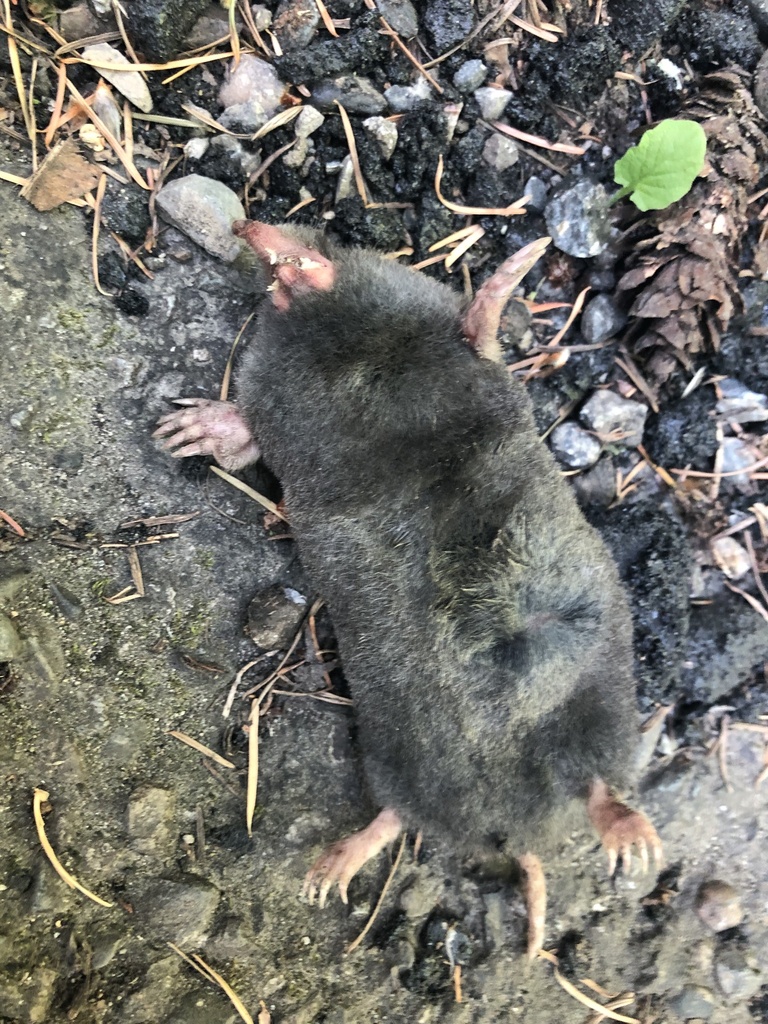
(c) Sam Beaumont, some rights reserved (CC BY) · licence
Family: Talpidae · Class: Mammalia · Order: Eulipotyphla
Scapanus orarius (Coast Mole) is a California animal in the Talpidae family.
The Coast Mole is a small, fossorial mammal endemic to the Pacific Northwest coastal region. Adults measure 140 to 180 mm (5.5 to 7.1 inches) in total length, with a tail length of 25 to 40 mm (1.0 to 1.6 inches). Body mass ranges from 45 to 85 grams (1.6 to 3.0 ounces). The species exhibits typical mole morphology with a cylindrical body, dense velvety fur that can lay flat in any direction, and highly modified forelimbs for digging. The fur is dark brown to black dorsally, slightly lighter on the ventral surface. The snout is elongated and pink, with small eyes that are often hidden by fur. The large, spade-like forefeet have prominent claws adapted for excavation. The Coast Mole occurs along the Pacific coast from southwestern British Columbia south to central California. In California, the species is found in coastal counties from Del Norte south to Sonoma County, with populations documented in Humboldt, Mendocino, Lake, and Sonoma counties. The distribution extends inland up to approximately 50 kilometers from the coast, following river valleys and suitable habitat corridors. This species inhabits areas with loose, well-drained soils that support extensive tunnel systems. Coast Moles prefer coniferous and mixed forests, coastal prairies, and agricultural areas with adequate soil conditions. They occur from sea level to elevations of approximately 1,000 meters (3,280 feet). The species requires areas with sufficient invertebrate prey and soil that allows for tunnel construction and maintenance. Coast Moles are solitary, spending nearly their entire lives in underground tunnel systems. They construct two types of tunnels: shallow feeding tunnels just below the surface that appear as raised ridges, and deeper permanent tunnels used for nesting and shelter. The species is active year-round, with no hibernation period. Diet consists primarily of earthworms, insect larvae, and other soil invertebrates. Adults consume approximately 70 to 100 percent of their body weight daily due to high metabolic demands. Reproduction occurs once annually, with mating typically in February and March. Gestation lasts approximately 30 days, with females producing litters of 2 to 5 young in April or May. Young are born hairless and helpless, reaching independence at 4 to 5 weeks of age. Sexual maturity is reached at approximately 10 months. The Coast Mole is not federally or state listed and appears to maintain stable populations throughout most of its range. The species faces localized threats from habitat conversion, particularly agricultural intensification and urban development in coastal areas. Pesticide use can reduce prey availability and cause direct mortality. Climate change may affect soil moisture conditions critical for tunnel stability and prey abundance. The species' narrow coastal distribution makes it potentially vulnerable to sea level rise and increased storm intensity, though current population trends suggest the species remains secure.
Classification
Class: Mammalia · Order: Eulipotyphla · Family: Talpidae
Frequently asked questions
How is Scapanus orarius classified?
Scapanus orarius belongs to class Mammalia, order Eulipotyphla, family Talpidae.
What family does Scapanus orarius belong to?
Scapanus orarius is in the Talpidae family.
What is Scapanus orarius?
The Coast Mole is a small, fossorial mammal endemic to the Pacific Northwest coastal region.
Is Scapanus orarius found in California?
Yes. Scapanus orarius is recorded in California in The California Species Project's catalogue.
Related species
Other California species in the same genus, family, or bioregion.
Data from The California Species Project — 14,000+ California species with verified data from CNPS, CDFW, USFWS, and more.