Scaphiopus couchii
Couch's Spadefoot
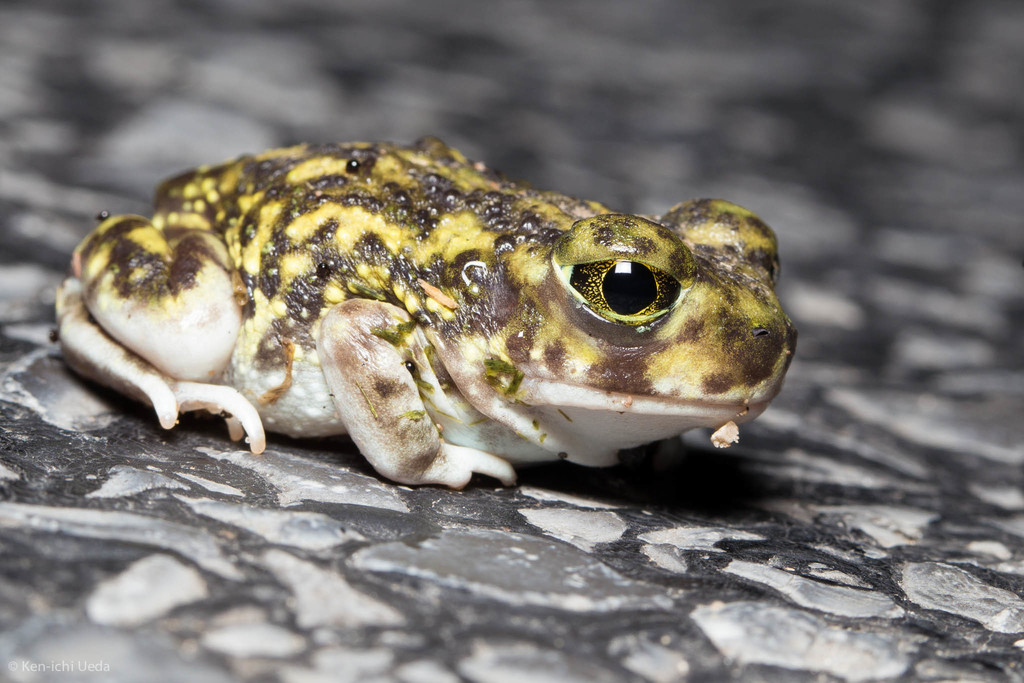
(c) Ken-ichi Ueda, some rights reserved (CC BY) · licence
Family: Scaphiopodidae · Class: Amphibia · Order: Anura
Conservation status: G5 S2
Scaphiopus couchii (Couch's Spadefoot) is a California animal in the Scaphiopodidae family.
Couch's spadefoot is a medium-sized toad endemic to the southwestern United States and northwestern Mexico. Adults measure 57 to 89 mm (2.2 to 3.5 inches) in snout-vent length, with females typically larger than males. The dorsal surface is yellowish-green to olive-brown with darker irregular blotches or marbling. A distinctive yellowish or white stripe often extends from the eye to the groin along each side of the body. The ventral surface is cream-colored to white, typically unmarked. The species is characterized by a prominent black, wedge-shaped spade on each hind foot, used for burrowing. Eyes are relatively large with vertical pupils, and parotoid glands are absent or poorly developed. In California, Couch's spadefoot occurs in the southeastern desert regions, primarily in Imperial and extreme southeastern Riverside counties. The species extends eastward through Arizona, New Mexico, and western Texas, with populations in northwestern Mexico including Sonora, Chihuahua, and Baja California. According to NatureServe, the global population is considered secure (G5), but California populations are imperiled (S2) due to limited distribution and habitat pressures. The species inhabits arid and semi-arid regions, typically in desert scrub, grassland, and oak woodland habitats. Couch's spadefoot occurs from sea level to approximately 1,520 meters (5,000 feet) elevation. Adults require loose, sandy or gravelly soils suitable for burrowing, often selecting areas near ephemeral pools, washes, or playas that serve as breeding sites. The species shows preference for substrates with low clay content that facilitate excavation of burrows up to 91 cm (3 feet) deep. Couch's spadefoot exhibits explosive breeding behavior triggered by heavy rainfall, typically during summer monsoons from July through September. Males call from shallow water or nearby terrestrial sites, producing a bleating call lasting 0.5 to 1.0 seconds. Females deposit 300 to 500 eggs in small clusters attached to vegetation or debris in temporary pools. Eggs hatch within 15 to 96 hours depending on temperature. Tadpoles develop rapidly, metamorphosing in 19 to 65 days before pools desiccate. Adults are primarily nocturnal, emerging from burrows to feed on insects, spiders, and other small invertebrates. During dry periods, individuals may remain underground for 8 to 10 months. While not federally listed, Couch's spadefoot faces significant conservation challenges in California. Primary threats include habitat loss from urban development, agriculture, and infrastructure projects in desert valleys. Water diversions and groundwater pumping reduce availability of breeding pools. Off-road vehicle use degrades soil structure necessary for burrowing. Climate change may alter precipitation patterns critical for breeding success. The species' limited California range and dependence on ephemeral aquatic habitats make populations particularly vulnerable to environmental changes. Conservation efforts focus on habitat protection and management of water resources in desert ecosystems.
Classification
Class: Amphibia · Order: Anura · Family: Scaphiopodidae
Conservation status
G5 S2
Frequently asked questions
How is Scaphiopus couchii classified?
Scaphiopus couchii belongs to class Amphibia, order Anura, family Scaphiopodidae.
What family does Scaphiopus couchii belong to?
Scaphiopus couchii is in the Scaphiopodidae family.
Is Scaphiopus couchii protected or of conservation concern?
Scaphiopus couchii carries the following status: G5 S2.
What is Scaphiopus couchii?
Couch's spadefoot is a medium-sized toad endemic to the southwestern United States and northwestern Mexico.
Is Scaphiopus couchii found in California?
Yes. Scaphiopus couchii is recorded in California in The California Species Project's catalogue.
Related species
Other California species in the same genus, family, or bioregion.
Data from The California Species Project — 14,000+ California species with verified data from CNPS, CDFW, USFWS, and more.