Sceloporus graciosus
Common Sagebrush Lizard
(c) Ace, some rights reserved (CC BY) · licence
Family: Phrynosomatidae · Class: Reptilia · Order: Squamata
Sceloporus graciosus (Common Sagebrush Lizard) is a California animal in the Phrynosomatidae family.
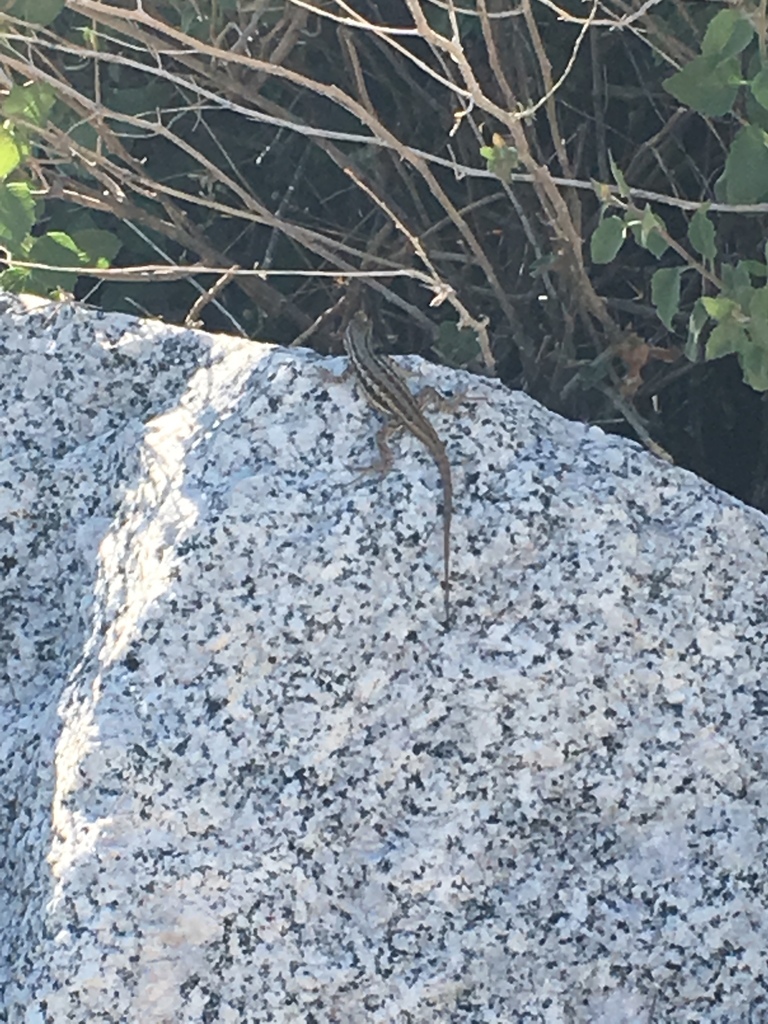
The common sagebrush lizard is a small, brown spiny lizard with adults measuring 50-75 mm (2.0-3.0 inches) in snout-to-vent length. The dorsal surface displays gray to brown coloration with darker crossbands or chevron patterns, while the ventral surface is white to cream-colored. Males develop blue patches on the throat and belly during breeding season, and both sexes possess overlapping keeled scales that create a rough texture. The tail, when intact, measures 1.5 to 2 times the body length. This species ranges across much of western North America from British Columbia south to Baja California and east to Colorado and New Mexico. In California, sceloporus graciosus occurs primarily in the northern and eastern portions of the state, including the Sierra Nevada, Cascade Range, and Great Basin regions. The northern subspecies (S. g. graciosus) is listed as a Species of Concern in Oregon, indicating some conservation attention in parts of its range. Common sagebrush lizards inhabit arid and semi-arid environments dominated by sagebrush scrub, pinyon-juniper woodlands, and open forests. They occur from near sea level to elevations exceeding 3,000 meters (9,800 feet) in montane areas. The species shows strong association with areas containing scattered rocks, fallen logs, or shrubs that provide basking sites and escape cover. In California's Great Basin region, they are commonly found in big sagebrush (Artemisia tridentata) communities mixed with bitterbrush and other drought-adapted shrubs. Sagebrush lizards are primarily insectivorous, feeding on ants, beetles, flies, moths, and other small arthropods. They are active during daylight hours, particularly in morning and late afternoon when temperatures are moderate. Breeding occurs from late spring through summer, with females depositing 2-8 eggs in sandy soil or under rocks. Incubation lasts 45-75 days depending on temperature and elevation. According to research in Utah and California, annual survival rates average 50-60% in adults but drop below 30% in juveniles and eggs (Tinkle et al. 1993). The species exhibits site fidelity, often returning to the same basking and shelter locations. Currently, the common sagebrush lizard maintains stable populations across most of its range and holds no federal listing status. However, habitat loss from development, livestock grazing, and invasive plant species poses localized threats. The conversion of native shrublands to agriculture and urban development has reduced available habitat in some areas. Climate change may also affect the species through altered precipitation patterns and increased temperatures in arid regions. The northern subspecies' designation as a Species of Concern in Oregon reflects potential vulnerability in portions of its range where habitat fragmentation and degradation are more pronounced.
Classification
Class: Reptilia · Order: Squamata · Family: Phrynosomatidae
Frequently asked questions
How is Sceloporus graciosus classified?
Sceloporus graciosus belongs to class Reptilia, order Squamata, family Phrynosomatidae.
What family does Sceloporus graciosus belong to?
Sceloporus graciosus is in the Phrynosomatidae family.
What is Sceloporus graciosus?
The common sagebrush lizard is a small, brown spiny lizard with adults measuring 50-75 mm (2.0-3.0 inches) in snout-to-vent length.
Is Sceloporus graciosus found in California?
Yes. Sceloporus graciosus is recorded in California in The California Species Project's catalogue.
Related species
Other California species in the same genus, family, or bioregion.
Data from The California Species Project — 14,000+ California species with verified data from CNPS, CDFW, USFWS, and more.