Sceloporus graciosus graciosus
Northern Sagebrush Lizard
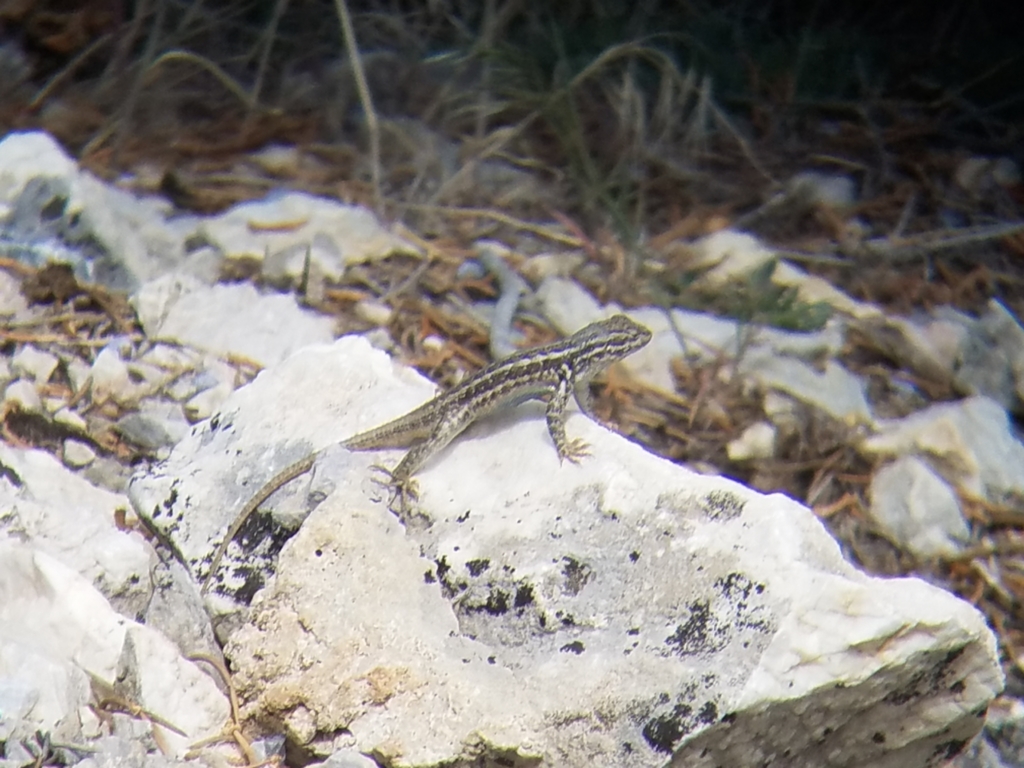
(c) Paul Hurtado, some rights reserved (CC BY-SA) · licence
Family: Phrynosomatidae · Class: Reptilia · Order: Squamata
Sceloporus graciosus graciosus (Northern Sagebrush Lizard) is a California animal in the Phrynosomatidae family.
The Northern Sagebrush Lizard is a small, slender spiny lizard measuring 40 to 60 mm (1.6 to 2.4 inches) in snout-vent length, with a total length reaching 120 to 150 mm (4.7 to 5.9 inches). Adults display grayish-brown dorsal coloration with darker crossbands and a distinctive pattern of keeled scales arranged in rows down the back. Males develop bright blue patches on the throat and sides of the belly during breeding season, while females typically show less pronounced coloration. The species has relatively small dorsal scales compared to other Sceloporus species and lacks the prominent spines characteristic of larger fence lizards. This subspecies occurs in the Great Basin desert region east of the Sierra Nevada and in northeastern California, including portions of Lassen, Modoc, and Inyo counties. The range extends north into eastern Washington and Idaho, and east through Montana, Wyoming, Utah, Colorado, Arizona, and New Mexico. In California, populations are found at elevations ranging from approximately 1,200 to 2,400 meters (4,000 to 8,000 feet), with some records from the White Mountains in Inyo County at elevations exceeding 2,300 meters (7,700 feet). Northern Sagebrush Lizards inhabit open sagebrush scrubland, pinyon-juniper woodland, and high desert environments. They prefer areas with scattered low shrubs, particularly sagebrush (Artemisia species), rabbit brush, and other desert shrubs that provide both basking sites and escape cover. The species typically occurs in well-drained soils with rocky or sandy substrate and requires access to both sunny basking areas and shaded retreats. Habitat includes open flats, gentle slopes, and areas around rock outcroppings where temperatures can be effectively regulated. This diurnal species is primarily insectivorous, feeding on small arthropods including ants, beetles, flies, and spiders. Northern Sagebrush Lizards are active from April through September, with peak activity during morning and late afternoon hours when temperatures are optimal. Breeding occurs from May through July, with females laying clutches of 2 to 5 eggs in sandy soil or under rocks. Eggs incubate for approximately 60 to 70 days, with hatchlings emerging in late summer. The species exhibits territorial behavior, particularly males during breeding season, and uses rapid push-up displays and bright throat coloration for communication. The Northern Sagebrush Lizard currently has no federal listing status but is designated as a Species of Greatest Conservation Need in Washington and Nevada. Primary conservation concerns include habitat loss from agricultural conversion, urban development, and energy infrastructure projects in sagebrush ecosystems. Climate change poses additional threats through altered precipitation patterns and increased temperatures that may affect prey availability and suitable habitat. Fire management practices that reduce native shrub cover also impact population stability. While not currently listed under the Endangered Species Act, ongoing monitoring is recommended to assess population trends across the subspecies' range, particularly in areas experiencing rapid habitat modification.
Classification
Class: Reptilia · Order: Squamata · Family: Phrynosomatidae
Frequently asked questions
How is Sceloporus graciosus graciosus classified?
Sceloporus graciosus graciosus belongs to class Reptilia, order Squamata, family Phrynosomatidae.
What family does Sceloporus graciosus graciosus belong to?
Sceloporus graciosus graciosus is in the Phrynosomatidae family.
What is Sceloporus graciosus graciosus?
The Northern Sagebrush Lizard is a small, slender spiny lizard measuring 40 to 60 mm (1.6 to 2.4 inches) in snout-vent length, with a total length reaching 120 to 150 mm (4.7 to 5.9 inches).
Is Sceloporus graciosus graciosus found in California?
Yes. Sceloporus graciosus graciosus is recorded in California in The California Species Project's catalogue.
Related species
Other California species in the same genus, family, or bioregion.
Data from The California Species Project — 14,000+ California species with verified data from CNPS, CDFW, USFWS, and more.