Sceloporus uniformis
Yellow-backed Spiny Lizard
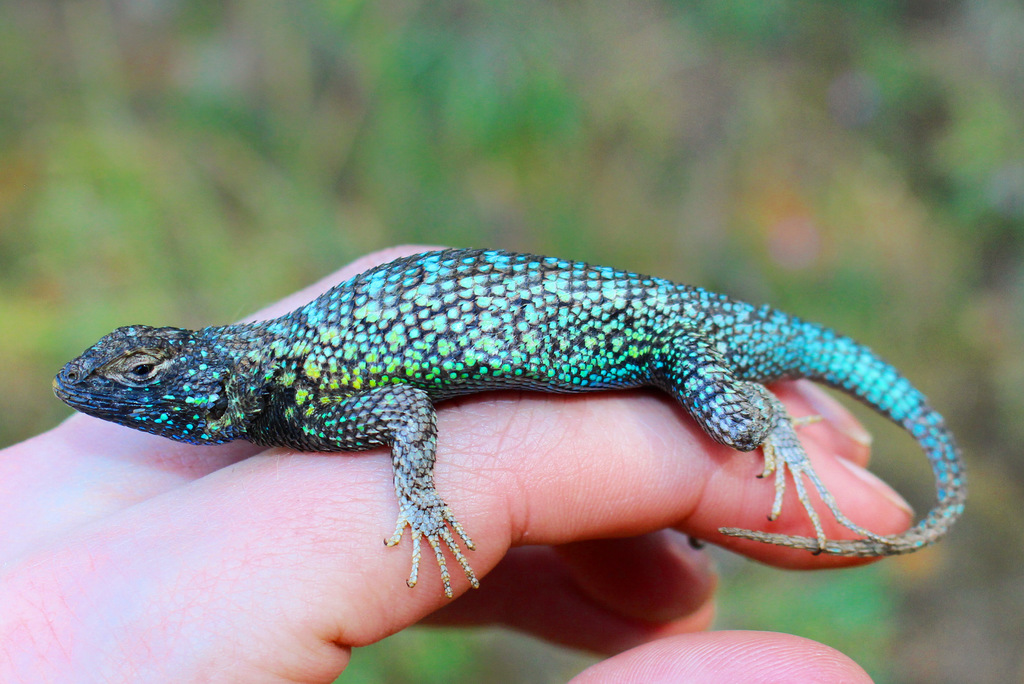
(c) Connor Long, some rights reserved (CC BY-SA) · licence
Family: Phrynosomatidae · Class: Reptilia · Order: Squamata
Sceloporus uniformis (Yellow-backed Spiny Lizard) is a California animal in the Phrynosomatidae family.
The Yellow-backed Spiny Lizard is a medium to large-sized spiny lizard with distinctive coloration and robust build. Adults typically measure 8 to 12 centimeters (3.1 to 4.7 inches) in snout-vent length, with total length including the tail reaching up to 30 centimeters (12 inches). The species exhibits sexual dimorphism, with males displaying more vibrant coloration during breeding season. The dorsal surface features large, keeled scales arranged in overlapping rows, giving the lizard its characteristic spiny appearance. Adult males often develop bright blue patches on the throat and sides of the belly, while females tend to be more subdued in coloration with yellow or orange hues on the back that give the species its common name. Historically, Sceloporus uniformis was considered a subspecies of the Desert Spiny Lizard (Sceloporus magister), known as Sceloporus magister uniformis or Northern Desert Spiny Lizard. However, recent taxonomic revisions have elevated it to full species status. The species occurs primarily in the southwestern United States, with California populations representing the western edge of its range. In California, the Yellow-backed Spiny Lizard is found in the Sonoran Desert region of southeastern areas, particularly in Riverside County and extending eastward toward the Colorado River. The species inhabits arid and semi-arid environments characteristic of the Sonoran Desert ecosystem. Preferred habitats include desert flats, rocky outcrops, and areas with scattered vegetation such as creosote bush scrub, Joshua tree woodlands, and desert washes. These lizards are strongly associated with rocky terrain, using boulders, rock crevices, and cliff faces for thermoregulation, shelter, and nesting sites. They are typically found at elevations ranging from near sea level to approximately 1,200 meters (4,000 feet). Yellow-backed Spiny Lizards are primarily insectivorous, feeding on a variety of arthropods including beetles, ants, spiders, and other small invertebrates. They are active foragers that use both sit-and-wait and active searching strategies. The species is oviparous, with females laying clutches of 4 to 17 eggs in sandy or loose soil during late spring and early summer. Eggs incubate for approximately 60 to 75 days, hatching in late summer or early fall. Juveniles reach sexual maturity at 1 to 2 years of age. These lizards are primarily diurnal, exhibiting peak activity during morning and late afternoon hours when temperatures are optimal for thermoregulation. The Yellow-backed Spiny Lizard is not currently listed under federal or state endangered species legislation. The species appears to maintain stable populations throughout its range, though like many desert reptiles, it may face pressures from habitat modification, urbanization, and climate change effects on desert ecosystems. Conservation concerns are minimal at present, but continued monitoring of population trends and habitat quality remains important for long-term species management in California's desert regions.
Classification
Class: Reptilia · Order: Squamata · Family: Phrynosomatidae
Frequently asked questions
How is Sceloporus uniformis classified?
Sceloporus uniformis belongs to class Reptilia, order Squamata, family Phrynosomatidae.
What family does Sceloporus uniformis belong to?
Sceloporus uniformis is in the Phrynosomatidae family.
What is Sceloporus uniformis?
The Yellow-backed Spiny Lizard is a medium to large-sized spiny lizard with distinctive coloration and robust build.
Is Sceloporus uniformis found in California?
Yes. Sceloporus uniformis is recorded in California in The California Species Project's catalogue.
Related species
Other California species in the same genus, family, or bioregion.
Data from The California Species Project — 14,000+ California species with verified data from CNPS, CDFW, USFWS, and more.