Sceloporus vandenburgianus
Southern Sagebrush Lizard
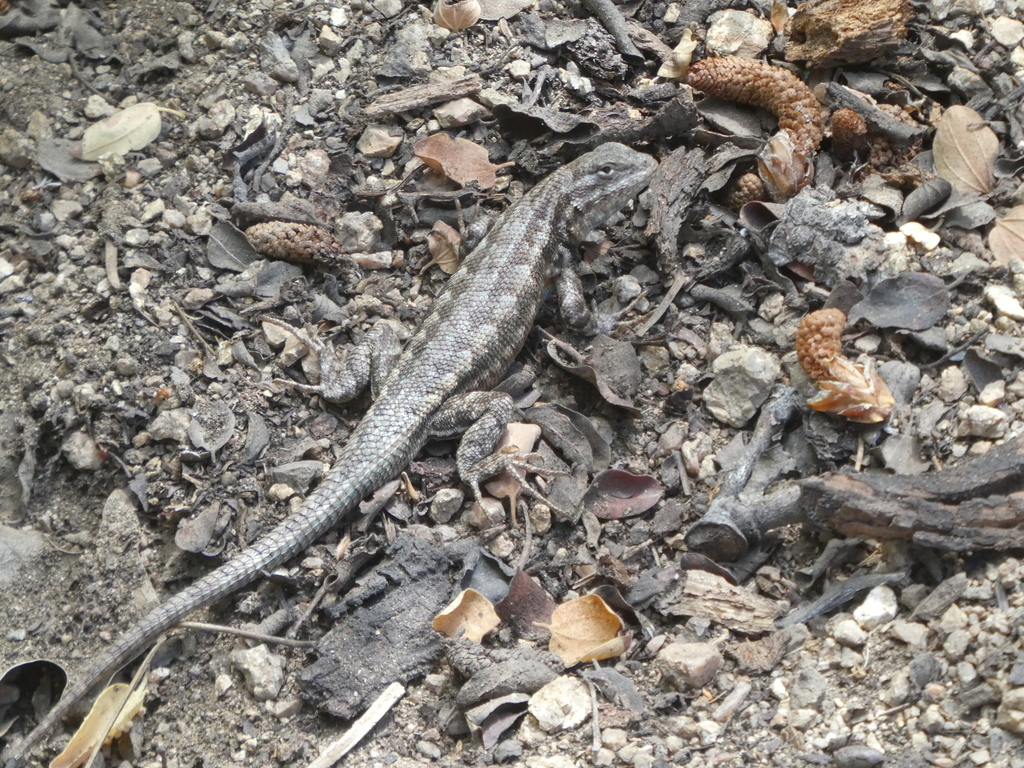
(c) Eric Johnson, some rights reserved (CC BY) · licence
Family: Phrynosomatidae · Class: Reptilia · Order: Squamata
Sceloporus vandenburgianus (Southern Sagebrush Lizard) is a California animal in the Phrynosomatidae family.
The Southern Sagebrush Lizard is a small, slender reptile in the spiny lizard family Phrynosomatidae. Adults typically measure 1.5 to 2.5 inches in snout-to-vent length, with a total length including tail of approximately 5 to 6 inches. The body is covered in small, overlapping keeled scales that give the lizard a slightly rough texture. Coloration is typically brown to gray dorsally with darker crossbands or mottled patterns, providing effective camouflage against rocky and sandy substrates. Males often display blue patches on the throat and belly, particularly during breeding season, while females tend to have more subdued coloration with orange or yellow markings. This species occurs in southeastern California, extending south into Baja California, Mexico. In California, populations are found primarily in San Bernardino, Riverside, and Imperial counties, with records from elevations ranging from near sea level in desert areas to approximately 9,600 feet in montane regions (CaliforniaHerps.com). The species' range represents the southern extent of the sagebrush lizard complex in North America. Southern Sagebrush Lizards inhabit arid and semi-arid environments characterized by desert scrub, chaparral, and pinyon-juniper woodland communities. They show a strong preference for rocky outcrops, boulder fields, and areas with scattered shrubs that provide both basking sites and shelter. The species is commonly associated with sagebrush (Artemisia species), creosote bush, and other drought-adapted vegetation. They utilize rock crevices, fallen logs, and dense vegetation for refuge from predators and extreme temperatures. These lizards are primarily insectivorous, feeding on a variety of small arthropods including ants, beetles, spiders, and other invertebrates. They are active foragers, using both sit-and-wait and active hunting strategies. Breeding occurs in spring and early summer, with females laying clutches of 2 to 8 eggs in sandy or loose soil beneath rocks or vegetation. Eggs incubate for approximately 60 to 75 days, with hatchlings emerging in late summer. Southern Sagebrush Lizards are heliothermic, relying on behavioral thermoregulation through basking and seeking shade to maintain optimal body temperatures. The Southern Sagebrush Lizard is not federally listed and has no special conservation status designation (USFWS). However, like many desert reptiles, the species faces potential threats from habitat loss due to urban development, off-road vehicle use, and renewable energy projects in desert regions. Climate change may also impact the species through altered precipitation patterns and increased temperatures in already marginal habitats. The species' relatively broad elevation range and association with rocky habitats may provide some resilience to environmental changes, but localized populations could be vulnerable to specific development pressures.
Classification
Class: Reptilia · Order: Squamata · Family: Phrynosomatidae
Frequently asked questions
How is Sceloporus vandenburgianus classified?
Sceloporus vandenburgianus belongs to class Reptilia, order Squamata, family Phrynosomatidae.
What family does Sceloporus vandenburgianus belong to?
Sceloporus vandenburgianus is in the Phrynosomatidae family.
What is Sceloporus vandenburgianus?
The Southern Sagebrush Lizard is a small, slender reptile in the spiny lizard family Phrynosomatidae.
Is Sceloporus vandenburgianus found in California?
Yes. Sceloporus vandenburgianus is recorded in California in The California Species Project's catalogue.
Related species
Other California species in the same genus, family, or bioregion.
Data from The California Species Project — 14,000+ California species with verified data from CNPS, CDFW, USFWS, and more.