Schinia acutilinea
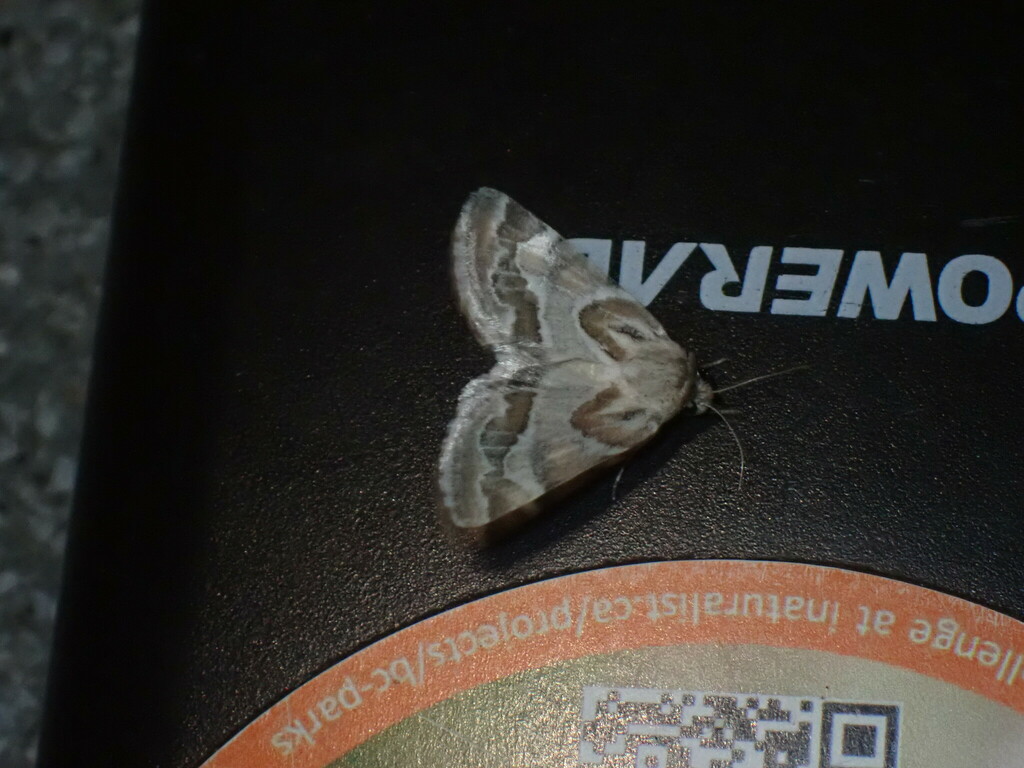
no rights reserved · CC0
Family: Noctuidae · Class: Insecta · Order: Lepidoptera
Schinia acutilinea is a California animal in the Noctuidae family.
Schinia acutilinea is a small noctuid moth in the family Noctuidae, subfamily Heliothinae. This species belongs to the genus Schinia, commonly known as flower moths due to their association with specific host plants. Adult moths typically measure 12-16 mm in forewing length, displaying the characteristic wing patterns common to Schinia species. The forewings are generally pale with subtle markings, though specific coloration details for this species require further documentation. The distribution and current range of Schinia acutilinea remain poorly documented in the scientific literature. Limited collection records suggest the species may occur in western North America, potentially including California, though comprehensive range mapping has not been completed. Historical collection data and current population status are insufficient to determine the species' geographic extent or population trends. Habitat requirements for Schinia acutilinea are not well-established, though members of the genus Schinia typically inhabit areas where their specific host plants occur. Many Schinia species demonstrate strict host plant relationships, with larvae developing exclusively on particular plant species. The moths are generally found in open habitats including grasslands, shrublands, and desert areas where their host plants grow. Elevation ranges and specific microhabitat preferences for this species have not been adequately studied. Like other Schinia species, S. acutilinea likely exhibits specialized feeding behavior closely tied to its host plant. Adult moths are typically active during evening and nighttime hours, with males attracted to pheromones released by females. Larvae presumably feed on the flowers, buds, or seeds of their host plant, following the pattern common among Schinia species. The timing of adult flight periods, number of generations per year, and specific reproductive behaviors remain undocumented for this species. Overwintering likely occurs in the pupal stage, as observed in related species. The conservation status of Schinia acutilinea is currently unknown, with no federal or state listing designation. The species lacks sufficient data for assessment under standard conservation criteria. Population trends, threats, and conservation needs have not been evaluated due to limited research and monitoring efforts. The apparent rarity of collection records may indicate naturally low population densities, restricted distribution, or inadequate survey effort in suitable habitats. Taxonomic uncertainty may complicate conservation assessment, as some Schinia species have been synonymized or reclassified following detailed morphological and genetic studies. The validity of S. acutilinea as a distinct species may require verification through modern taxonomic methods. Without comprehensive biological data, habitat requirements, and population assessments, effective conservation planning for this species remains impossible. Further research is needed to document basic life history, distribution, host plant relationships, and conservation status before appropriate management strategies can be developed.
Classification
Class: Insecta · Order: Lepidoptera · Family: Noctuidae
Frequently asked questions
How is Schinia acutilinea classified?
Schinia acutilinea belongs to class Insecta, order Lepidoptera, family Noctuidae.
What family does Schinia acutilinea belong to?
Schinia acutilinea is in the Noctuidae family.
What is Schinia acutilinea?
Schinia acutilinea is a small noctuid moth in the family Noctuidae, subfamily Heliothinae.
Is Schinia acutilinea found in California?
Yes. Schinia acutilinea is recorded in California in The California Species Project's catalogue.
Related species
Other California species in the same genus, family, or bioregion.
Data from The California Species Project — 14,000+ California species with verified data from CNPS, CDFW, USFWS, and more.