Schinia amaryllis
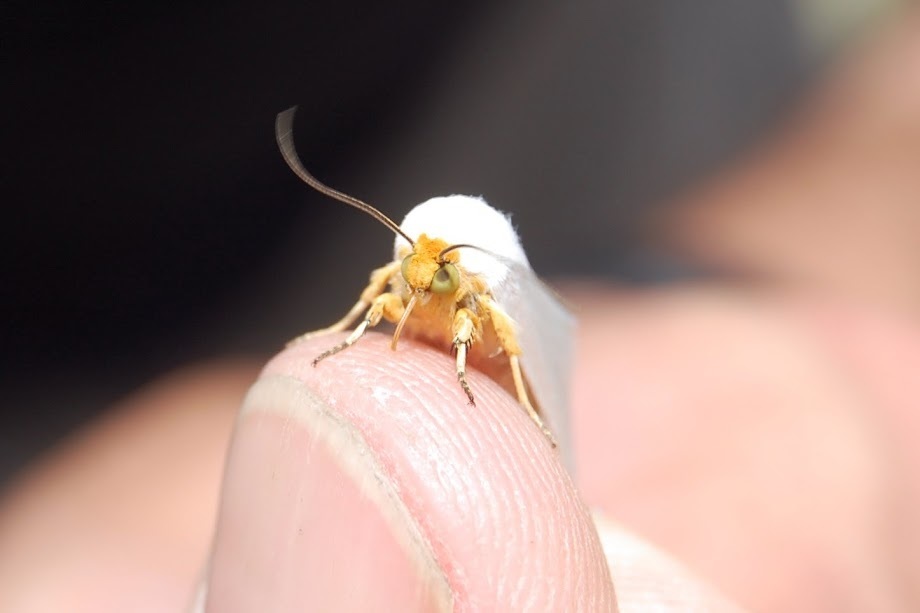
(c) Chris Friesen, some rights reserved (CC BY) · licence
Family: Noctuidae · Class: Insecta · Order: Lepidoptera
Schinia amaryllis is a California animal in the Noctuidae family.
Schinia amaryllis is a moth species in the family Noctuidae, subfamily Heliothinae. This small moth belongs to a genus known for its specialized associations with flowering plants, particularly those in the sunflower family (Asteraceae). The species exhibits the typical nocturid body plan with a robust thorax and moderately broad forewings. Adult moths display muted coloration patterns characteristic of the genus, with forewings typically showing earth-tone base colors marked by lighter and darker bands or patches that provide camouflage when resting on host plants during daylight hours. The range and distribution of Schinia amaryllis appears to be limited, though specific locality data requires verification from entomological collections and recent surveys. Like many Schinia species, this moth likely occurs in areas where its specific host plants are present, suggesting a potentially fragmented or specialized distribution pattern. The species may be found in California, though confirmed occurrence records need validation from museum databases and field studies. Habitat requirements for Schinia amaryllis are presumably tied to the presence of its host plants, following the pattern seen in related Schinia species. These moths typically inhabit areas where their larval host plants grow, including grasslands, chaparral margins, desert washes, or other open habitats where composite flowers thrive. The species likely requires areas with suitable nectar sources for adults and appropriate host plants for larval development. The life cycle of Schinia amaryllis follows the typical pattern for noctuids, with complete metamorphosis including egg, larval, pupal, and adult stages. Adults are presumed to be nocturnal, becoming active after sunset to feed on flower nectar and seek mates. Larvae likely feed on the flowers, buds, or developing seeds of their host plants, a feeding strategy common throughout the genus Schinia. The timing of adult flight periods would correspond to the blooming schedule of host plants, potentially occurring during spring or fall months when composite flowers are most abundant. Conservation status information for Schinia amaryllis is currently unclear, as the species lacks formal listing under federal or state endangered species programs. However, many Schinia species face conservation challenges due to their specialized host plant relationships and habitat requirements. Threats to such specialists typically include habitat loss from development, agricultural conversion, invasive plant species that displace native hosts, and altered fire regimes that affect plant community composition. Climate change may also impact the synchronization between moth emergence and host plant flowering. Without specific population data or trend information, the conservation needs of this species remain to be determined through targeted surveys and ecological research.
Classification
Class: Insecta · Order: Lepidoptera · Family: Noctuidae
Frequently asked questions
How is Schinia amaryllis classified?
Schinia amaryllis belongs to class Insecta, order Lepidoptera, family Noctuidae.
What family does Schinia amaryllis belong to?
Schinia amaryllis is in the Noctuidae family.
What is Schinia amaryllis?
Schinia amaryllis is a moth species in the family Noctuidae, subfamily Heliothinae.
Is Schinia amaryllis found in California?
Yes. Schinia amaryllis is recorded in California in The California Species Project's catalogue.
Related species
Other California species in the same genus, family, or bioregion.
Data from The California Species Project — 14,000+ California species with verified data from CNPS, CDFW, USFWS, and more.