Schinia buta
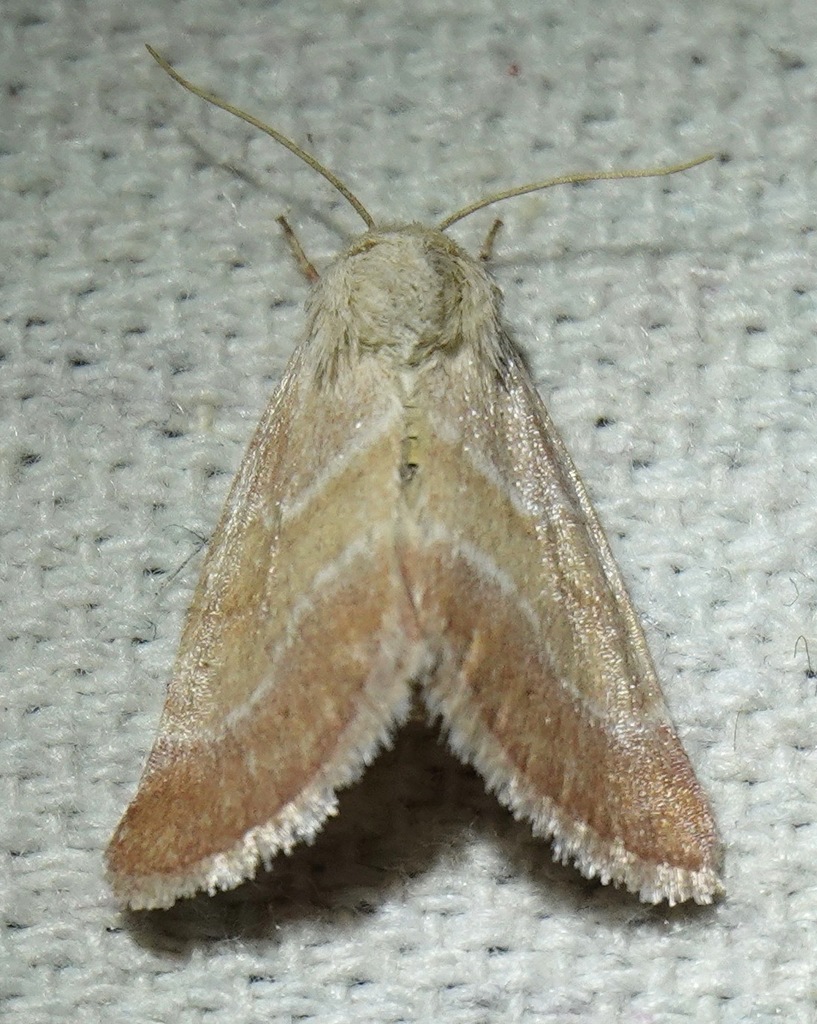
(c) desertnaturalist, some rights reserved (CC BY) · licence
Family: Noctuidae · Class: Insecta · Order: Lepidoptera
Schinia buta is a California animal in the Noctuidae family.
Schinia buta is a moth species in the family Noctuidae, commonly known as flower moths or owlet moths. This species belongs to the genus Schinia, which comprises approximately 140 described species in North America, many of which are specialized feeders on composite flowers. Like other members of its genus, S. buta is likely a relatively small moth with forewings typically measuring 10-15 mm in length, though specific morphological details for this species are limited in available literature. The geographic range and distribution of Schinia buta remain poorly documented in current taxonomic databases. The species appears to be native to North America, consistent with the distribution pattern of the genus Schinia, which is predominantly Nearctic. However, specific locality records and the extent of its range within California or other western states require further documentation through systematic surveys and museum specimen examination. Habitat preferences for Schinia buta are not well-established in published literature. Members of the genus Schinia typically inhabit areas where their host plants occur, often in open habitats such as grasslands, prairies, desert margins, and disturbed areas. Many Schinia species show strong fidelity to specific flowering plants, particularly those in the family Asteraceae (sunflower family), and adults are often found nectaring on the same plant species that serve as larval hosts. The ecology and life history of Schinia buta follow the general pattern typical of noctuids. Adults are likely nocturnal, active during evening and nighttime hours when they seek nectar sources and mates. Like other Schinia species, S. buta probably has a close association with specific host plants, with larvae feeding on flowers, developing seeds, or flower heads of their preferred plant species. The timing of adult emergence is likely synchronized with the blooming period of the host plant, ensuring that females can locate appropriate oviposition sites. Most Schinia species produce one or two generations per year, depending on climate and host plant phenology. The conservation status of Schinia buta is unclear due to limited available data on its distribution, population size, and ecological requirements. The species does not appear on federal or California state endangered species lists as of December 2025, nor is it assessed by the International Union for Conservation of Nature. This lack of conservation assessment may reflect insufficient biological and distributional data rather than secure population status. Many specialized moth species face threats from habitat loss, pesticide use, and climate change effects on host plant distribution and phenology. Without adequate baseline surveys and ecological studies, it is difficult to assess whether S. buta populations are stable, declining, or at risk. Further research is needed to establish the basic biology, distribution, host plant relationships, and conservation needs of Schinia buta. Systematic surveys targeting potential habitats and host plants would help clarify the species' current status and inform any necessary conservation measures.
Classification
Class: Insecta · Order: Lepidoptera · Family: Noctuidae
Frequently asked questions
How is Schinia buta classified?
Schinia buta belongs to class Insecta, order Lepidoptera, family Noctuidae.
What family does Schinia buta belong to?
Schinia buta is in the Noctuidae family.
What is Schinia buta?
Schinia buta is a moth species in the family Noctuidae, commonly known as flower moths or owlet moths.
Is Schinia buta found in California?
Yes. Schinia buta is recorded in California in The California Species Project's catalogue.
Related species
Other California species in the same genus, family, or bioregion.
Data from The California Species Project — 14,000+ California species with verified data from CNPS, CDFW, USFWS, and more.