Schinia ciliata
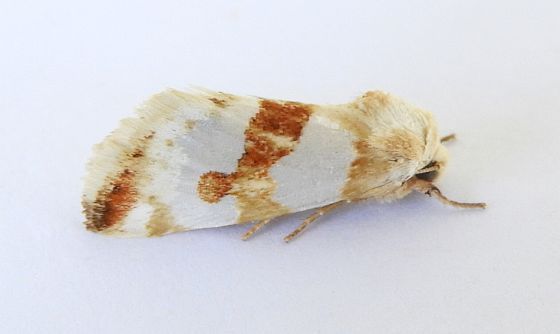
(c) jimeckert49, some rights reserved (CC BY) · licence
Family: Noctuidae · Class: Insecta · Order: Lepidoptera
Schinia ciliata is a California animal in the Noctuidae family.
Schinia ciliata is a small noctuid moth in the family Noctuidae, subfamily Heliothinae. This species belongs to a genus of specialized moths that typically exhibit close associations with specific host plants, particularly members of the sunflower family (Asteraceae). Adult moths display the characteristic features of the genus Schinia, with forewings typically measuring 12-16 mm in length and exhibiting cryptic coloration patterns that provide camouflage when resting on their host plants. The forewings of S. ciliata are generally brownish-gray with subtle markings that may include darker cross-lines and pale patches. The hindwings are typically lighter, ranging from pale gray to whitish. Like other Schinia species, the moths have well-developed antennae and compound eyes adapted for nocturnal activity. The thorax and abdomen are covered in scales that match the overall coloration of the wings. The distribution and range of Schinia ciliata in California remains poorly documented in the scientific literature. Members of the genus Schinia are typically distributed across western North America, with many species showing restricted ranges tied to the distribution of their specific host plants. Without detailed survey data, the precise counties and elevational range of this species in California cannot be definitively stated. Habitat requirements for S. ciliata likely follow the pattern typical of Schinia moths, which are found in areas where their host plants occur. These habitats may include grasslands, chaparral edges, desert scrub, or other plant communities supporting appropriate host species. The elevation range and specific microhabitat preferences remain undocumented for this species. The life cycle of S. ciliata presumably follows the pattern common to Schinia moths, which are typically univoltine (one generation per year) in temperate regions. Adults likely emerge during specific months when host plants are in bloom, though the exact flight period for this species has not been well documented. Larvae are expected to be specialist feeders on one or more plant species in the Asteraceae family, feeding on flowers, developing seeds, or other plant parts. Like other Schinia species, the larvae likely pupate in the soil or leaf litter near the host plant. Females deposit eggs on or near the host plant, and larvae develop through five instars before pupation. The timing of reproduction is typically synchronized with the phenology of the host plant to ensure optimal food availability for developing larvae. The conservation status of Schinia ciliata is not well established due to limited research and survey efforts. No federal or state listing status has been assigned to this species as of December 2025. The lack of comprehensive distributional data, population estimates, and threat assessments represents a significant knowledge gap for this moth. Potential threats may include habitat loss, pesticide use, and climate change impacts on host plant distributions, though specific threat analyses have not been conducted. Further taxonomic research, distribution surveys, and ecological studies are needed to assess the conservation needs of this poorly known California moth species.
Classification
Class: Insecta · Order: Lepidoptera · Family: Noctuidae
Frequently asked questions
How is Schinia ciliata classified?
Schinia ciliata belongs to class Insecta, order Lepidoptera, family Noctuidae.
What family does Schinia ciliata belong to?
Schinia ciliata is in the Noctuidae family.
What is Schinia ciliata?
Schinia ciliata is a small noctuid moth in the family Noctuidae, subfamily Heliothinae.
Is Schinia ciliata found in California?
Yes. Schinia ciliata is recorded in California in The California Species Project's catalogue.
Related species
Other California species in the same genus, family, or bioregion.
Data from The California Species Project — 14,000+ California species with verified data from CNPS, CDFW, USFWS, and more.