Schinia citrinella
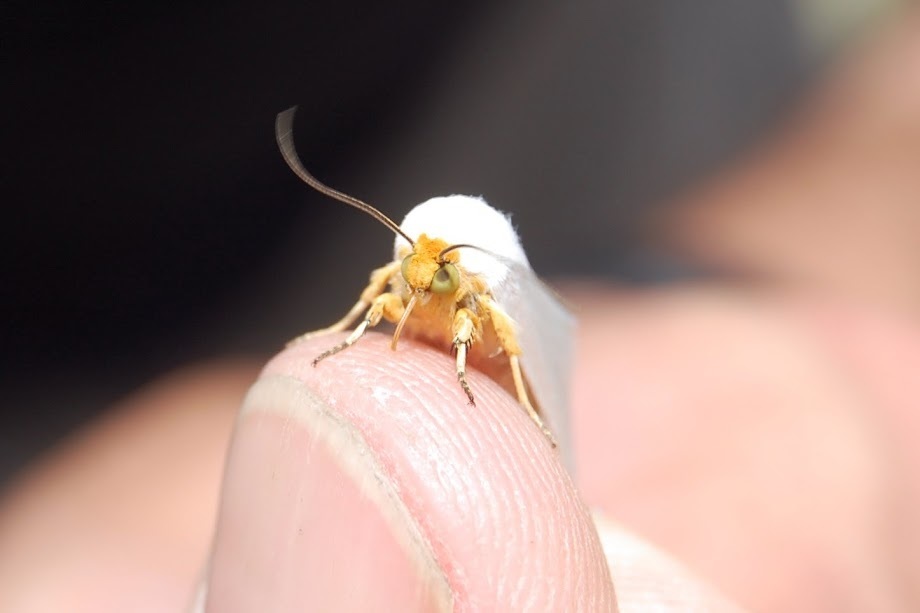
(c) Chris Friesen, some rights reserved (CC BY) · licence
Family: Noctuidae · Class: Insecta · Order: Lepidoptera
Schinia citrinella is a California animal in the Noctuidae family.
Schinia citrinella is a small moth in the family Noctuidae, subfamily Heliothinae. Adults have a forewing length of approximately 8 to 12 mm, with forewings displaying a pale yellow to cream-colored ground color marked with darker yellow or orange-brown patterns. The hindwings are typically paler, ranging from white to light cream. Like other Schinia species, the forewings show characteristic reniform and orbicular spots, though these markings may be indistinct in some individuals. The thorax and head match the forewing coloration, while the abdomen is generally paler. This species occurs in western North America, with records from California, Nevada, and other western states. In California, Schinia citrinella has been documented from various locations, though its full distribution within the state requires further documentation. The species appears to have a relatively restricted range compared to more widespread Schinia species. Schinia citrinella inhabits arid and semi-arid environments typical of western North American deserts and grasslands. The species is associated with areas supporting its host plants, which include members of the Asteraceae family. Adults are typically found in open areas with sandy or rocky substrates where suitable vegetation occurs. Elevation ranges appear to span from low desert elevations to moderate mountain slopes, though specific altitudinal limits require further study. Adults are active during warmer months, with flight periods likely extending from late spring through early fall, depending on local climate conditions. Like other Schinia species, adults are primarily nocturnal and are attracted to artificial lights. Larvae feed on flowers and developing seeds of their host plants, following the typical pattern of flower moth biology. The species likely produces one generation per year in most locations, though this may vary with elevation and local conditions. Mating and oviposition occur during the adult flight period, with females depositing eggs on or near host plants. The conservation status of Schinia citrinella has not been formally assessed at federal or state levels. The species does not appear on any endangered species lists as of December 2025. Population trends and conservation needs remain poorly understood due to limited survey data and taxonomic research. Like many specialized moths associated with desert ecosystems, potential threats may include habitat loss from development, invasive plant species that compete with native host plants, and climate change effects on desert plant communities. The species' conservation status would benefit from systematic surveys to determine population trends and distribution limits. Additionally, clarification of host plant relationships and life cycle requirements would inform future conservation planning if needed.
Classification
Class: Insecta · Order: Lepidoptera · Family: Noctuidae
Frequently asked questions
How is Schinia citrinella classified?
Schinia citrinella belongs to class Insecta, order Lepidoptera, family Noctuidae.
What family does Schinia citrinella belong to?
Schinia citrinella is in the Noctuidae family.
What is Schinia citrinella?
Schinia citrinella is a small moth in the family Noctuidae, subfamily Heliothinae.
Is Schinia citrinella found in California?
Yes. Schinia citrinella is recorded in California in The California Species Project's catalogue.
Related species
Other California species in the same genus, family, or bioregion.
Data from The California Species Project — 14,000+ California species with verified data from CNPS, CDFW, USFWS, and more.