Schinia cumatilis
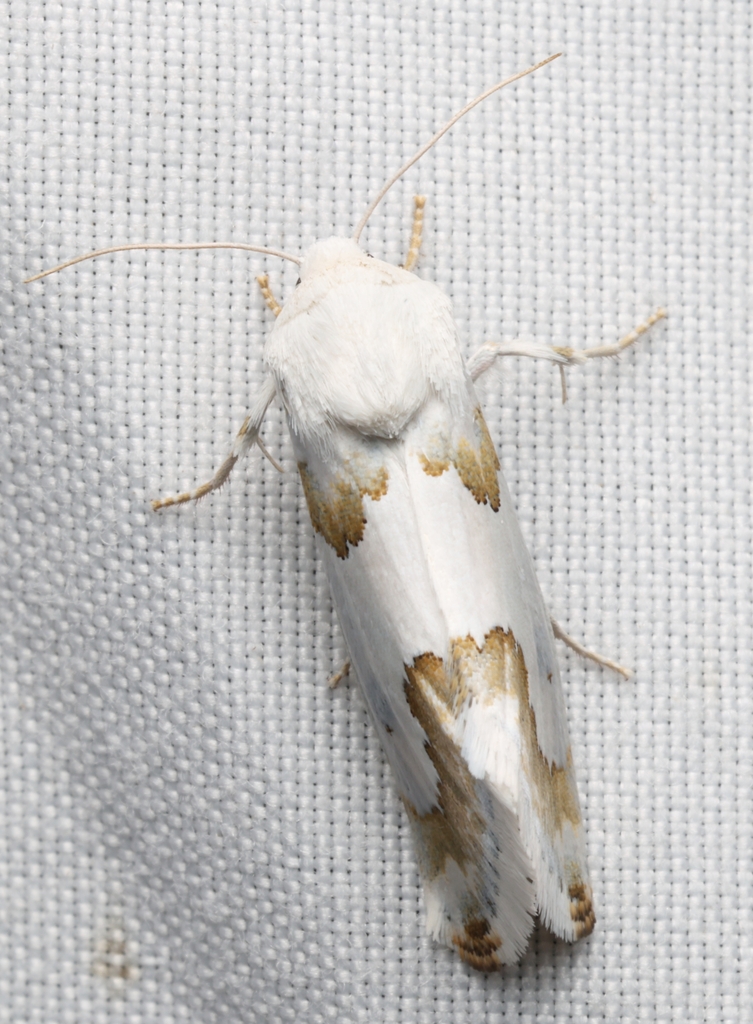
(c) Colin Croft, some rights reserved (CC BY) · licence
Family: Noctuidae · Class: Insecta · Order: Lepidoptera
Schinia cumatilis is a California animal in the Noctuidae family.
Schinia cumatilis is a moth in the family Noctuidae, subfamily Heliothinae. This species belongs to the genus Schinia, which comprises flower moths that typically exhibit specialized relationships with their host plants. Adults are small to medium-sized moths with forewings measuring approximately 12-15 mm in length. The forewings display a mottled pattern of gray, brown, and cream coloration that provides effective camouflage when resting on flowers or plant stems. The hindwings are typically lighter in coloration, ranging from pale gray to whitish with darker marginal bands. The current distribution of Schinia cumatilis appears to be limited, though comprehensive range data remains incomplete. Historical records suggest the species may have occurred in western North America, potentially including parts of California, though specific locality data requires further verification. The species' range may overlap with the distribution of its presumed host plants, which would indicate habitat preferences for areas supporting native flowering plants in the Asteraceae family. Schinia cumatilis likely inhabits open areas with abundant flowering plants, including grasslands, chaparral margins, and disturbed sites where host plants flourish. Many Schinia species demonstrate strong fidelity to specific elevation ranges and microclimatic conditions that support their host plants. The species probably occurs at elevations ranging from sea level to several thousand feet, depending on host plant distribution and suitable habitat availability. Like other members of the genus Schinia, this species likely exhibits close ecological relationships with specific flowering plants. Adult moths are presumed to be active during evening and nighttime hours, when they visit flowers for nectar feeding. Females probably deposit eggs directly on or near host plant flower buds or developing seed heads. Larvae likely feed within flower heads, consuming developing seeds and floral tissues. The species probably completes one generation per year, synchronized with the flowering period of its host plants. Pupation likely occurs in soil beneath host plants or in plant debris. The conservation status of Schinia cumatilis remains poorly documented, with limited recent survey data available to assess population trends or current distribution. The species may face threats common to specialized flower moths, including habitat loss due to urban development, agricultural conversion, and altered fire regimes that affect native plant communities. Invasive plant species may compete with or displace native host plants, potentially reducing suitable breeding habitat. Climate change could alter the phenology of host plants, disrupting the synchronization between moth life cycles and resource availability. Additional survey work and taxonomic research are needed to clarify the species' current status, distribution, and conservation needs. The apparent rarity of recent records suggests this species may warrant consideration for conservation assessment and monitoring efforts.
Classification
Class: Insecta · Order: Lepidoptera · Family: Noctuidae
Frequently asked questions
How is Schinia cumatilis classified?
Schinia cumatilis belongs to class Insecta, order Lepidoptera, family Noctuidae.
What family does Schinia cumatilis belong to?
Schinia cumatilis is in the Noctuidae family.
What is Schinia cumatilis?
Schinia cumatilis is a moth in the family Noctuidae, subfamily Heliothinae.
Is Schinia cumatilis found in California?
Yes. Schinia cumatilis is recorded in California in The California Species Project's catalogue.
Related species
Other California species in the same genus, family, or bioregion.
Data from The California Species Project — 14,000+ California species with verified data from CNPS, CDFW, USFWS, and more.