Schinia cupes
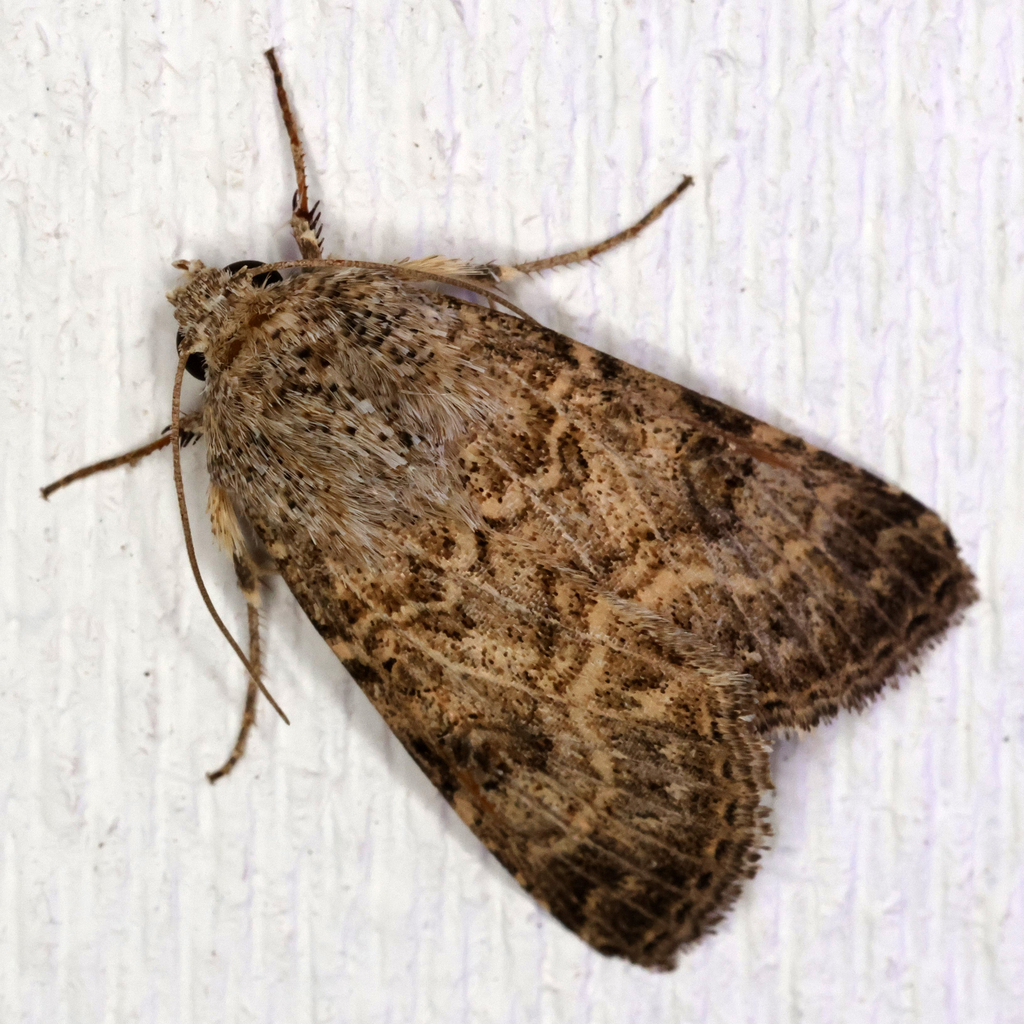
(c) Catherine C. Galley, some rights reserved (CC BY) · licence
Family: Noctuidae · Class: Insecta · Order: Lepidoptera
Schinia cupes is a California animal in the Noctuidae family.
Schinia cupes is a moth species in the family Noctuidae, subfamily Heliothinae. This species belongs to the flower moth genus Schinia, which comprises numerous specialized moths that often feed on specific host plants during their larval stage. Adult moths typically measure 12-16 mm in forewing length, with forewings displaying mottled brown and gray patterns that provide camouflage against bark and dried vegetation. The hindwings are lighter, often pale gray or whitish with darker marginal bands. The species is found in western North America, with documented populations in California, Nevada, and other southwestern states. In California, Schinia cupes occurs in various counties throughout the state, though specific distribution records are limited. The moth appears to be associated with arid and semi-arid regions, consistent with other members of the Schinia genus that have adapted to dry environments. Schinia cupes inhabits desert scrub, chaparral, and grassland communities, typically at elevations ranging from near sea level to approximately 1,500 meters. The species shows preference for areas with scattered shrubs and open spaces where host plants occur. Like other Schinia species, this moth likely requires specific microhabitat conditions related to its larval host plant requirements and adult nectar sources. Adult moths are primarily nocturnal, with flight activity concentrated during warmer months when host plants are in bloom. Larvae are specialist feeders, though the specific host plant relationships for Schinia cupes require further documentation. Many Schinia species demonstrate highly specialized associations with particular plant families, often Asteraceae, and larvae typically feed within flower heads or on developing seeds. Adults feed on nectar from various flowering plants and are attracted to artificial lights during evening hours. The conservation status of Schinia cupes has not been formally assessed by federal or state wildlife agencies. The species does not appear on current threatened or endangered species lists, though limited survey data makes population trend assessment difficult. Like many specialized moths, Schinia cupes may face threats from habitat loss due to urban development, agricultural conversion, and changes in fire regimes that affect native plant communities. Climate change could impact the species through alterations in precipitation patterns and temperature regimes that affect both the moth and its host plants. The species' narrow ecological requirements typical of Schinia moths may make it vulnerable to environmental changes, though specific population data and threat assessments are needed to determine conservation priorities. Additional research is required to fully understand the species' distribution, abundance, host plant relationships, and conservation needs throughout its range.
Classification
Class: Insecta · Order: Lepidoptera · Family: Noctuidae
Frequently asked questions
How is Schinia cupes classified?
Schinia cupes belongs to class Insecta, order Lepidoptera, family Noctuidae.
What family does Schinia cupes belong to?
Schinia cupes is in the Noctuidae family.
What is Schinia cupes?
Schinia cupes is a moth species in the family Noctuidae, subfamily Heliothinae.
Is Schinia cupes found in California?
Yes. Schinia cupes is recorded in California in The California Species Project's catalogue.
Related species
Other California species in the same genus, family, or bioregion.
Data from The California Species Project — 14,000+ California species with verified data from CNPS, CDFW, USFWS, and more.