Schinia dobla
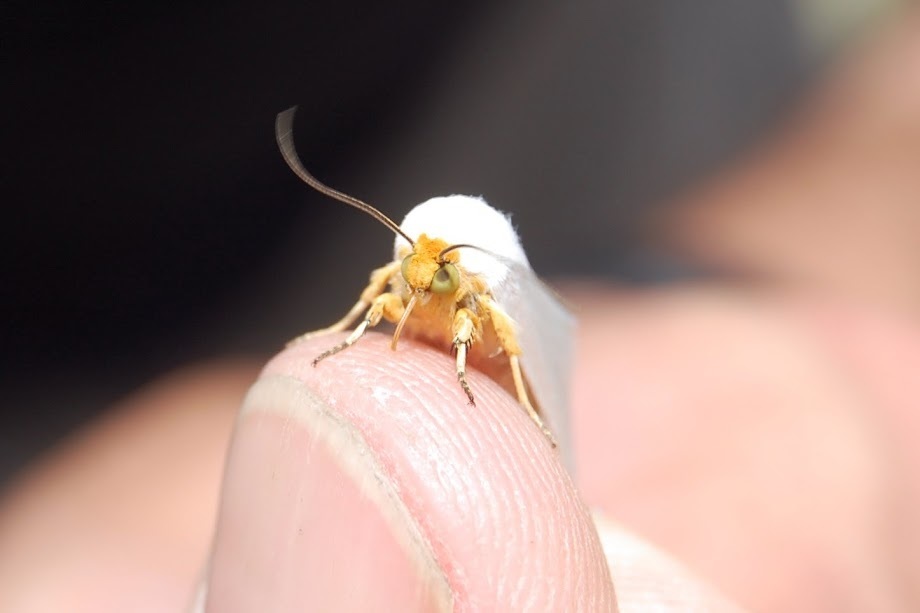
(c) Chris Friesen, some rights reserved (CC BY) · licence
Family: Noctuidae · Class: Insecta · Order: Lepidoptera
Schinia dobla is a California animal in the Noctuidae family.
Schinia dobla is a moth species in the family Noctuidae, subfamily Heliothinae. This species belongs to the genus Schinia, a group of moths commonly known as flower moths due to their close association with specific host plants. Adult moths typically measure 12 to 16 mm in forewing length, with wingspan ranging from 24 to 32 mm. The forewings display a mottled pattern of brown, gray, and cream coloration that provides effective camouflage when resting on host plants during daylight hours. The hindwings are typically paler, ranging from light brown to whitish with darker marginal bands. The distribution of Schinia dobla appears to be limited to specific regions of western North America, though comprehensive range data remains incomplete. Like many Schinia species, this moth likely has a restricted distribution tied to the availability of its host plant requirements. The species has been documented in areas where suitable habitat and host plants occur, but detailed distributional records are limited in scientific literature. Schinia dobla inhabits areas where its specific host plants grow, typically in open, sunny locations such as grasslands, scrublands, and disturbed areas. The species demonstrates the specialized habitat requirements characteristic of many Schinia moths, which have evolved close relationships with particular plant species. Elevation preferences and specific microhabitat requirements for this species require further documentation through field studies. The life cycle of Schinia dobla follows the typical pattern of other flower moths in the genus. Adults are active during warmer months, with flight periods likely concentrated in late spring through early fall, depending on local climate conditions. Females deposit eggs on or near host plants, where larvae develop by feeding on flowers, buds, seeds, or other plant parts. The larvae typically complete development within the host plant structures, pupating in soil or plant debris. Like other Schinia species, this moth likely produces one or two generations per year, depending on local environmental conditions and host plant phenology. The conservation status of Schinia dobla remains poorly documented, reflecting the limited research attention given to many specialized moth species. As with other members of the genus Schinia, potential threats may include habitat loss, changes in land use practices, and factors affecting host plant availability. Many flower moths face conservation challenges due to their specialized ecological requirements and often restricted distributions. Climate change may pose additional risks by altering the timing of host plant availability or shifting suitable habitat ranges. The species would benefit from systematic surveys to better understand its current distribution, population status, and specific conservation needs. Further research is needed to document host plant relationships, habitat requirements, and population trends for this specialized moth species.
Classification
Class: Insecta · Order: Lepidoptera · Family: Noctuidae
Frequently asked questions
How is Schinia dobla classified?
Schinia dobla belongs to class Insecta, order Lepidoptera, family Noctuidae.
What family does Schinia dobla belong to?
Schinia dobla is in the Noctuidae family.
What is Schinia dobla?
Schinia dobla is a moth species in the family Noctuidae, subfamily Heliothinae.
Is Schinia dobla found in California?
Yes. Schinia dobla is recorded in California in The California Species Project's catalogue.
Related species
Other California species in the same genus, family, or bioregion.
Data from The California Species Project — 14,000+ California species with verified data from CNPS, CDFW, USFWS, and more.