Schinia erosa
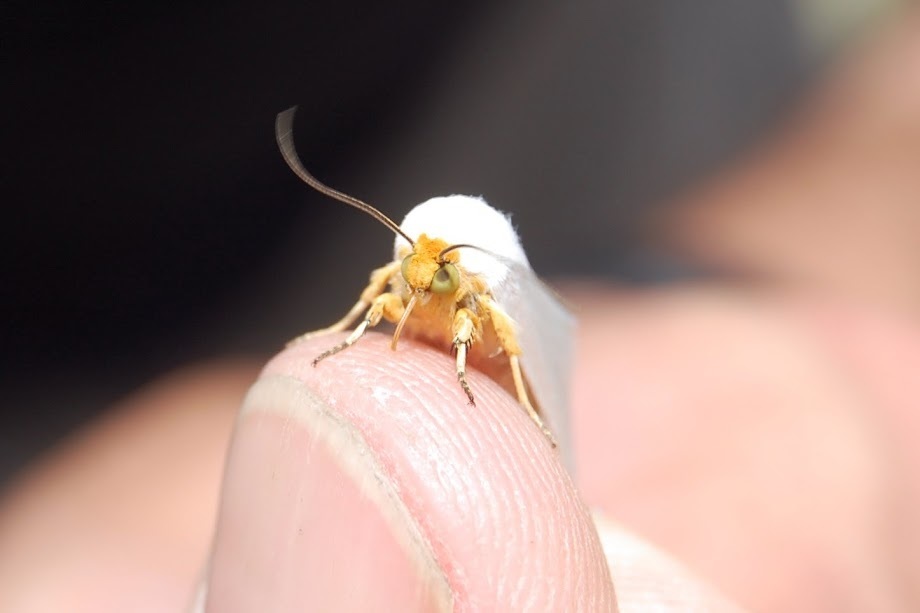
(c) Chris Friesen, some rights reserved (CC BY) · licence
Family: Noctuidae · Class: Insecta · Order: Lepidoptera
Schinia erosa is a California animal in the Noctuidae family.
Schinia erosa is a moth species in the family Noctuidae, commonly known as flower moths or owlet moths. This species belongs to the genus Schinia, which comprises approximately 150 species of moths primarily found in North America. Adult Schinia erosa typically display the characteristic coloration patterns of their genus, with forewings that often exhibit cryptic markings and earth-toned coloration that provides camouflage when at rest on host plants or substrate. The historical and current range of Schinia erosa includes portions of western North America, though detailed distribution records for this species are limited in published literature. Many Schinia species demonstrate restricted ranges tied closely to the distribution of their specific host plants. Without comprehensive survey data, the precise geographic boundaries and population status of S. erosa remain unclear. Habitat requirements for Schinia erosa are likely closely tied to the presence of specific host plants, as is typical for moths in this genus. Schinia species generally inhabit areas where their larval host plants occur, including grasslands, shrublands, desert margins, and disturbed areas. The elevation range and specific microhabitat preferences for S. erosa require further documentation through field studies. Many Schinia moths show strong fidelity to particular plant communities and may be found in relatively small, isolated populations where suitable host plants persist. The life cycle of Schinia erosa follows the typical lepidopteran pattern of complete metamorphosis. Adults are likely nocturnal, as are most members of the Noctuidae family. Larvae presumably feed on specific host plants, though the exact plant species utilized by S. erosa larvae have not been definitively documented in available literature. Most Schinia species are univoltine, producing one generation per year, with timing of adult emergence synchronized to the flowering period of their host plants. Adult flight periods vary among Schinia species but commonly occur during late spring through early fall, depending on geographic location and local climate conditions. The conservation status of Schinia erosa is poorly documented, reflecting broader knowledge gaps for many invertebrate species. The species lacks formal federal or state conservation listing status, though this may reflect insufficient data rather than population stability. Many Schinia moths face potential threats from habitat loss, particularly the destruction or degradation of native plant communities that support their larval development. Agricultural conversion, urban development, invasive plant species, and altered fire regimes can eliminate host plants and fragment suitable habitat. Climate change may also affect the phenology and distribution of both the moth and its host plants. Without recent population surveys or systematic monitoring, the current population trends and conservation needs of Schinia erosa remain uncertain. The species would benefit from targeted field surveys to determine its current distribution, abundance, host plant associations, and habitat requirements. Such baseline ecological data is essential for assessing conservation status and developing appropriate management strategies if needed.
Classification
Class: Insecta · Order: Lepidoptera · Family: Noctuidae
Frequently asked questions
How is Schinia erosa classified?
Schinia erosa belongs to class Insecta, order Lepidoptera, family Noctuidae.
What family does Schinia erosa belong to?
Schinia erosa is in the Noctuidae family.
What is Schinia erosa?
Schinia erosa is a moth species in the family Noctuidae, commonly known as flower moths or owlet moths.
Is Schinia erosa found in California?
Yes. Schinia erosa is recorded in California in The California Species Project's catalogue.
Related species
Other California species in the same genus, family, or bioregion.
Data from The California Species Project — 14,000+ California species with verified data from CNPS, CDFW, USFWS, and more.