Schinia felicitata
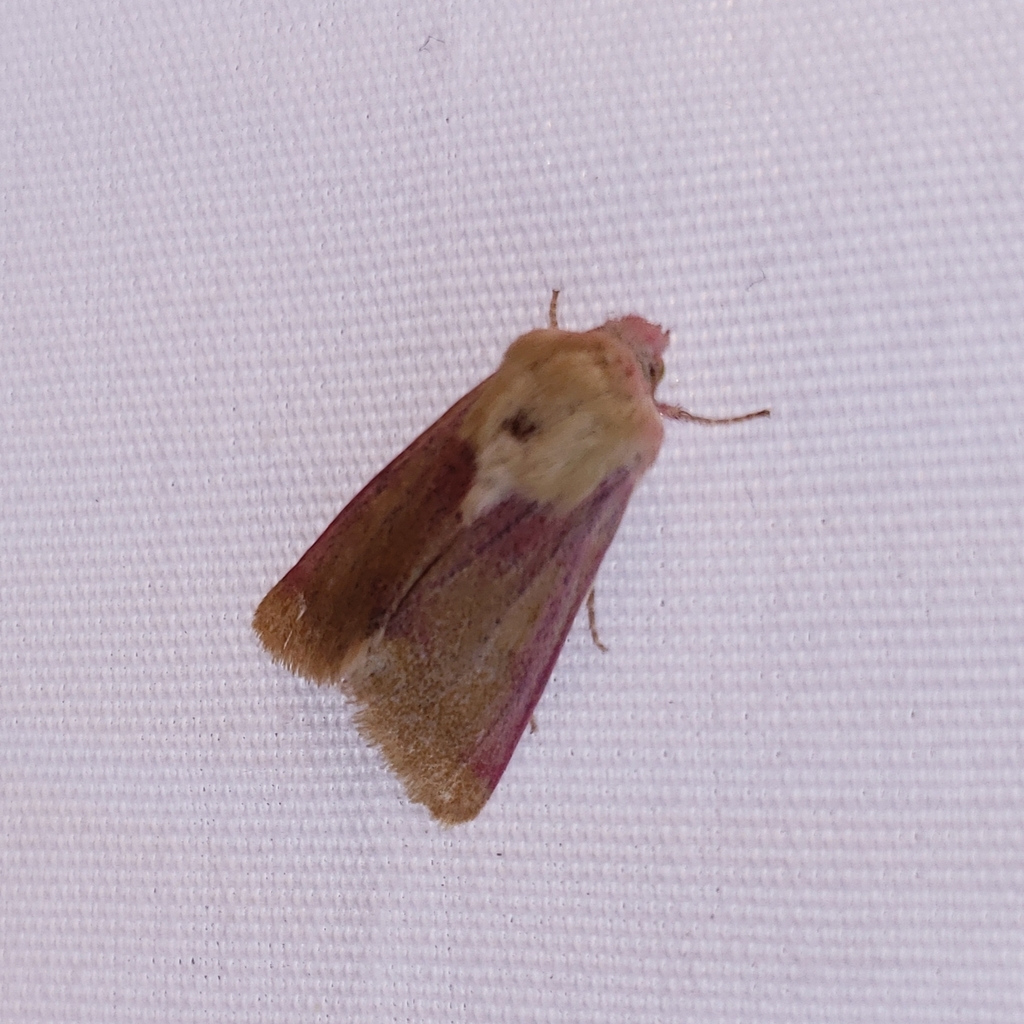
no rights reserved · CC0
Family: Noctuidae · Class: Insecta · Order: Lepidoptera
Schinia felicitata is a California animal in the Noctuidae family.
Schinia felicitata is a moth in the family Noctuidae, subfamily Heliothinae. This species belongs to the diverse genus Schinia, which includes numerous flower moths that typically exhibit close associations with specific host plants. Physical characteristics and detailed morphological descriptions for this species remain poorly documented in the available scientific literature. The species occurs from northern Mexico north to southern California and southwest Utah (iNaturalist). Within California, S. felicitata represents one of many Schinia species found in the southwestern United States, though its specific distributional limits within the state require further documentation. The genus Schinia is well-represented in arid and semi-arid regions of western North America, with many species showing narrow geographic ranges tied to their host plant distributions. Habitat requirements for S. felicitata have not been well documented in the scientific literature. Members of the genus Schinia typically inhabit desert, chaparral, and grassland environments where their host plants occur. Many Schinia species demonstrate strong fidelity to specific flowering plants, with larvae feeding on flower heads, seeds, or other reproductive structures. The moths are often found in areas with sandy or rocky soils that support diverse wildflower communities. Life history details for S. felicitata remain largely undocumented. Most Schinia species are univoltine, with adults flying during specific seasons that coincide with the flowering periods of their host plants. Larvae typically develop within flower heads or seed pods, and many species overwinter as pupae in soil chambers. Adults are generally nocturnal and attracted to lights, though some species are also active during daylight hours while nectaring at flowers. The Moth Photographers Group database lists this species as number 11163 in their taxonomic system, indicating its recognized status within North American Lepidoptera fauna. Taxonomic research has revealed complexity within this group, with DNA barcoding studies providing evidence of genetic relationships among Schinia species (Moth Photographers Group). The closely related Schinia lynda was described by Troubridge in 2002 as a new species, suggesting ongoing taxonomic work within this genus may reveal additional species-level distinctions. No federal or state conservation status has been assigned to S. felicitata. Like many moths with limited distributional data and poorly understood ecology, this species may face conservation challenges that remain unassessed. The lack of comprehensive surveys for many Noctuidae species makes it difficult to evaluate population trends or identify potential threats. Habitat modification, light pollution, and climate change represent general concerns for desert-dwelling moths, though specific impacts on S. felicitata have not been studied. Scientific documentation for this species remains limited. The information presented here is based on available sources including iNaturalist and the Moth Photographers Group database. If you have additional verified information about this species' biology, distribution, or ecology, please contact us to help improve this species account.
Classification
Class: Insecta · Order: Lepidoptera · Family: Noctuidae
Frequently asked questions
How is Schinia felicitata classified?
Schinia felicitata belongs to class Insecta, order Lepidoptera, family Noctuidae.
What family does Schinia felicitata belong to?
Schinia felicitata is in the Noctuidae family.
What is Schinia felicitata?
Schinia felicitata is a moth in the family Noctuidae, subfamily Heliothinae.
Is Schinia felicitata found in California?
Yes. Schinia felicitata is recorded in California in The California Species Project's catalogue.
Related species
Other California species in the same genus, family, or bioregion.
Data from The California Species Project — 14,000+ California species with verified data from CNPS, CDFW, USFWS, and more.