Schinia graefiana
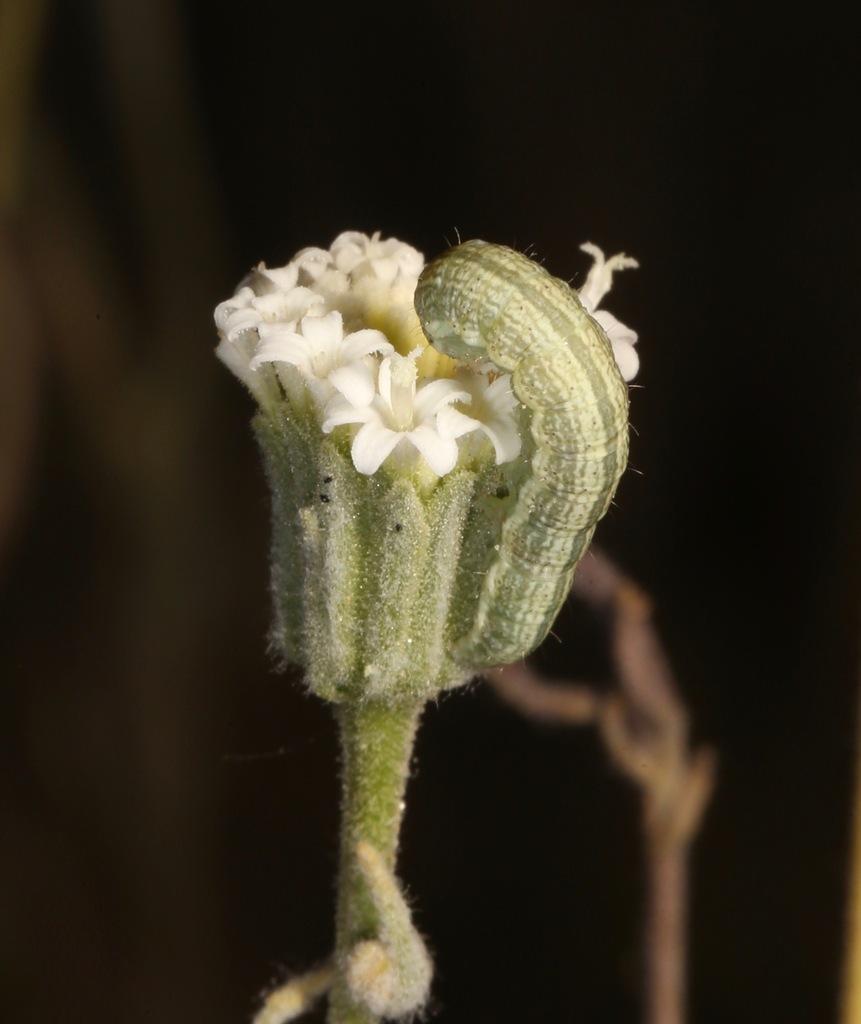
(c) Laura Gaudette, some rights reserved (CC BY) · licence
Family: Noctuidae · Class: Insecta · Order: Lepidoptera
Schinia graefiana is a California animal in the Noctuidae family.
Schinia graefiana is a moth species in the family Noctuidae, subfamily Heliothinae. This species belongs to a genus of flower moths known for their specialized relationships with host plants in the sunflower family. Adult moths typically measure 12-16 mm in wingspan, with forewings displaying muted earth tones that provide camouflage when resting on their host plants during daylight hours. The forewings are generally pale brown to grayish-brown with subtle darker markings, while the hindwings are lighter, often whitish or pale gray with darker marginal bands. The distribution and range of Schinia graefiana remain poorly documented in the scientific literature. Like many members of the genus Schinia, this species likely has a restricted range tied to the distribution of its specific host plant requirements. Many Schinia species exhibit narrow geographical distributions due to their specialized feeding relationships and habitat requirements. Habitat preferences for S. graefiana are presumably linked to areas where its host plants occur. Members of the genus Schinia typically inhabit open areas such as grasslands, prairies, desert regions, or disturbed sites where their Asteraceae host plants grow. These moths often require specific microhabitat conditions including appropriate soil types, elevation ranges, and climate patterns that support both the host plants and the moth's life cycle requirements. The behavior and ecology of Schinia graefiana likely follow patterns typical of other Schinia species. Adults are generally nocturnal, becoming active at dusk and during nighttime hours. Females lay eggs on or near the host plant, and larvae develop by feeding on flower heads, seeds, or other plant parts. The larval stage is typically the most host-specific phase of the life cycle. Most Schinia species have one generation per year, with timing synchronized to their host plant's flowering and fruiting periods. Adults may feed on nectar from various flowers, though they show strong fidelity to their larval host plants for reproduction. The conservation status of Schinia graefiana is not well established due to limited research and documentation of this species. Many specialized moths in the genus Schinia face conservation challenges due to habitat loss, agricultural practices, and the decline of native plant communities. Species with narrow host plant relationships are particularly vulnerable to environmental changes that affect their host plants. Urban development, agricultural conversion, invasive species, and altered fire regimes can all impact the specialized habitats required by these moths. Further research is needed to determine the specific host plant relationships, distribution, population status, and conservation needs of S. graefiana. Comprehensive surveys and taxonomic studies would help clarify the species' status and inform any necessary conservation measures. Like many lesser-known invertebrate species, S. graefiana may benefit from broader habitat conservation efforts that protect native plant communities and maintain the ecological processes that support specialized plant-insect relationships.
Classification
Class: Insecta · Order: Lepidoptera · Family: Noctuidae
Frequently asked questions
How is Schinia graefiana classified?
Schinia graefiana belongs to class Insecta, order Lepidoptera, family Noctuidae.
What family does Schinia graefiana belong to?
Schinia graefiana is in the Noctuidae family.
What is Schinia graefiana?
Schinia graefiana is a moth species in the family Noctuidae, subfamily Heliothinae.
Is Schinia graefiana found in California?
Yes. Schinia graefiana is recorded in California in The California Species Project's catalogue.
Related species
Other California species in the same genus, family, or bioregion.
Data from The California Species Project — 14,000+ California species with verified data from CNPS, CDFW, USFWS, and more.