Schinia honesta
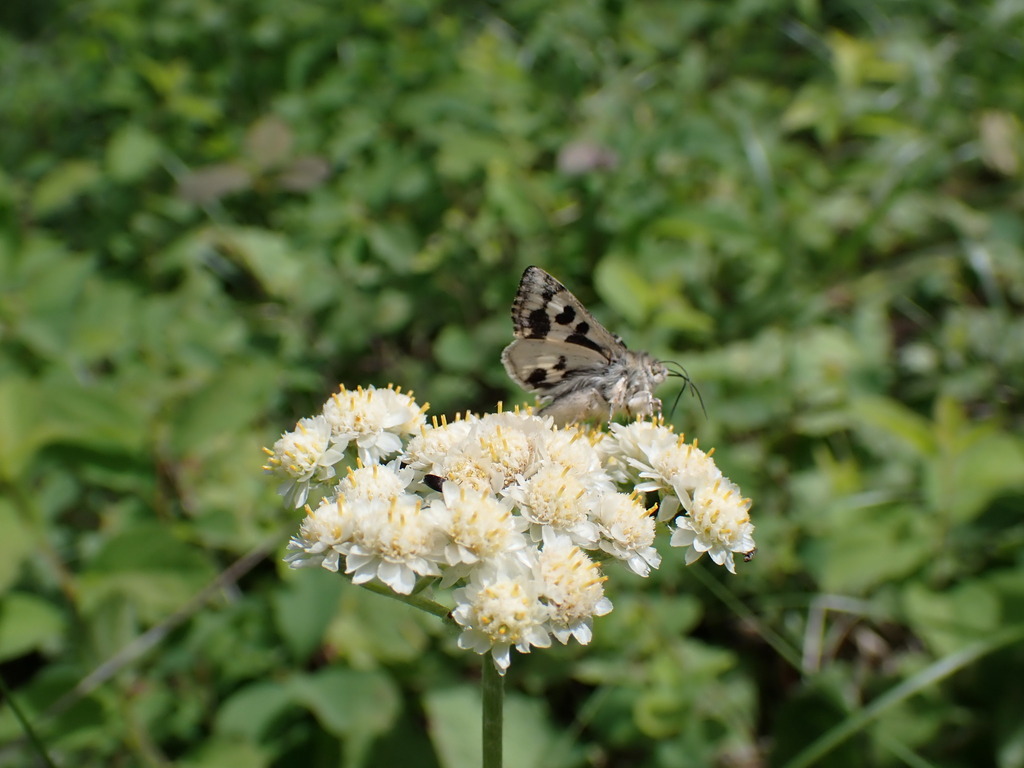
(c) Aiva Noringseth, some rights reserved (CC BY) · licence
Family: Noctuidae · Class: Insecta · Order: Lepidoptera
Schinia honesta is a California animal in the Noctuidae family.
Schinia honesta is a moth species in the family Noctuidae, subfamily Heliothinae. This species belongs to the flower moth genus Schinia, which comprises approximately 120 North American species known for their specialized relationships with composite flowers. Adult moths typically measure 12 to 18 mm in forewing length, displaying the characteristic compact body form and relatively narrow wings common to the genus. The forewings exhibit a mottled pattern of brown, gray, and tan coloration that provides effective camouflage when the moth rests on flower heads during daylight hours. Like other Schinia species, S. honesta likely displays sexual dimorphism, with males typically showing more pronounced wing patterns and feathered antennae compared to females. The hindwings are generally paler than the forewings, often cream-colored or light gray with reduced patterning. Schinia honesta occurs in western North America, with documented populations in California, Nevada, and Oregon. Within California, the species has been recorded from multiple counties including those in the Central Valley and coastal regions. The distribution appears to be closely tied to the presence of suitable host plants and appropriate habitat conditions. The species inhabits areas where its host plants occur, typically in open habitats such as grasslands, chaparral margins, and disturbed areas. Based on the ecology of related Schinia species, S. honesta likely requires specific composite flowers for larval development. Many flower moths in this genus are oligophagous, with larvae feeding exclusively on flower heads, developing seeds, and receptacles of plants in the Asteraceae family. The habitat preferences likely include areas with moderate elevation ranges and seasonal moisture patterns that support host plant blooming cycles. Adult flight periods for Schinia species typically coincide with the blooming periods of their host plants, often occurring from late spring through early fall. Females lay eggs directly on or near flower buds, and larvae bore into developing flower heads where they feed on seeds, pollen, and floral tissues. This feeding behavior often causes minimal visible damage to the host plant, as the larvae consume internal structures rather than leaves or stems. Development is typically univoltine, with one generation per year, though this may vary with local climate conditions and host plant phenology. Pupation occurs in the soil near the host plant, with adults emerging to coincide with peak flowering periods. Like other nocturnal moths, S. honesta adults are likely attracted to artificial lights and may visit flowers for nectar feeding during evening and nighttime hours. The conservation status of Schinia honesta has not been formally assessed at federal or state levels. However, like many specialized herbivorous insects, the species may face threats from habitat loss, agricultural conversion, and changes in host plant availability. Urban development and intensive land management practices can eliminate the native plant communities upon which the species depends. Climate change may also affect the synchronization between moth emergence and host plant flowering, potentially disrupting reproductive success. Conservation of S. honesta would benefit from protection of native grassland and chaparral habitats where host plants occur naturally.
Classification
Class: Insecta · Order: Lepidoptera · Family: Noctuidae
Frequently asked questions
How is Schinia honesta classified?
Schinia honesta belongs to class Insecta, order Lepidoptera, family Noctuidae.
What family does Schinia honesta belong to?
Schinia honesta is in the Noctuidae family.
What is Schinia honesta?
Schinia honesta is a moth species in the family Noctuidae, subfamily Heliothinae.
Is Schinia honesta found in California?
Yes. Schinia honesta is recorded in California in The California Species Project's catalogue.
Related species
Other California species in the same genus, family, or bioregion.
Data from The California Species Project — 14,000+ California species with verified data from CNPS, CDFW, USFWS, and more.