Schinia jaguarina
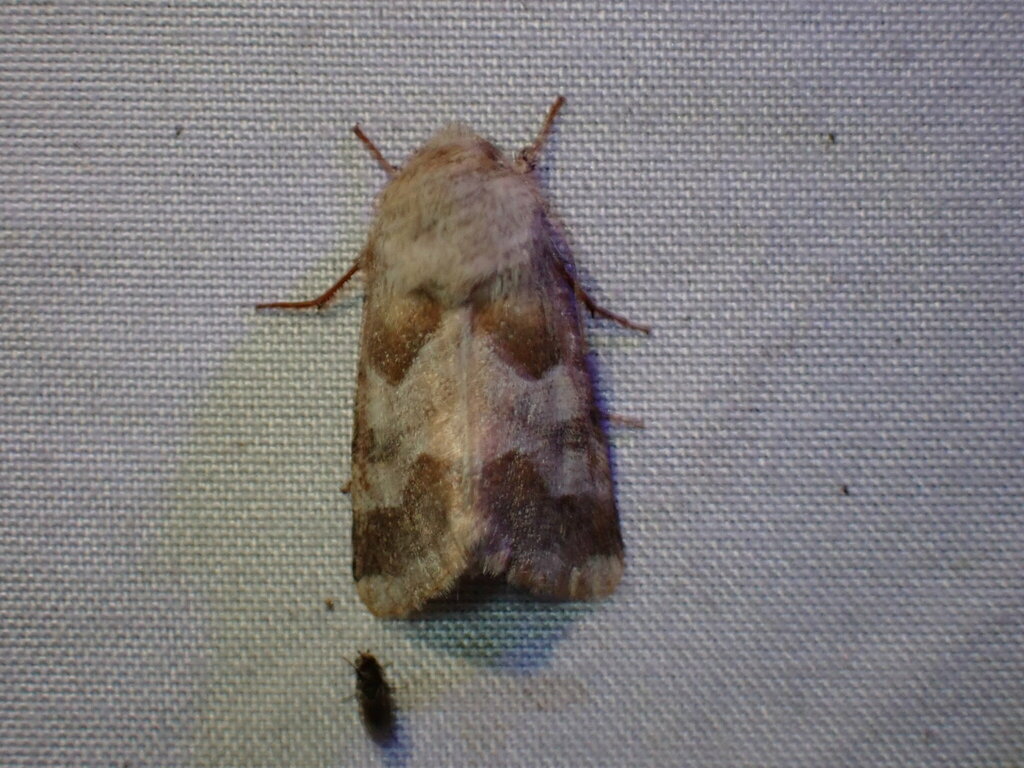
no rights reserved · CC0
Family: Noctuidae · Class: Insecta · Order: Lepidoptera
Schinia jaguarina is a California animal in the Noctuidae family.
Schinia jaguarina is a moth species in the family Noctuidae, commonly known as owlet moths or cutworm moths. This species belongs to the genus Schinia, which comprises numerous small to medium-sized moths typically associated with specific host plants in the sunflower family (Asteraceae). Adult moths in this genus generally measure 12 to 25 mm in wingspan, with forewings displaying cryptic coloration patterns that provide camouflage against bark and vegetation. The taxonomic placement of Schinia jaguarina within Noctuidae indicates it shares characteristics with other members of this diverse moth family, including nocturnal activity patterns and larvae that often feed on herbaceous plants. The species epithet 'jaguarina' may reference spotted or marked wing patterns reminiscent of jaguar pelage, though specific morphological descriptions for this species are limited in available literature. Information regarding the current distribution and range of Schinia jaguarina in California remains poorly documented. Many Schinia species exhibit restricted ranges tied to the distribution of their specific host plants, often occurring in fragmented populations across suitable habitat patches. Without confirmed records, the historical and current range of this species within California cannot be definitively established. Habitat requirements for Schinia jaguarina are not well documented, though members of the genus Schinia typically inhabit areas where their host plants occur. These environments often include grasslands, coastal scrub, desert margins, and oak woodlands where Asteraceae species are present. Elevation ranges and specific microhabitat preferences for S. jaguarina have not been established through published research. The life history and ecological requirements of Schinia jaguarina are largely unknown. Most Schinia species are univoltine, producing one generation per year, with larvae feeding exclusively on buds, flowers, and developing seeds of their host plants. Adults typically emerge during late spring through early fall, depending on host plant phenology and local climate conditions. Mating and oviposition behaviors likely follow patterns observed in related species, with females depositing eggs directly on or near host plants. The conservation status of Schinia jaguarina is not established through state or federal listing programs. The species lacks formal status designations under the California Endangered Species Act or the Federal Endangered Species Act. Without comprehensive surveys or population monitoring, the stability of populations and potential threats cannot be assessed. Many Schinia species face habitat loss due to urban development, agricultural conversion, and invasive plant species that displace native host plants. The limited available information for Schinia jaguarina highlights the need for systematic surveys and taxonomic research to better understand this species' distribution, ecology, and conservation needs within California's diverse ecosystems. Further research is necessary to establish basic biological parameters and assess whether conservation measures may be warranted.
Classification
Class: Insecta · Order: Lepidoptera · Family: Noctuidae
Frequently asked questions
How is Schinia jaguarina classified?
Schinia jaguarina belongs to class Insecta, order Lepidoptera, family Noctuidae.
What family does Schinia jaguarina belong to?
Schinia jaguarina is in the Noctuidae family.
What is Schinia jaguarina?
Schinia jaguarina is a moth species in the family Noctuidae, commonly known as owlet moths or cutworm moths.
Is Schinia jaguarina found in California?
Yes. Schinia jaguarina is recorded in California in The California Species Project's catalogue.
Related species
Other California species in the same genus, family, or bioregion.
Data from The California Species Project — 14,000+ California species with verified data from CNPS, CDFW, USFWS, and more.