Schinia lucens
Leadplant Flower Moth
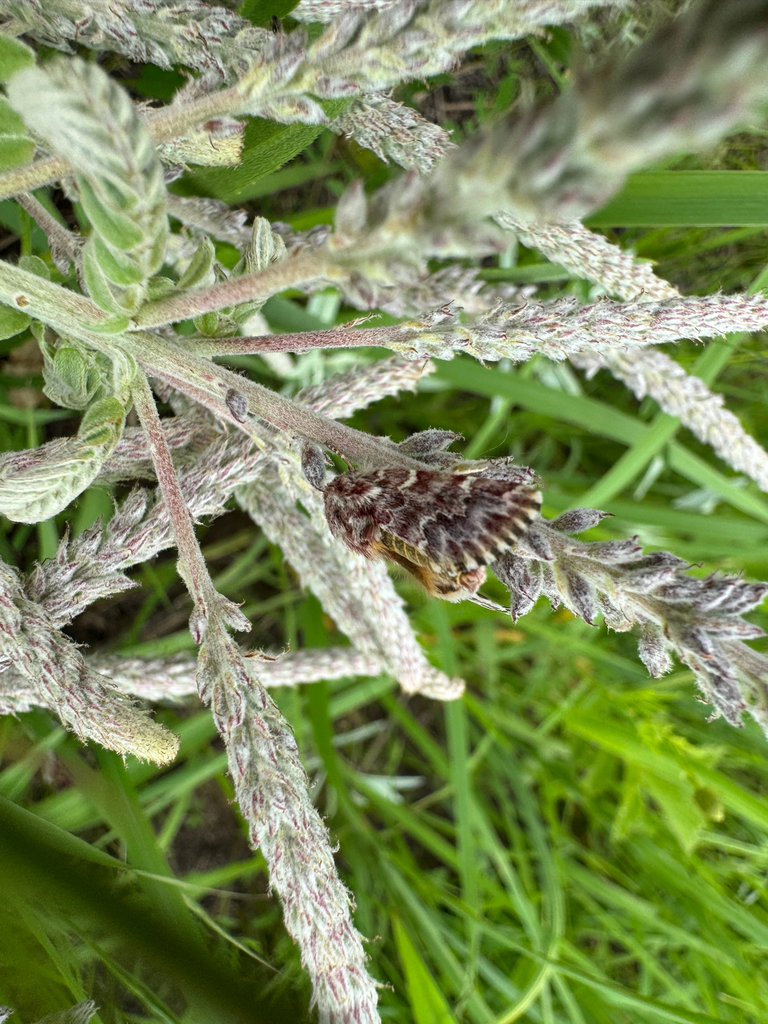
(c) Elizabeth Axley, some rights reserved (CC BY) · licence
Family: Noctuidae · Class: Insecta · Order: Lepidoptera
Schinia lucens (Leadplant Flower Moth) is a California animal in the Noctuidae family.
The Leadplant Flower Moth (Schinia lucens) is a small noctuid moth in the family Noctuidae. Adults have a wingspan of approximately 20-25 mm (0.8-1.0 inches). The forewings display a mottled pattern of gray, brown, and cream coloration that provides effective camouflage when resting on host plant flowers during daylight hours. The hindwings are typically lighter, ranging from pale gray to whitish with darker marginal bands. Like other members of the genus Schinia, this species exhibits sexual dimorphism, with males generally smaller and more slender than females. The Leadplant Flower Moth has a limited distribution in western North America, with populations documented in several western states including Colorado, Wyoming, Nebraska, and portions of the Great Plains region. The species' range is closely tied to the distribution of its primary host plant, leadplant (Amorpha canescens), which restricts its occurrence to specific prairie and grassland ecosystems. This moth inhabits native prairie grasslands, particularly mixed-grass and shortgrass prairie systems where leadplant occurs naturally. The species is typically found at elevations ranging from 1,000 to 2,000 meters (3,300 to 6,600 feet) in areas characterized by well-drained soils and moderate to low annual precipitation. Habitat requirements include intact prairie communities with healthy populations of leadplant, as the moth's lifecycle is intimately connected to this specific host plant species. The Leadplant Flower Moth exhibits a specialized feeding relationship with leadplant throughout its larval stage. Adult females deposit eggs directly on leadplant flower clusters during the blooming period, typically from June through August. Larvae feed exclusively on the flowers, seeds, and developing seed pods of leadplant, completing their development within the host plant's reproductive structures. This feeding strategy makes the species particularly vulnerable to disruptions in leadplant flowering cycles. Adults are active during warm summer evenings and are attracted to ultraviolet light sources. The species produces one generation per year, with adults emerging in midsummer coinciding with peak leadplant flowering. While the Leadplant Flower Moth does not currently hold federal or state listing status, its populations face significant conservation challenges due to widespread prairie habitat loss and fragmentation. The conversion of native grasslands to agricultural use has eliminated vast areas of suitable habitat throughout the species' range. Additional threats include overgrazing, invasive plant species competition, altered fire regimes, and herbicide applications that may directly impact both the moth and its host plant. Climate change poses emerging risks through potential shifts in precipitation patterns and temperature regimes that could affect leadplant distribution and flowering phenology. Conservation efforts focus on prairie restoration and management practices that maintain healthy leadplant populations and preserve the specialized plant-insect relationships essential for the species' survival.
Classification
Class: Insecta · Order: Lepidoptera · Family: Noctuidae
Frequently asked questions
How is Schinia lucens classified?
Schinia lucens belongs to class Insecta, order Lepidoptera, family Noctuidae.
What family does Schinia lucens belong to?
Schinia lucens is in the Noctuidae family.
What is Schinia lucens?
The Leadplant Flower Moth (Schinia lucens) is a small noctuid moth in the family Noctuidae.
Is Schinia lucens found in California?
Yes. Schinia lucens is recorded in California in The California Species Project's catalogue.
Related species
Other California species in the same genus, family, or bioregion.
Data from The California Species Project — 14,000+ California species with verified data from CNPS, CDFW, USFWS, and more.