Schinia macneilli
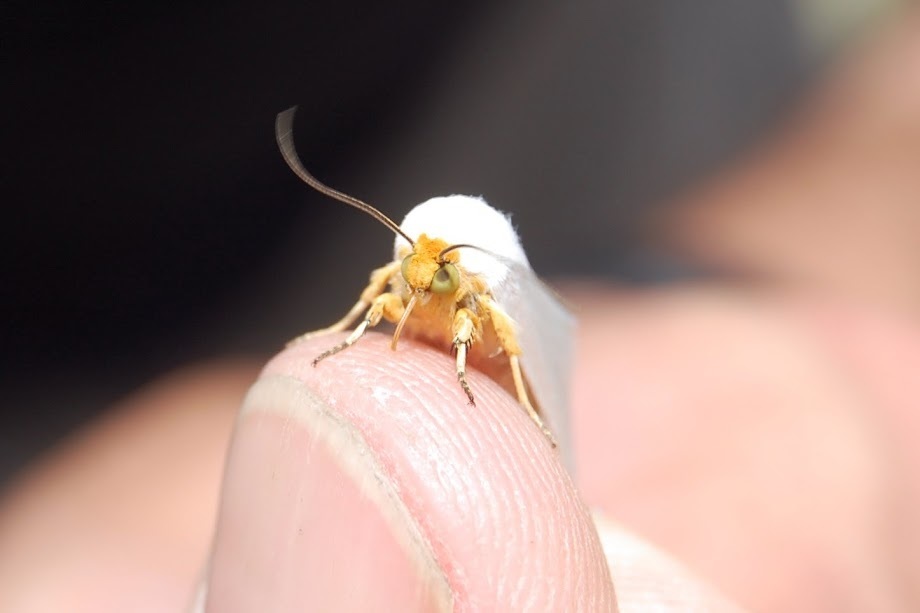
(c) Chris Friesen, some rights reserved (CC BY) · licence
Family: Noctuidae · Class: Insecta · Order: Lepidoptera
Schinia macneilli is a California animal in the Noctuidae family.
Schinia macneilli is a nocturnal moth in the family Noctuidae, characterized by its small to medium size typical of flower moths in the genus Schinia. Adults exhibit the cryptic coloration pattern common to this genus, with forewings displaying mottled browns and grays that provide camouflage against bark and dried vegetation. The hindwings are typically lighter, ranging from pale gray to off-white. Wing span measurements for this species have not been extensively documented, but other Schinia species range from 20 to 35 mm across the forewings. The known range of Schinia macneilli is extremely limited and poorly documented. Based on available taxonomic records, this species appears to be endemic to California, though specific distribution data remain scarce. The type locality and extent of occurrence have not been thoroughly surveyed, making it one of the least studied members of the genus Schinia in the state. No definitive county records or elevation ranges have been established for this species. Habitat requirements for Schinia macneilli remain largely unknown due to the limited collection records and lack of systematic surveys. Most Schinia species are closely associated with their larval host plants, typically members of the Asteraceae family, and adults are often found in proximity to these flowering plants. The species likely inhabits areas where suitable host plants occur, potentially including grasslands, chaparral margins, or other open habitats typical of California's Mediterranean climate regions. The life history and ecological behavior of Schinia macneilli are not well documented. Like other members of the genus, adults are presumed to be nocturnal, with peak activity occurring during evening and nighttime hours. Larvae likely feed on flowers and developing seeds of specific host plants, following the typical Schinia pattern of specialized herbivory. The timing of adult emergence, number of generations per year, and overwintering stage remain unknown for this species. Mating behavior and larval development periods have not been studied. The conservation status of Schinia macneilli is uncertain due to insufficient data on population size, distribution, and trends. The species lacks federal or state listing status, and no formal conservation assessments have been conducted. The apparent rarity of collection records suggests either extremely limited distribution, specific habitat requirements, or both. Without baseline population data or habitat mapping, it is impossible to determine whether the species faces conservation threats. Potential risks may include habitat loss from urbanization and agricultural conversion, which affect many specialized insects in California. The species would benefit from targeted surveys to establish its current distribution and population status, as well as identification of critical habitat requirements. Until more comprehensive biological and ecological data are gathered, Schinia macneilli remains one of California's least understood moth species.
Classification
Class: Insecta · Order: Lepidoptera · Family: Noctuidae
Frequently asked questions
How is Schinia macneilli classified?
Schinia macneilli belongs to class Insecta, order Lepidoptera, family Noctuidae.
What family does Schinia macneilli belong to?
Schinia macneilli is in the Noctuidae family.
What is Schinia macneilli?
Schinia macneilli is a nocturnal moth in the family Noctuidae, characterized by its small to medium size typical of flower moths in the genus Schinia.
Is Schinia macneilli found in California?
Yes. Schinia macneilli is recorded in California in The California Species Project's catalogue.
Related species
Other California species in the same genus, family, or bioregion.
Data from The California Species Project — 14,000+ California species with verified data from CNPS, CDFW, USFWS, and more.