Schinia meadi
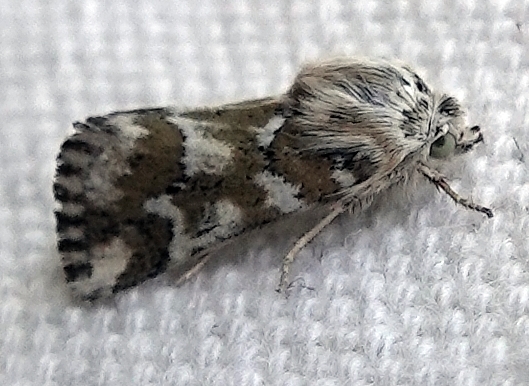
(c) Colin Croft, some rights reserved (CC BY) · licence
Family: Noctuidae · Class: Insecta · Order: Lepidoptera
Schinia meadi is a California animal in the Noctuidae family.
Schinia meadi is a moth species in the family Noctuidae, commonly known as noctuid moths or owlet moths. This species belongs to the genus Schinia, which comprises numerous moth species often associated with specific host plants, particularly in the sunflower family Asteraceae. Physical characteristics of S. meadi follow the typical noctuid moth pattern, with forewings that are generally cryptically colored to provide camouflage during daytime rest periods. Like other Schinia species, adults likely display earth-toned forewings with intricate patterns of lines, spots, and bands that vary in intensity. The hindwings are typically lighter in coloration. Wingspan measurements for this species have not been extensively documented in available literature, though most Schinia moths range from 20 to 35 millimeters in wingspan. The geographic distribution of Schinia meadi appears to be limited, though specific range information is not well-documented in current taxonomic databases. Many Schinia species exhibit restricted distributions tied to the availability of their host plants, suggesting S. meadi may have similarly specialized habitat requirements. The species' occurrence in North America is probable given the predominantly Nearctic distribution of the genus Schinia. Habitat preferences for S. meadi likely follow patterns observed in related Schinia species, which typically inhabit areas where their specific host plants occur. These environments often include grasslands, prairies, desert areas, and disturbed sites where Asteraceae family plants flourish. Many Schinia moths show strong fidelity to particular microhabitats that support their larval host plants throughout the growing season. The life cycle of S. meadi presumably follows the standard lepidopteran development pattern, progressing through egg, larval, pupal, and adult stages. Schinia larvae are typically external feeders on flowers, buds, and developing seeds of their host plants. The timing of adult emergence likely coincides with the flowering period of the primary host plant species, ensuring optimal conditions for mating and oviposition. Most Schinia species produce one generation per year, with adults active during specific months when host plants are in bloom. Conservation status information for Schinia meadi is notably absent from major databases, including the U.S. Fish and Wildlife Service species lists and NatureServe Explorer as of December 2025. This data gap may indicate either that the species has not been comprehensively assessed for conservation status, or that it maintains stable populations that do not warrant special conservation attention. However, the apparent lack of detailed ecological and distributional information suggests that further research may be needed to fully understand this species' conservation needs. The limited available information about S. meadi reflects a broader challenge in lepidopteran taxonomy and conservation, where many species remain poorly studied despite potential ecological importance. Future research priorities for this species should include detailed surveys to determine its current distribution, identification of specific host plant relationships, and assessment of population trends to inform any necessary conservation measures.
Classification
Class: Insecta · Order: Lepidoptera · Family: Noctuidae
Frequently asked questions
How is Schinia meadi classified?
Schinia meadi belongs to class Insecta, order Lepidoptera, family Noctuidae.
What family does Schinia meadi belong to?
Schinia meadi is in the Noctuidae family.
What is Schinia meadi?
Schinia meadi is a moth species in the family Noctuidae, commonly known as noctuid moths or owlet moths.
Is Schinia meadi found in California?
Yes. Schinia meadi is recorded in California in The California Species Project's catalogue.
Related species
Other California species in the same genus, family, or bioregion.
Data from The California Species Project — 14,000+ California species with verified data from CNPS, CDFW, USFWS, and more.