Schinia obliqua
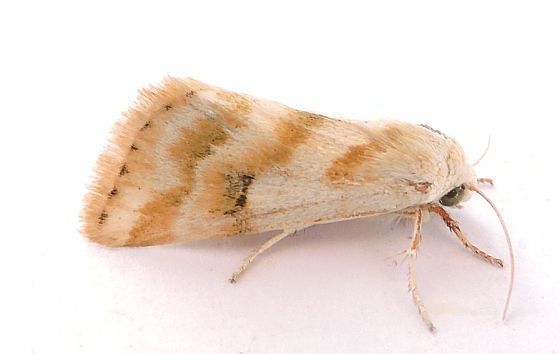
(c) jimeckert49, some rights reserved (CC BY) · licence
Family: Noctuidae · Class: Insecta · Order: Lepidoptera
Schinia obliqua is a California animal in the Noctuidae family.
Schinia obliqua is a small moth in the family Noctuidae, part of the diverse group known as flower moths or heliothine moths. Adult moths typically measure 12 to 16 millimeters (0.47 to 0.63 inches) in forewing length. The forewings display a mottled pattern of brown and gray scales with oblique darker markings that give the species its scientific name. The hindwings are pale gray to whitish with darker marginal borders. Like other Schinia species, the antennae are thread-like in both sexes, and the proboscis is well-developed for nectar feeding. The range and distribution of Schinia obliqua remain poorly documented in the scientific literature. Limited collection records suggest the species occurs in western North America, potentially including portions of California, though specific distributional data are sparse. Historical collecting records indicate scattered populations, but comprehensive surveys to establish current range boundaries have not been conducted. The species' apparent rarity in collections may reflect either genuine scarcity or insufficient sampling effort in appropriate habitats. Habitat requirements for Schinia obliqua are not well-established, though related Schinia species typically inhabit open areas including grasslands, desert scrub, and disturbed sites where their host plants occur. Many flower moths in this genus demonstrate strong fidelity to specific plant families, particularly Asteraceae. The elevation range and specific microhabitat preferences for S. obliqua require further research to establish definitive parameters. The life history and behavioral ecology of Schinia obliqua remain largely unstudied. Adult moths are presumed to be nocturnal, following the typical pattern of noctuids, and likely active during spring or summer months based on limited collection dates. Larvae probably develop as internal feeders within flower heads or seed pods of their host plants, consistent with the feeding ecology of related species. The number of generations per year, overwintering stage, and specific reproductive behaviors have not been documented. Adults presumably feed on nectar from various flowering plants, though specific nectar sources are unknown. The conservation status of Schinia obliqua is uncertain due to limited distributional and ecological data. The species lacks federal or state listing status, and population trends cannot be assessed without baseline survey information. The apparent paucity of recent collection records raises questions about current population status, though this may reflect collection bias rather than actual decline. Potential threats could include habitat loss from development, altered fire regimes, invasive plant species, and climate change effects on host plant phenology, but these impacts cannot be quantified without better understanding of the species' ecological requirements. Comprehensive surveys to establish current distribution, host plant associations, and population status would be essential for any future conservation assessment of this poorly known moth species.
Classification
Class: Insecta · Order: Lepidoptera · Family: Noctuidae
Frequently asked questions
How is Schinia obliqua classified?
Schinia obliqua belongs to class Insecta, order Lepidoptera, family Noctuidae.
What family does Schinia obliqua belong to?
Schinia obliqua is in the Noctuidae family.
What is Schinia obliqua?
Schinia obliqua is a small moth in the family Noctuidae, part of the diverse group known as flower moths or heliothine moths.
Is Schinia obliqua found in California?
Yes. Schinia obliqua is recorded in California in The California Species Project's catalogue.
Related species
Other California species in the same genus, family, or bioregion.
Data from The California Species Project — 14,000+ California species with verified data from CNPS, CDFW, USFWS, and more.