Schinia oculata
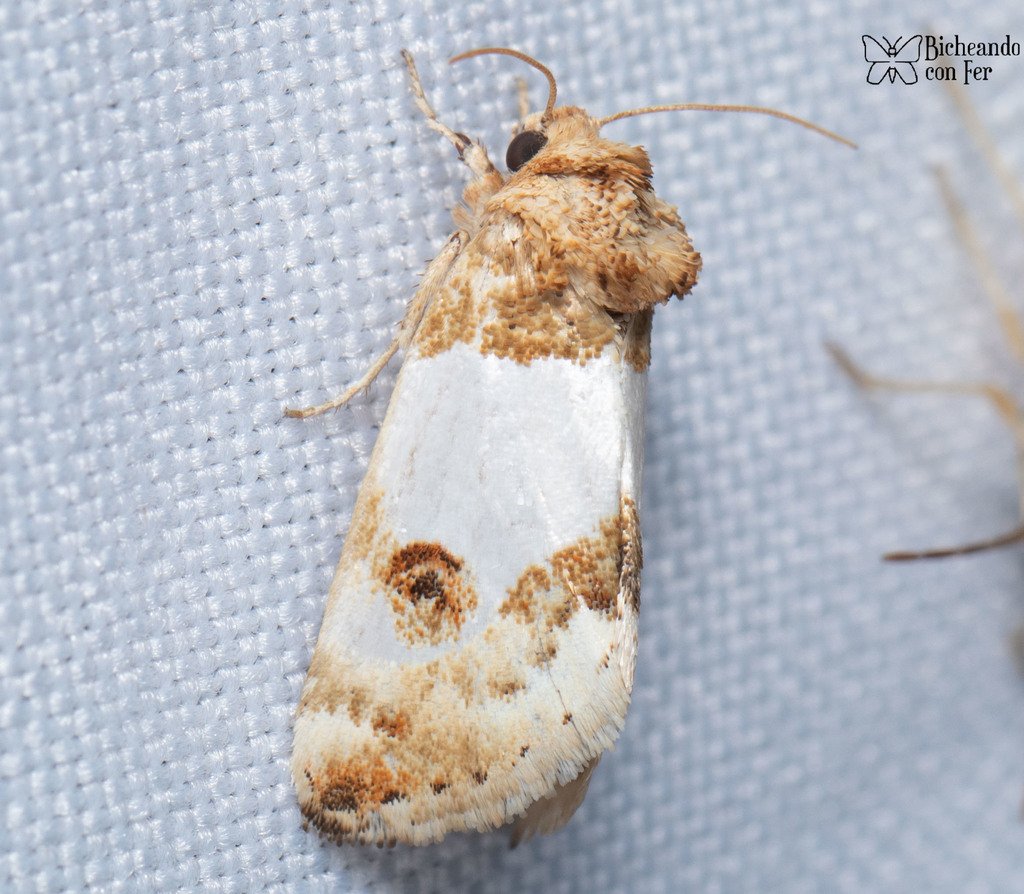
(c) Luis Fernando Valdez Ojeda, some rights reserved (CC BY) · licence
Family: Noctuidae · Class: Insecta · Order: Lepidoptera
Schinia oculata is a California animal in the Noctuidae family.
Schinia oculata is a moth species in the family Noctuidae, commonly known as the owlet moth family. This species belongs to the genus Schinia, a group of small to medium-sized moths known for their often colorful wing patterns and specialized host plant relationships. The specific epithet 'oculata' refers to eye-like markings, suggesting this species displays distinctive ocelli or eye-spots on its wings, a characteristic feature of many Schinia species. The forewings of Schinia moths typically measure 10 to 15 mm in length, with wingspan ranging from 20 to 30 mm. Members of this genus generally display cryptic coloration that provides camouflage when resting on their host plants during daylight hours. The wing patterns often include a complex mixture of brown, gray, and cream tones, with distinctive markings that may include reniform and orbicular spots characteristic of noctuids. Schinia species are distributed across North America, with the genus showing particular diversity in western regions. Many species in this genus have restricted distributions tied to the availability of their specific host plants. The range and habitat requirements of S. oculata would be closely linked to the distribution of its larval host plants, as is typical for specialist herbivores in this genus. Most Schinia species inhabit areas where their host plants occur, which often includes grasslands, prairies, desert regions, and disturbed habitats. These moths typically prefer open areas with abundant flowering plants that serve as nectar sources for adults. Elevation ranges vary considerably among species in the genus, from sea level to montane environments depending on host plant distribution. Schinia moths are typically univoltine, producing one generation per year, though some species may be bivoltine in favorable conditions. Adults are primarily nocturnal, becoming active at dusk to feed on flower nectar and engage in mating activities. Females deposit eggs directly on or near the host plant, and larvae develop within flower heads or seed pods of their specific host species. This intimate relationship between larva and host plant often results in high host specificity, with many Schinia species restricted to a single plant family or even genus. Larvae typically complete development within the reproductive structures of their host plants, pupating in soil or plant debris. Adult flight periods usually coincide with the blooming period of host plants, ensuring that gravid females can locate appropriate oviposition sites. The conservation status of S. oculata has not been formally assessed by federal or state agencies, and the species does not appear on current threatened or endangered species lists. However, like many specialist herbivores, Schinia species may be vulnerable to habitat loss and degradation that affects their host plants. The narrow host plant requirements typical of this genus make many species potentially sensitive to environmental changes that impact plant communities. Further research would be needed to determine population trends, distribution limits, and specific conservation needs for this species.
Classification
Class: Insecta · Order: Lepidoptera · Family: Noctuidae
Frequently asked questions
How is Schinia oculata classified?
Schinia oculata belongs to class Insecta, order Lepidoptera, family Noctuidae.
What family does Schinia oculata belong to?
Schinia oculata is in the Noctuidae family.
What is Schinia oculata?
Schinia oculata is a moth species in the family Noctuidae, commonly known as the owlet moth family.
Is Schinia oculata found in California?
Yes. Schinia oculata is recorded in California in The California Species Project's catalogue.
Related species
Other California species in the same genus, family, or bioregion.
Data from The California Species Project — 14,000+ California species with verified data from CNPS, CDFW, USFWS, and more.