Schinia pulchripennis
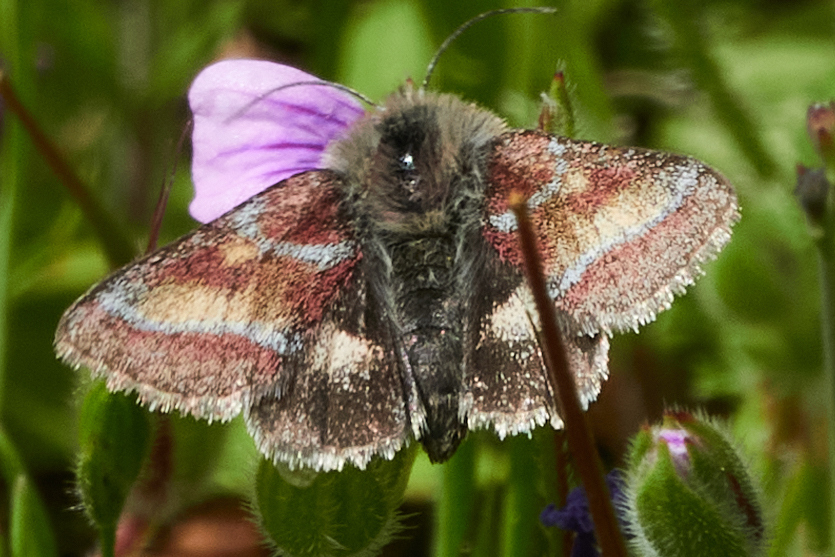
(c) Ken-ichi Ueda, some rights reserved (CC BY) · licence
Family: Noctuidae · Class: Insecta · Order: Lepidoptera
Schinia pulchripennis is a California animal in the Noctuidae family.
Schinia pulchripennis is a moth species in the family Noctuidae, commonly known as flower moths or forester moths. This species belongs to a genus characterized by relatively small size and often colorful wing patterns, though specific morphological details for S. pulchripennis remain poorly documented in the scientific literature. The range and distribution of Schinia pulchripennis appear to be restricted, though comprehensive range data are not readily available in current taxonomic databases. Like many Schinia species, this moth likely has a limited geographic distribution tied closely to the availability of its host plants. The genus Schinia is predominantly North American, with most species occurring in western regions where their specialized host relationships have evolved. Habitat requirements for S. pulchripennis are presumably linked to the distribution of its host plants, following the typical pattern observed in other Schinia species. Members of this genus are generally associated with open habitats including grasslands, prairies, desert areas, and disturbed sites where their host plants occur. Many Schinia species prefer areas with sandy or well-drained soils and full sun exposure, conditions that support the growth of their preferred host plant families. The behavioral ecology of Schinia pulchripennis likely follows patterns common to the genus. Schinia moths are typically univoltine, producing one generation per year, with adults emerging during specific windows that coincide with the flowering period of their host plants. Adults are primarily nocturnal and are attracted to artificial lights. Larvae are specialized feeders, typically consuming flowers and developing seed heads of their host plants rather than foliage. This feeding strategy often results in high host specificity, with individual Schinia species often restricted to one or a few closely related plant species. The timing of larval development is closely synchronized with host plant phenology, particularly flowering and seed production periods. Mating behavior in Schinia species involves pheromone communication, with females releasing species-specific chemical signals to attract males. Eggs are typically laid directly on or near host plants, often on flower buds or developing inflorescences. Larval development occurs within flowers and seed structures, with pupation usually taking place in the soil near the host plant. The conservation status of Schinia pulchripennis is not well established, as the species lacks formal state or federal protection status. However, like many specialized moths, this species may face conservation challenges related to habitat loss, particularly if its host plants have restricted distributions. The high degree of host specificity typical of Schinia species makes them vulnerable to environmental changes that affect their host plants, including habitat conversion, invasive species competition, and altered fire regimes. Climate change may also impact the synchronization between moth life cycles and host plant phenology, potentially affecting reproductive success. Without comprehensive survey data, the current population status and trends for S. pulchripennis remain unknown, highlighting the need for targeted research on this and other poorly studied moth species.
Classification
Class: Insecta · Order: Lepidoptera · Family: Noctuidae
Frequently asked questions
How is Schinia pulchripennis classified?
Schinia pulchripennis belongs to class Insecta, order Lepidoptera, family Noctuidae.
What family does Schinia pulchripennis belong to?
Schinia pulchripennis is in the Noctuidae family.
What is Schinia pulchripennis?
Schinia pulchripennis is a moth species in the family Noctuidae, commonly known as flower moths or forester moths.
Is Schinia pulchripennis found in California?
Yes. Schinia pulchripennis is recorded in California in The California Species Project's catalogue.
Related species
Other California species in the same genus, family, or bioregion.
Data from The California Species Project — 14,000+ California species with verified data from CNPS, CDFW, USFWS, and more.