Schinia scarletina
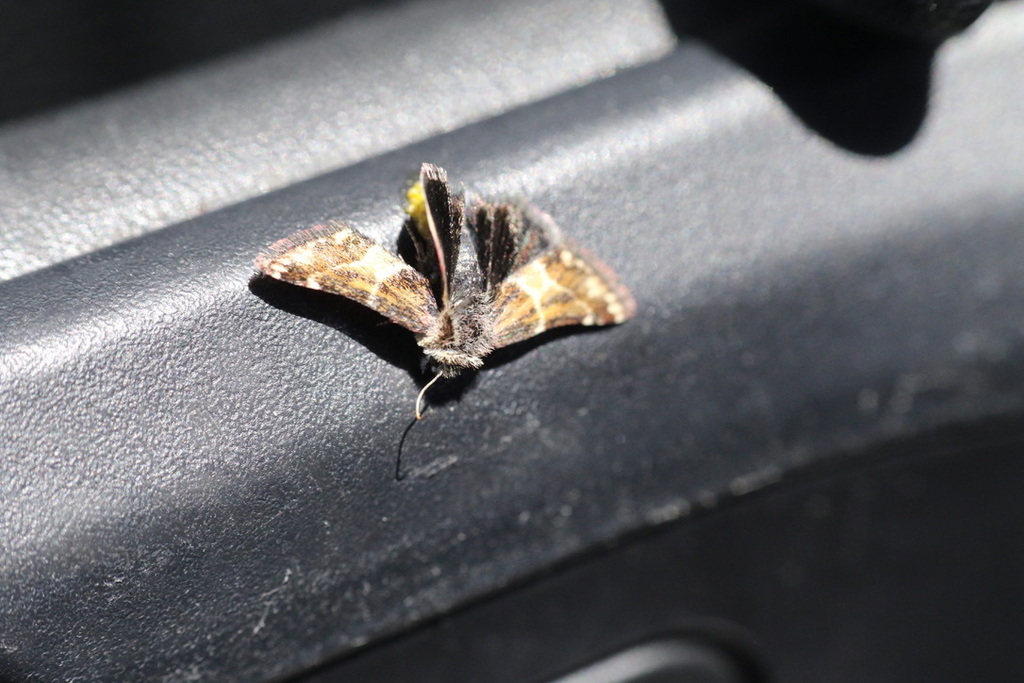
(c) Emily Herriott, some rights reserved (CC BY) · licence
Family: Noctuidae · Class: Insecta · Order: Lepidoptera
Schinia scarletina is a California animal in the Noctuidae family.
Schinia scarletina is a moth species in the family Noctuidae, commonly known as flower moths or owlet moths. This species belongs to the genus Schinia, which comprises numerous small to medium-sized moths that typically exhibit close associations with specific host plants. Adult moths measure approximately 12 to 18 mm in wingspan, displaying the characteristic noctuoid wing structure with forewings that are narrow and elongated relative to the hindwings. The forewings of S. scarletina typically exhibit cryptic coloration patterns that aid in camouflage when the moth is at rest during daylight hours. Like other members of the genus, this species likely displays earth-toned coloration with intricate patterns of lines, spots, and shading that vary among individuals. The hindwings are generally paler than the forewings, often appearing whitish or light gray with reduced markings. The antennae are filiform in both sexes, and the proboscis is well-developed for nectar feeding. The range and distribution of Schinia scarletina in California remains poorly documented in available literature. Many Schinia species have restricted distributions tied closely to the occurrence of their specific host plants, suggesting this species may have a limited range within the state. Members of this genus are often associated with arid and semi-arid environments, particularly areas supporting native wildflower communities. Habitat requirements for S. scarletina likely center around the presence of its larval host plants, as is typical for Schinia species. These moths generally inhabit open areas such as grasslands, chaparral margins, desert scrub, and disturbed sites where their host plants occur. Adults are active during warm months, typically flying from late spring through early fall depending on elevation and local climate conditions. Like other Schinia species, S. scarletina larvae are likely specialized feeders, developing within the flower heads or seed structures of specific plant species. Adult moths are nocturnal and attracted to artificial lights. Mating occurs during nighttime hours, with females depositing eggs directly on or near the larval host plants. The species likely has one to two generations per year, with timing dependent on host plant phenology and local environmental conditions. Larval development occurs within the reproductive structures of the host plant, where caterpillars feed on developing seeds, pollen, or floral tissues. This feeding strategy is characteristic of the genus and often results in minimal visible damage to the host plant. Pupation typically occurs in soil or plant debris near the host plant. The conservation status of Schinia scarletina is not well-established due to limited research and documentation. As with many specialized moths, potential threats may include habitat loss, altered fire regimes, invasive plant species that displace native host plants, and pesticide applications. The species' conservation needs cannot be adequately assessed without additional research to determine its distribution, population status, host plant associations, and ecological requirements within California.
Classification
Class: Insecta · Order: Lepidoptera · Family: Noctuidae
Frequently asked questions
How is Schinia scarletina classified?
Schinia scarletina belongs to class Insecta, order Lepidoptera, family Noctuidae.
What family does Schinia scarletina belong to?
Schinia scarletina is in the Noctuidae family.
What is Schinia scarletina?
Schinia scarletina is a moth species in the family Noctuidae, commonly known as flower moths or owlet moths.
Is Schinia scarletina found in California?
Yes. Schinia scarletina is recorded in California in The California Species Project's catalogue.
Related species
Other California species in the same genus, family, or bioregion.
Data from The California Species Project — 14,000+ California species with verified data from CNPS, CDFW, USFWS, and more.