Schinia sexplagiata
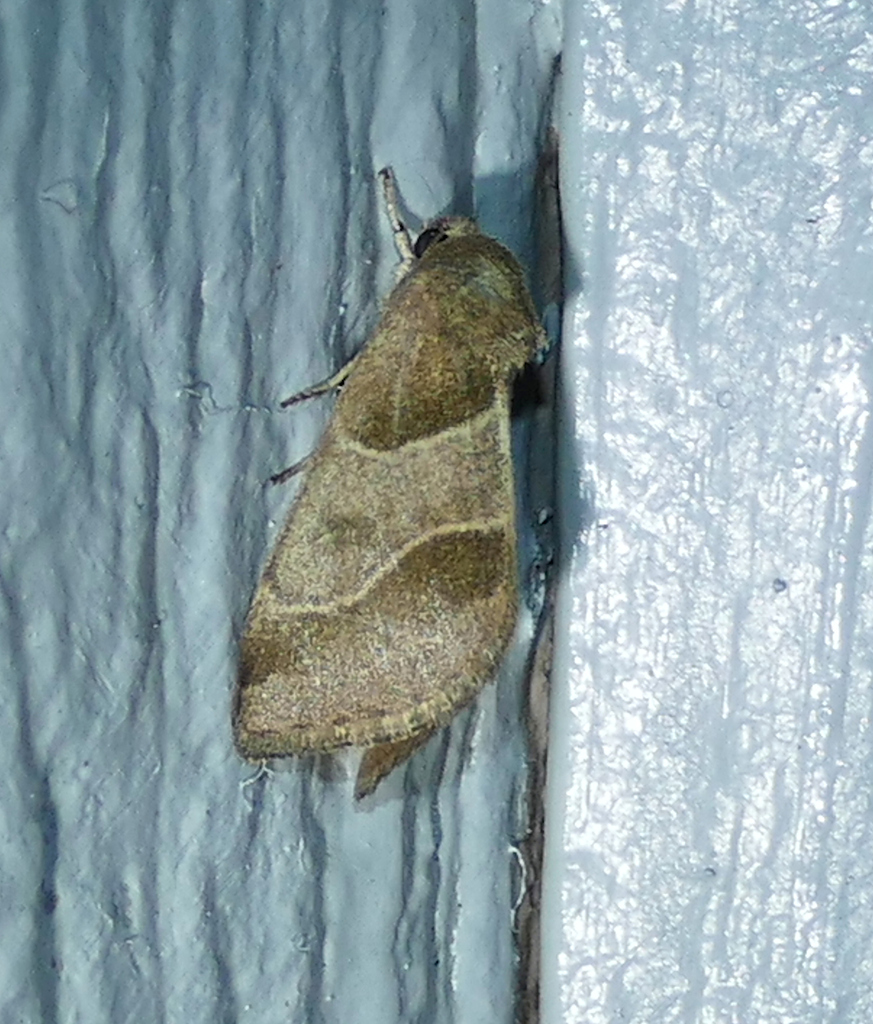
(c) Wendy McCrady, some rights reserved (CC BY) · licence
Family: Noctuidae · Class: Insecta · Order: Lepidoptera
Schinia sexplagiata is a California animal in the Noctuidae family.
Schinia sexplagiata is a moth species in the family Noctuidae, commonly known as noctuid moths or owlet moths. This species belongs to the genus Schinia, a group of moths often associated with specific host plants and characterized by their distinctive wing patterns and coloration. The physical characteristics of S. sexplagiata include forewings that typically display a mottled pattern of earth tones, consistent with other members of the Schinia genus. Like most noctuids, adults possess a robust body structure and relatively broad wings adapted for nocturnal flight. The hindwings are generally lighter in coloration than the forewings. Wing span measurements and detailed morphological descriptions for this species are not well-documented in readily accessible literature. The range and distribution of Schinia sexplagiata appear to be poorly documented in current scientific literature. While the species is recognized taxonomically, specific geographic distribution data within California or elsewhere in North America requires further research to establish accurate occurrence records. Many Schinia species have restricted ranges tied to the distribution of their host plants. Habitat requirements for S. sexplagiata are not well-established in available sources. Members of the genus Schinia typically inhabit areas where their specific host plants occur, which often includes grasslands, chaparral, desert regions, or other open habitats. The elevation range and specific microhabitat preferences for this species have not been thoroughly documented. The behavioral and ecological characteristics of S. sexplagiata follow typical patterns observed in related Schinia species. Adults are likely nocturnal, with peak activity periods during evening and nighttime hours. Reproduction probably involves females laying eggs on or near host plants, with larvae developing through several instars before pupating. The specific host plant relationships, flight periods, and voltinism (number of generations per year) for this species are not clearly established in current literature. Many Schinia species exhibit specialized relationships with particular plant families, often Asteraceae, and larvae may feed on flowers, seeds, or other plant parts. The conservation status of Schinia sexplagiata is unclear, as the species lacks formal federal or state listing designations. The absence of comprehensive distribution data, population assessments, and ecological studies makes it difficult to evaluate conservation needs. This data deficiency itself may indicate rarity or limited distribution, though it could also reflect insufficient survey effort or taxonomic uncertainty. Without established population trends, threat assessments, or habitat requirements, conservation priorities for this species cannot be adequately determined. Further research is needed to establish fundamental biological and ecological information for S. sexplagiata, including distribution mapping, host plant identification, life cycle studies, and population assessments. Such studies would be essential for any future conservation planning or habitat management considerations for this poorly-known moth species.
Classification
Class: Insecta · Order: Lepidoptera · Family: Noctuidae
Frequently asked questions
How is Schinia sexplagiata classified?
Schinia sexplagiata belongs to class Insecta, order Lepidoptera, family Noctuidae.
What family does Schinia sexplagiata belong to?
Schinia sexplagiata is in the Noctuidae family.
What is Schinia sexplagiata?
Schinia sexplagiata is a moth species in the family Noctuidae, commonly known as noctuid moths or owlet moths.
Is Schinia sexplagiata found in California?
Yes. Schinia sexplagiata is recorded in California in The California Species Project's catalogue.
Related species
Other California species in the same genus, family, or bioregion.
Data from The California Species Project — 14,000+ California species with verified data from CNPS, CDFW, USFWS, and more.