Schinia sueta californica
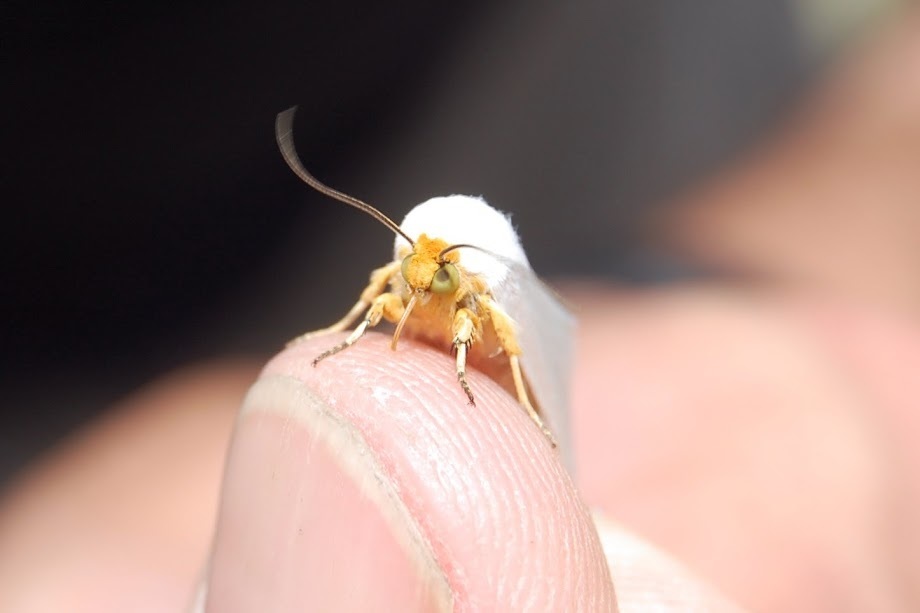
(c) Chris Friesen, some rights reserved (CC BY) · licence
Family: Noctuidae · Class: Insecta · Order: Lepidoptera
Schinia sueta californica is a California animal in the Noctuidae family.
Schinia sueta californica is a subspecies of moth in the family Noctuidae, representing the California population of the phlox moth complex. This nocturnal lepidopteran exhibits the typical characteristics of the genus Schinia, with forewings measuring approximately 12-15 mm in length. The forewings display a mottled pattern of gray, brown, and cream coloration that provides effective camouflage against bark and dried vegetation. The hindwings are typically lighter, ranging from pale gray to whitish with darker marginal bands. Males can be distinguished from females by their more feathered antennae and slightly smaller size. The subspecies S. s. californica is endemic to California, where it occurs in scattered populations throughout the state's diverse ecosystems. Historical records indicate presence in both coastal and inland regions, though current distribution may be more fragmented than originally documented. The subspecies appears to be restricted to areas where suitable host plants occur, creating a patchy distribution pattern across the landscape. This moth inhabits areas supporting its specialized host plant requirements, typically occurring in chaparral, oak woodlands, and mixed coniferous forests at elevations ranging from sea level to approximately 2,000 meters. The species shows strong fidelity to specific microhabitats where host plants thrive, including rocky slopes, canyon walls, and forest clearings with appropriate soil conditions and sun exposure. Habitat quality appears closely tied to the health and abundance of host plant populations. Schinia sueta californica exhibits a univoltine life cycle, with adults typically emerging during late spring and early summer months. Females lay eggs directly on or near host plants, with larvae developing through several instars before pupating in the soil or leaf litter. The caterpillars are specialized feeders, likely dependent on specific plant compounds found in their host species. Adults are attracted to artificial lights and are most active during warm, calm evenings. Flight period generally extends from May through August, with peak activity occurring in June and July. The conservation status of S. s. californica remains poorly documented, with no current federal or state listing designation. However, like many specialized herbivorous insects, this subspecies faces potential threats from habitat loss, fragmentation, and degradation of host plant populations. Urban development, agricultural conversion, and altered fire regimes may impact suitable habitat availability. Climate change poses additional concerns through potential shifts in host plant distribution and phenological mismatches between moth emergence and optimal host plant conditions. The subspecies' narrow ecological requirements and apparent rarity in collections suggest it may be vulnerable to environmental changes. More comprehensive surveys and taxonomic studies are needed to assess population status and clarify the subspecies' conservation needs. Without detailed monitoring data, the true conservation status of this California endemic moth remains uncertain.
Classification
Class: Insecta · Order: Lepidoptera · Family: Noctuidae
Frequently asked questions
How is Schinia sueta californica classified?
Schinia sueta californica belongs to class Insecta, order Lepidoptera, family Noctuidae.
What family does Schinia sueta californica belong to?
Schinia sueta californica is in the Noctuidae family.
What is Schinia sueta californica?
Schinia sueta californica is a subspecies of moth in the family Noctuidae, representing the California population of the phlox moth complex.
Is Schinia sueta californica found in California?
Yes. Schinia sueta californica is recorded in California in The California Species Project's catalogue.
Related species
Other California species in the same genus, family, or bioregion.
Data from The California Species Project — 14,000+ California species with verified data from CNPS, CDFW, USFWS, and more.