Schinia tertia
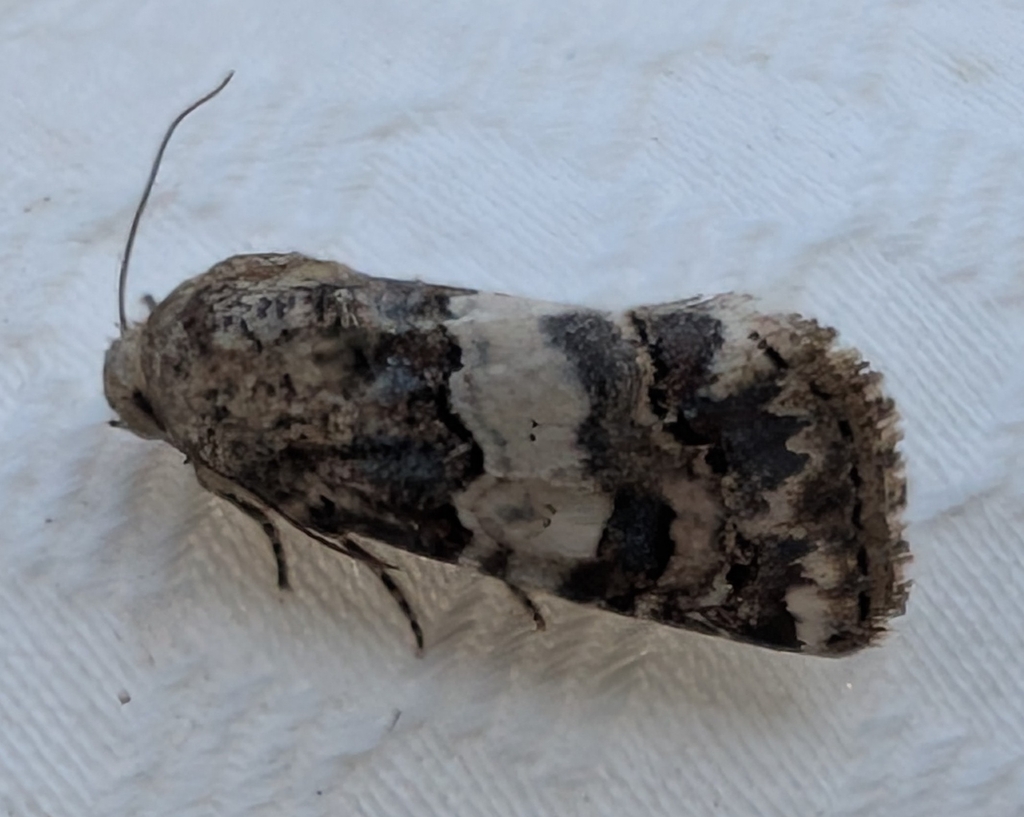
(c) Jeff D Hansen, some rights reserved (CC BY) · licence
Family: Noctuidae · Class: Insecta · Order: Lepidoptera
Schinia tertia is a California animal in the Noctuidae family.
Schinia tertia is a moth species in the family Noctuidae, representing one of the lesser-documented members of the flower moth genus Schinia. This species belongs to a group of noctuids that are typically associated with specific host plants and exhibit specialized ecological relationships. Adult moths display the characteristic features of the genus, with forewings that likely measure 10-15 mm in length based on related Schinia species. The coloration and wing patterns would typically provide camouflage when at rest on their host plants during daylight hours. The current distribution and range of Schinia tertia remain poorly documented in the scientific literature. Like many Schinia species, this moth likely has a restricted range tied to the distribution of its host plants. The genus Schinia is well-represented in western North America, with many species occurring in California's diverse ecosystems. However, specific locality records and current range boundaries for S. tertia require further field survey work to establish accurately. Habitat requirements for Schinia tertia are likely closely tied to the presence of specific flowering plants that serve as both larval host plants and adult nectar sources. Most Schinia species exhibit high host plant specificity, with larvae feeding exclusively on flower heads and developing seeds of plants in families such as Asteraceae. The habitat would typically consist of areas where these host plants occur naturally, potentially including grasslands, chaparral, or desert scrub communities depending on the specific plant associations. The life cycle of Schinia tertia likely follows the typical pattern observed in related flower moths. Adults are probably active during late spring through summer months, with females laying eggs directly on or near the flower heads of host plants. Larvae develop within the flower heads, feeding on developing seeds and floral tissue. This feeding behavior often results in larvae being well-concealed within the plant structure, making detection challenging. The species likely produces one generation per year, synchronized with the flowering period of its host plants. Adults are typically active during evening and night hours, when they visit flowers for nectar feeding. The conservation status of Schinia tertia is not well-established due to limited survey data and taxonomic uncertainty within the genus. Many Schinia species face threats from habitat loss, particularly when their specialized host plants have restricted distributions. Urban development, agricultural conversion, and altered fire regimes can significantly impact populations of host-specific moths. Climate change may pose additional challenges by affecting the phenology and distribution of both the moths and their associated plants. Given the specialized nature of most Schinia species, conservation efforts would benefit from comprehensive field surveys to determine current distribution, population status, and critical habitat requirements. Protection of native plant communities that support these specialized moths is essential for maintaining viable populations of S. tertia and related species.
Classification
Class: Insecta · Order: Lepidoptera · Family: Noctuidae
Frequently asked questions
How is Schinia tertia classified?
Schinia tertia belongs to class Insecta, order Lepidoptera, family Noctuidae.
What family does Schinia tertia belong to?
Schinia tertia is in the Noctuidae family.
What is Schinia tertia?
Schinia tertia is a moth species in the family Noctuidae, representing one of the lesser-documented members of the flower moth genus Schinia.
Is Schinia tertia found in California?
Yes. Schinia tertia is recorded in California in The California Species Project's catalogue.
Related species
Other California species in the same genus, family, or bioregion.
Data from The California Species Project — 14,000+ California species with verified data from CNPS, CDFW, USFWS, and more.