Schistocerca nitens
Gray Bird Grasshopper
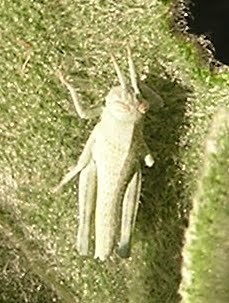
(c) 101595408250610106310, some rights reserved (CC BY) · licence
Family: Acrididae · Class: Insecta · Order: Orthoptera
Schistocerca nitens (Gray Bird Grasshopper) is a California animal in the Acrididae family.
The Gray Bird Grasshopper (Schistocerca nitens) is a medium-sized orthopteran in the family Acrididae, distinguished by its robust build and grayish coloration. Adult specimens typically measure 40-55 mm in length, with females generally larger than males. The species exhibits the characteristic morphology of the genus Schistocerca, including well-developed hind legs adapted for jumping and wings that may extend beyond the abdomen. Historically, Schistocerca nitens appears to have had a broader distribution, but its current range and native status remain subjects of taxonomic uncertainty. The species has been documented in various locations, though detailed distributional data are limited in the scientific literature. Some populations may represent introductions rather than native occurrences, particularly in areas where the species has been observed affecting native ecosystems. The Gray Bird Grasshopper inhabits a variety of open habitats, including grasslands, shrublands, and disturbed areas. The species demonstrates adaptability to different vegetation types and elevation ranges, though specific habitat preferences have not been comprehensively documented. Like other members of the genus, it likely favors areas with sufficient vegetation for feeding and open spaces for mobility. As a member of the Acrididae, this grasshopper is primarily herbivorous, feeding on a wide range of plant materials including grasses, forbs, and shrub foliage. Feeding behavior typically involves both grazing on low vegetation and browsing on taller plants. The species exhibits the typical orthopteran life cycle, with eggs laid in soil during favorable conditions, followed by several nymphal stages before reaching adulthood. Reproductive timing and detailed behavioral ecology require further scientific investigation. The conservation status of Schistocerca nitens presents complex considerations. In some regions, the species has been identified as a potential threat to native ecosystems. According to the U.S. Fish and Wildlife Service, the Gray Bird Grasshopper poses a documented threat to the endangered Hawaiian plant Schiedea nelsonii on Nihoa Island, where herbivory by this non-native grasshopper species affects plant populations (USFWS 2016). This situation illustrates the broader ecological challenges posed by introduced orthopteran species in island ecosystems, where native flora may lack evolutionary defenses against novel herbivore pressure. The taxonomic position and native range of S. nitens require clarification through additional research. Current understanding suggests the species may be native to certain regions while representing an introduction in others, particularly in island environments. Management considerations vary depending on location, with control measures potentially warranted in areas where the species threatens native biodiversity. The limited available literature on this grasshopper's basic biology, including detailed morphological descriptions, life history parameters, and ecological requirements, represents a significant knowledge gap that hinders both conservation planning and management decisions. Future research should focus on clarifying the species' native distribution, documenting its ecological impacts across different environments, and developing appropriate management strategies where necessary.
Classification
Class: Insecta · Order: Orthoptera · Family: Acrididae
Frequently asked questions
How is Schistocerca nitens classified?
Schistocerca nitens belongs to class Insecta, order Orthoptera, family Acrididae.
What family does Schistocerca nitens belong to?
Schistocerca nitens is in the Acrididae family.
What is Schistocerca nitens?
The Gray Bird Grasshopper (Schistocerca nitens) is a medium-sized orthopteran in the family Acrididae, distinguished by its robust build and grayish coloration.
Is Schistocerca nitens found in California?
Yes. Schistocerca nitens is recorded in California in The California Species Project's catalogue.
Related species
Other California species in the same genus, family, or bioregion.
Data from The California Species Project — 14,000+ California species with verified data from CNPS, CDFW, USFWS, and more.